If you have any questions, you are always welcome to contact us. We'll get back to you as soon as possible, withing 24 hours on weekdays.
Customer service
All questions about your order, return and delivery must be sent to our customer service team by e-mail at yourstore@yourdomain.com
Sale & Press
If you are interested in selling our products, need more information about our brand or wish to make a collaboration, please contact us at press@yourdomain.com
Help
If you have any questions, you are always welcome to contact us. We'll get back to you as soon as possible, withing 24 hours on weekdays.
Customer service
All questions about your order, return and delivery must be sent to our customer service team by e-mail at yourstore@yourdomain.com
Sale & Press
If you are interested in selling our products, need more information about our brand or wish to make a collaboration, please contact us at press@yourdomain.com
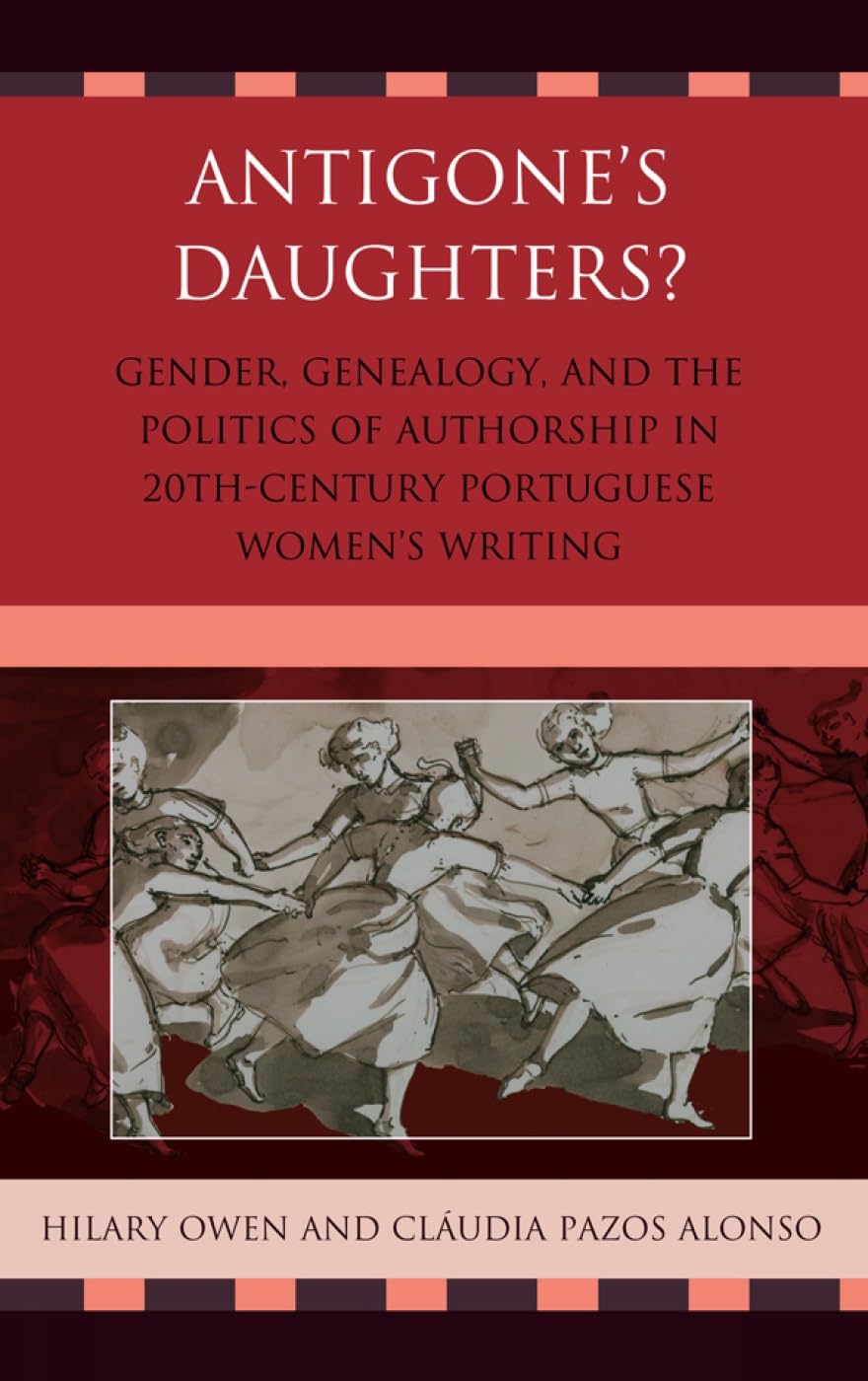
Antigone's Daughters? provides the first detailed discussion in English of six wellknown Portuguese women writers, working across a wide range of genres: Florbela Espanca (18941930), Irene Lisboa (18921958), Agustina Bessa Lus, (1923 ), Natlia Correia (192393), Hlia Correia (1949 ) and Ldia Jorge (1946 ). Together they cover the span of the 20th century and afford historical insights into the complex gender politics of achieving institutional acceptance and validation in the Portuguese national canon at different points in the 20th century.Although a patrilinear evolutionary model visibly structures national literary history in Portugal to the present day, women writers and critics have not generally sought to replace this with a matrilinear feminist counterhistory. The unifying metaphor that the authors adopt here for the purpose of discussing Portuguese women's ambivalent response to female genealogy is the classical figure of Antigone, who paradoxically sacrifices her own genealogical continuity in the name of defending family and kinship, while resisting the patriarchal pragmatics of statebuilding. Should women writers, faced with the absence of a female tradition, posit a womancentred place outside the jurisdiction of male genealogy, however strategically essentialist that place may be, or should they primarily eschew fixed sexual identity to act as unnameable saboteurs, undoing the law of patriarchal tradition from within?
⚠️ WARNING (California Proposition 65):
This product may contain chemicals known to the State of California to cause cancer,
birth defects, or other reproductive harm.
For MAP (Minimum Advertised Price) violations and Intellectual Property (IP) or Trademark concerns, please contact:
support@ergodebooks.com
⚠️ California Proposition 65 Warning: Some products sold on this website may expose you to chemicals known to the State of California to cause cancer, birth defects, or other reproductive harm. For more information, visit www.P65Warnings.ca.gov.