
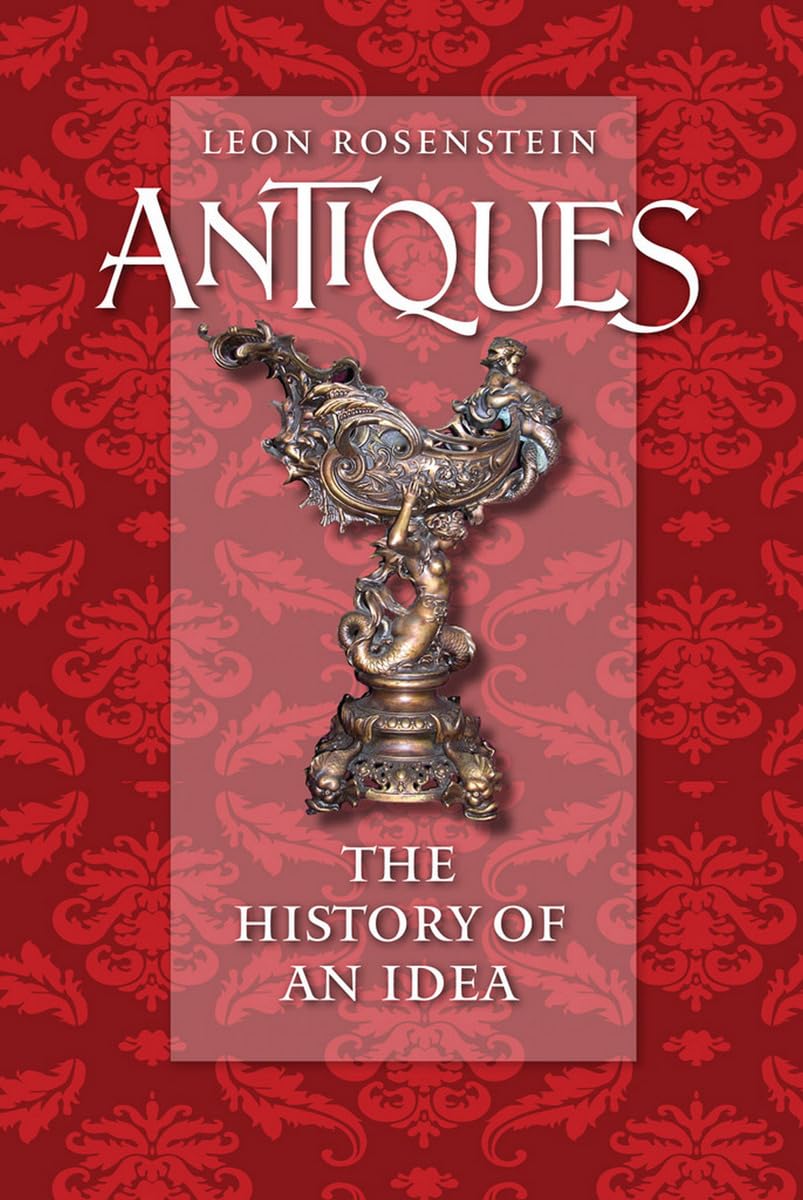
Title
Antiques: The History of an Idea,Used
Sold by Ergodebooks, an authorized reseller.
Returns accepted within 30 days | support@ergodebooks.com
Shipping Information
- Free Standard Shipping — United States only
- Processing Time: 3–5 business days
- Estimated Delivery: 6–10 business days after dispatch
- Double-boxed, fully insured & discreetly packaged
- Tracking number sent via email once dispatched
Returns & Refund
Returns accepted within 30 days of delivery.
Damaged or Defective Item
Free return shipping + replacement or full refund
Wrong Item Received
Free return shipping + replacement or full refund
Change of Mind
Return shipping at customer's expense · 25% restocking fee applies
Payment Option

The notion of retrieving a bit of the pastby owning a material piece of ithas always appealed to humans. Often our most prized possessions are those that have had a long history before they came into our hands. Part of the pleasure we gain from the encounter with antiques stems from the palpable age and the assumed (sometimes imaginary) cultural resonances of the particular object. But precisely what is it about these objects that creates this attraction? What common characteristics do they share and why and how do these traits affect us as they do?In Antiques: The History of an Idea, Leon Rosenstein, a distinguished philosopher who has also been an antiques dealer for more than twenty years, offers a sweeping and lively account of the origin and development of the antique as both a cultural concept and an aesthetic category. He shows that the appeal of antiques is multifaceted: it concerns their value as commodities, their age and historical and cultural associations, their uniqueness, their sensuous and tactile values, their beauty.Exploring how the idea of antiques evolved over time, Rosenstein chronicles the history of antique collecting and connoisseurship. He describes changing conceptions of the past in different epochs as evidenced by preservations, restorations, and renascences; examines shifting attitudes toward foreign cultures as revealed in stylistic borrowings and the importation of artifacts; and investigates varying understandings of and meanings assigned to their traits and functions as historical objects.While relying on the past for his evidence, Rosenstein approaches antiques from an entirely original perspective, setting history within a philosophical framework. He begins by providing a working definition of antiques that distinguishes them from other artifacts in general and, more distinctly, both from works of fine art and from the collectible detritus of popular culture. He then establishes a novel set of criteria for determining when an artifact is an antique: ten traits that an object must possess in order to elicit the aesthetic response that is unique to antiques. Concluding with a provocative discussion of the relation between antiques and civilization, this engaging and thoughtprovoking book helps explain the enduring appeal of owning a piece of the past.
⚠️ WARNING (California Proposition 65):
This product may contain chemicals known to the State of California to cause cancer, birth defects, or other reproductive harm.
For more information, please visit www.P65Warnings.ca.gov.