If you have any questions, you are always welcome to contact us. We'll get back to you as soon as possible, withing 24 hours on weekdays.
Customer service
All questions about your order, return and delivery must be sent to our customer service team by e-mail at yourstore@yourdomain.com
Sale & Press
If you are interested in selling our products, need more information about our brand or wish to make a collaboration, please contact us at press@yourdomain.com
Help
If you have any questions, you are always welcome to contact us. We'll get back to you as soon as possible, withing 24 hours on weekdays.
Customer service
All questions about your order, return and delivery must be sent to our customer service team by e-mail at yourstore@yourdomain.com
Sale & Press
If you are interested in selling our products, need more information about our brand or wish to make a collaboration, please contact us at press@yourdomain.com
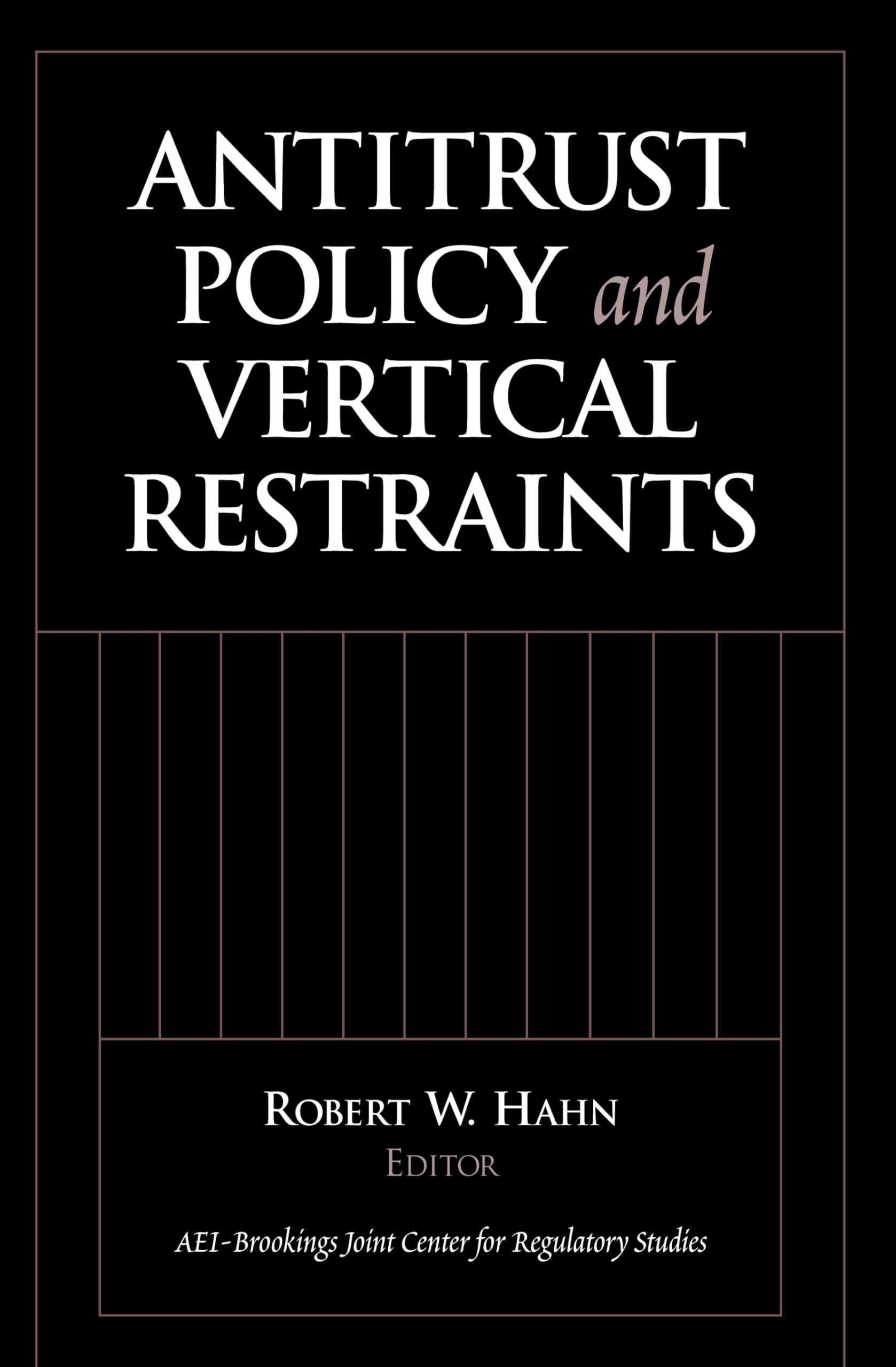
"Antitrust law is intended to protect consumer welfare and foster competition. At first glance, however, it is often unclear whether certain business practices have positive or detrimental effects. Businesses frequently engage in activities that may appear anticompetitive on the surface, but are actually beneficial to consumers. Business tying practices, for example, make the sale of one product conditional upon the sale of another product. This practice can either deprive consumers of choice and drive up prices or lower costs and improve convenience. Therefore, it is critical that policymakers have a keen understanding of which vertical restraintslimitations imposed on businesses by firms located in the production chainare likely to harm consumers more than they benefit competition. In order to formulate economically efficient policies, they must be able to identify and limit those practices that are likely to do more harm than good. In A ntitrust Policy and Vertical Restraints a group of leading scholars takes a hard look at how restraints limit the conditions under which firms may purchase, sell, or resell a good or service. The authors, representing both sides of the antitrust debate over tying practices, provide a uniquely broad perspective on this critical economic policy issue. Contributors include Dennis Carlton (University of Chicago), David Evans (University College London), Bruce Kobayashi (George Mason University), and Michael Waldman (Cornell University)."
⚠️ WARNING (California Proposition 65):
This product may contain chemicals known to the State of California to cause cancer,
birth defects, or other reproductive harm.
For MAP (Minimum Advertised Price) violations and Intellectual Property (IP) or Trademark concerns, please contact:
support@ergodebooks.com
⚠️ California Proposition 65 Warning: Some products sold on this website may expose you to chemicals known to the State of California to cause cancer, birth defects, or other reproductive harm. For more information, visit www.P65Warnings.ca.gov.