
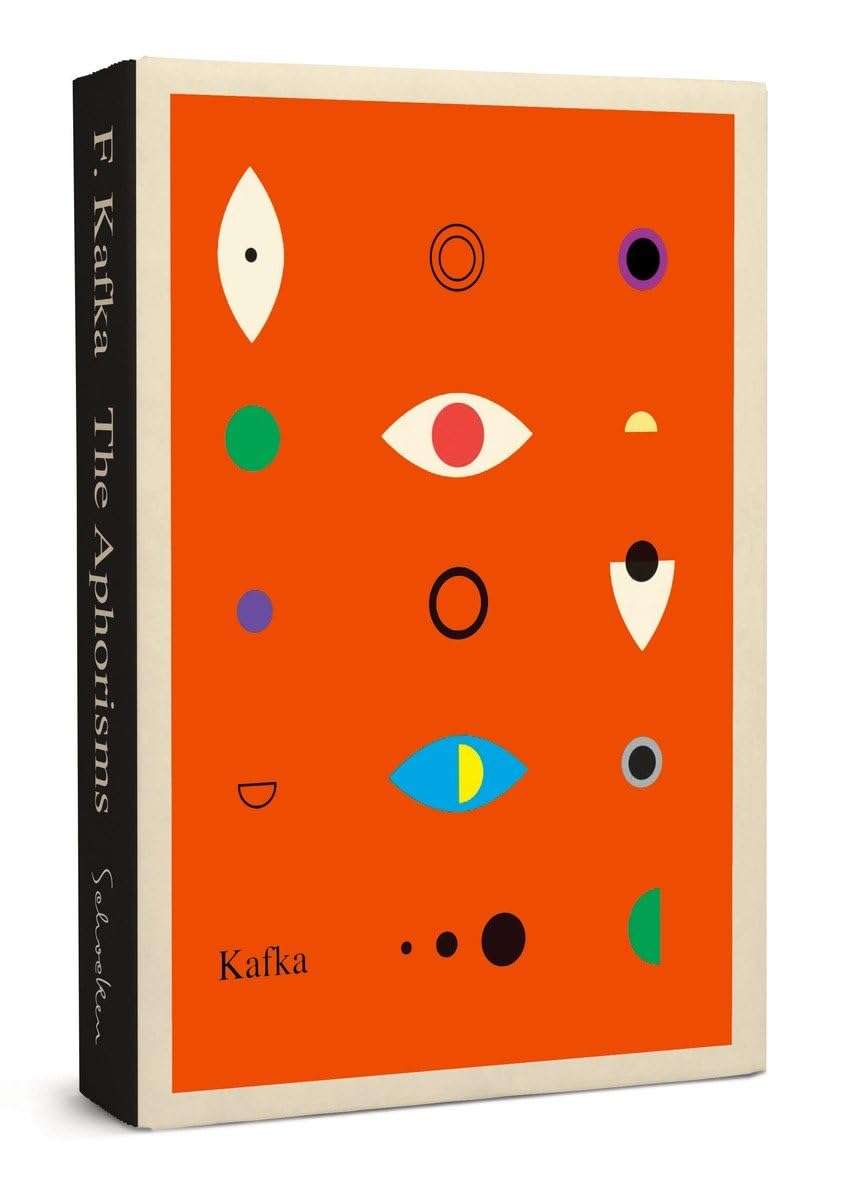
Title
Aphorisms (The Schocken Kafka Library),Used
Sold by Ergodebooks, an authorized reseller.
Returns accepted within 30 days | support@ergodebooks.com
Shipping Information
- Free Standard Shipping — United States only
- Processing Time: 3–5 business days
- Estimated Delivery: 6–10 business days after dispatch
- Double-boxed, fully insured & discreetly packaged
- Tracking number sent via email once dispatched
Returns & Refund
Returns accepted within 30 days of delivery.
Damaged or Defective Item
Free return shipping + replacement or full refund
Wrong Item Received
Free return shipping + replacement or full refund
Change of Mind
Return shipping at customer's expense · 25% restocking fee applies
Payment Option

Kafkas Aphorisms Are Fascinating Glimpses Into The Lure And The Enigma Of The Form Itself. From The Acclaimed Author Of The Metamorphosis And The Trialand One Of The Most Acclaimed Writers Of The Twentieth Century.The Aphorism Eludes Definition: It Can Appear To Be A Random Jotting Or A More Polished Observation. Whether Arbitrary Fragment Or Crystalline Shard, An Aphorism Captures The Inception Of A Thought. Franz Kafka Composed Aphorisms During Two Periods In His Life. A Series Of 109 Was Written Between September 1917 And April 1918, In Zrau, West Bohemia, While Kafka Was On A Visit To His Sister Ottla, Hoping For A Brief Respite Following The Diagnosis Of The Tuberculosis Virus That Would Eventually Claim His Life.They Were Originally Published In 1931, Seven Years After His Death By His Friend And Literary Executor Max Brod, Under The Title Betrachtungen Ber Snde, Hoffnung, Leid, Und Den Wahren Wag (Reflections On Sin, Hope, Suffering, And The True Way). The Second Sequence Of Aphorisms, Numbering 41, Originally Appeared As Entries In Kafkas Diary From January 6 To February 29, 1920. They, Too, Were Published Posthumously, Under The Title Er: Aufzeichnungen Aus Dem Jahr 1920 (He: Reflections From The Year 1920).
⚠️ WARNING (California Proposition 65):
This product may contain chemicals known to the State of California to cause cancer, birth defects, or other reproductive harm.
For more information, please visit www.P65Warnings.ca.gov.
- Q: What are the dimensions of this book? A: The book measures five inches in length, zero point seventy-one inches in width, and six point seven inches in height.
- Q: How many pages does this book have? A: This book contains one hundred forty-four pages, featuring a collection of aphorisms by Franz Kafka.
- Q: What is the binding type of this book? A: The binding type is hardcover, which offers durability and a premium feel.
- Q: Who is the author of this book? A: The author is Franz Kafka, a renowned writer known for his influential works in the twentieth century.
- Q: What genre does this book belong to? A: This book is categorized as German literature, with a focus on philosophical aphorisms.
- Q: How can I read and understand these aphorisms? A: You can read these aphorisms as reflective pieces that capture thoughts on various themes, suitable for anyone interested in literature.
- Q: Is this book suitable for all ages? A: Yes, this book is suitable for adults and mature teens who appreciate deep philosophical themes.
- Q: How should I store this book to keep it in good condition? A: Store the book upright in a dry place, away from direct sunlight, to preserve its condition.
- Q: Can I clean the book's cover if it gets dirty? A: Yes, you can gently wipe the hardcover with a soft, dry cloth to remove dust or smudges.
- Q: Is this book a good choice for studying Kafka's work? A: Yes, this book provides insightful aphorisms that reflect Kafka's thoughts and enhance understanding of his literary style.
- Q: What if the book arrives damaged? A: If the book arrives damaged, you should contact customer service for assistance with returns or exchanges.
- Q: Does this book come with a warranty? A: No, this book does not come with a warranty, but customer service can assist with any issues.
- Q: Are there any similar books to this one? A: Yes, readers may also enjoy other works by Franz Kafka, such as 'The Metamorphosis' or 'The Trial', which explore similar themes.
- Q: How can I benefit from reading these aphorisms? A: Reading these aphorisms can stimulate thought and reflection on life's complexities, enhancing your literary appreciation.
- Q: Can I gift this book to someone else? A: Yes, this book makes a thoughtful gift for anyone interested in literature or philosophy.