If you have any questions, you are always welcome to contact us. We'll get back to you as soon as possible, withing 24 hours on weekdays.
Customer service
All questions about your order, return and delivery must be sent to our customer service team by e-mail at yourstore@yourdomain.com
Sale & Press
If you are interested in selling our products, need more information about our brand or wish to make a collaboration, please contact us at press@yourdomain.com
Help
If you have any questions, you are always welcome to contact us. We'll get back to you as soon as possible, withing 24 hours on weekdays.
Customer service
All questions about your order, return and delivery must be sent to our customer service team by e-mail at yourstore@yourdomain.com
Sale & Press
If you are interested in selling our products, need more information about our brand or wish to make a collaboration, please contact us at press@yourdomain.com
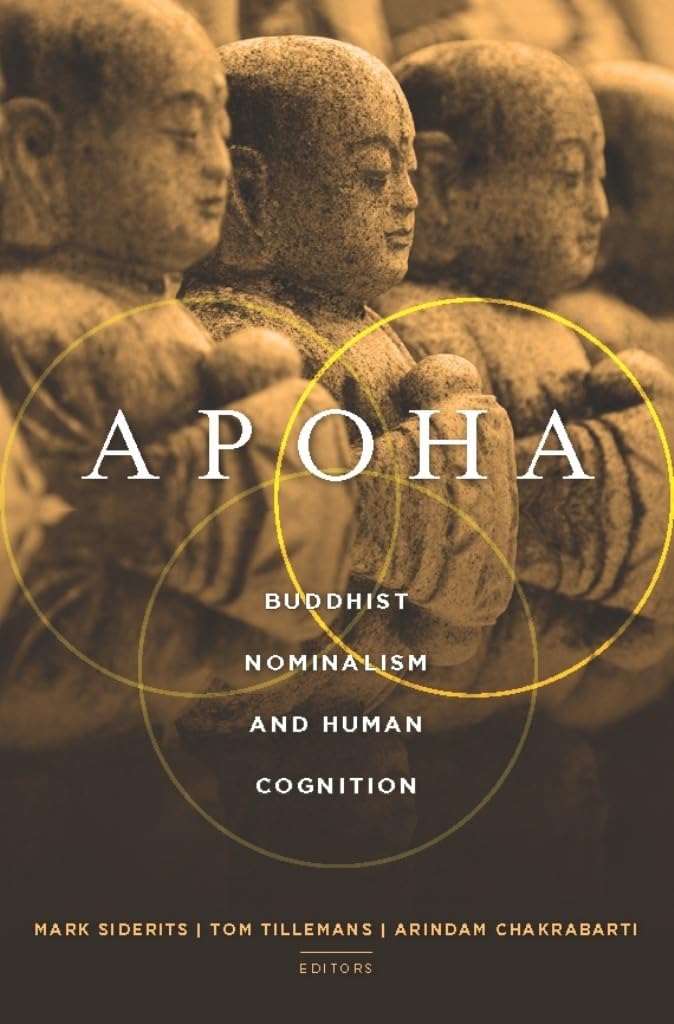
When we understand that something is a pot, is it because of one property that all pots share? This seems unlikely, but without this common essence, it is difficult to see how we could teach someone to use the word "pot" or to see something as a pot. The Buddhist apoha theory tries to resolve this dilemma, first, by rejecting properties such as "potness" and, then, by claiming that the element uniting all pots is their very difference from all nonpots. In other words, when we seek out a pot, we select an object that is not a nonpot, and we repeat this practice with all other items and expressions.Writing from the vantage points of history, philosophy, and cognitive science, the contributors to this volume clarify the nominalist apoha theory and explore the relationship between apoha and the scientific study of human cognition. They engage throughout in a lively debate over the theory's legitimacy. Classical Indian philosophers challenged the apoha theory's legitimacy, believing instead in the existence of enduring essences. Seeking to settle this controversy, essays explore whether apoha offers new and workable solutions to problems in the scientific study of human cognition. They show that the work of generations of Indian philosophers can add much toward the resolution of persistent conundrums in analytic philosophy and cognitive science.
⚠️ WARNING (California Proposition 65):
This product may contain chemicals known to the State of California to cause cancer,
birth defects, or other reproductive harm.
For MAP (Minimum Advertised Price) violations and Intellectual Property (IP) or Trademark concerns, please contact:
support@ergodebooks.com
⚠️ California Proposition 65 Warning: Some products sold on this website may expose you to chemicals known to the State of California to cause cancer, birth defects, or other reproductive harm. For more information, visit www.P65Warnings.ca.gov.