
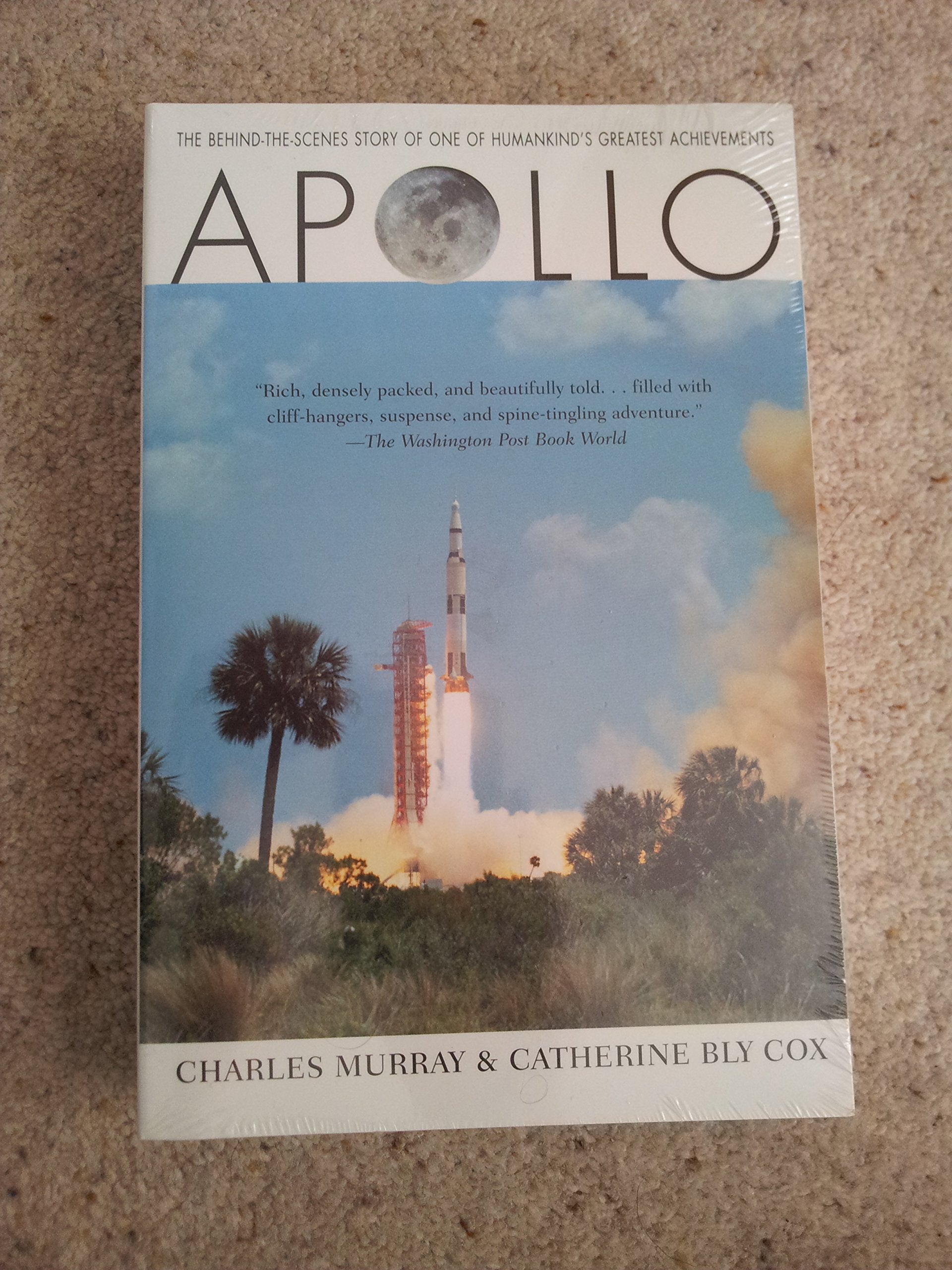
Title
Apollo
Sold by Ergodebooks, an authorized reseller.
Returns accepted within 30 days | support@ergodebooks.com
Shipping Information
- Free Standard Shipping — United States only
- Processing Time: 3–5 business days
- Estimated Delivery: 6–10 business days after dispatch
- Double-boxed, fully insured & discreetly packaged
- Tracking number sent via email once dispatched
Returns & Refund
Returns accepted within 30 days of delivery.
Damaged or Defective Item
Free return shipping + replacement or full refund
Wrong Item Received
Free return shipping + replacement or full refund
Change of Mind
Return shipping at customer's expense · 25% restocking fee applies
Payment Option

Out Of Print For Fifteen Years, This Is The Classic Account Of How The United States Got To The Moon. It Is A Book For Those Who Were Part Of Apollo And Want To Recapture The Experience And For Those Of A New Generation Who Want To Know How It Was Done. It Is An Opinon Shared By Many Apollo Veterans. Republished In 2004 With A New Foreword By The Authors.
⚠️ WARNING (California Proposition 65):
This product may contain chemicals known to the State of California to cause cancer, birth defects, or other reproductive harm.
For more information, please visit www.P65Warnings.ca.gov.
- Q: What is the page count of the book Apollo? A: The book Apollo has five hundred twelve pages. This makes it a substantial read for those interested in the history of the moon landing.
- Q: What is the binding type of Apollo? A: Apollo is available in paperback binding. This provides a flexible and lightweight option for readers.
- Q: What are the dimensions of the book Apollo? A: The dimensions of Apollo are nine point thirty-three inches in length, six point thirty-four inches in width, and one point thirty-eight inches in height. These measurements make it easy to handle and store.
- Q: Who is the author of Apollo? A: The author of Apollo is Charles Murray. He provides insight into the Apollo program and its significance in history.
- Q: What genre does Apollo belong to? A: Apollo is categorized as a historical account. It details the events and experiences related to the United States moon landing.
- Q: Is Apollo suitable for young readers? A: Apollo is best suited for adults and older teens. Its historical content may require a mature understanding of complex themes.
- Q: How can I use Apollo as a resource? A: You can use Apollo as a reference for historical research or as a captivating read about the Apollo missions. It provides firsthand accounts and analysis.
- Q: What audience is Apollo intended for? A: Apollo is intended for readers interested in space exploration and history. It's particularly appealing to those who have a passion for the Apollo missions.
- Q: How should I store Apollo to keep it in good condition? A: Store Apollo in a cool, dry place, away from direct sunlight. This will help preserve the quality of the paperback binding and pages.
- Q: Can I clean the book Apollo if it gets dirty? A: Yes, you can clean Apollo gently with a soft, dry cloth. Avoid using liquids to prevent damage to the pages.
- Q: What if I receive a damaged copy of Apollo? A: If you receive a damaged copy of Apollo, contact the seller for a return or exchange. Most retailers have policies in place for such situations.
- Q: Is there a warranty for the book Apollo? A: No, books like Apollo typically do not come with a warranty. However, check with the retailer for their return policy.
- Q: How does Apollo compare to other space exploration books? A: Apollo stands out as a classic account of the moon landing, often recommended for its detailed narratives and firsthand experiences. It's considered a must-read in the genre.
- Q: What is the historical significance of Apollo? A: Apollo is historically significant as it chronicles the United States' efforts to land on the moon. It captures the experiences of those who were involved in the missions.
- Q: Is there a new foreword included in Apollo? A: Yes, Apollo was republished in two thousand four with a new foreword by the authors. This adds contemporary context to the original content.