
Title
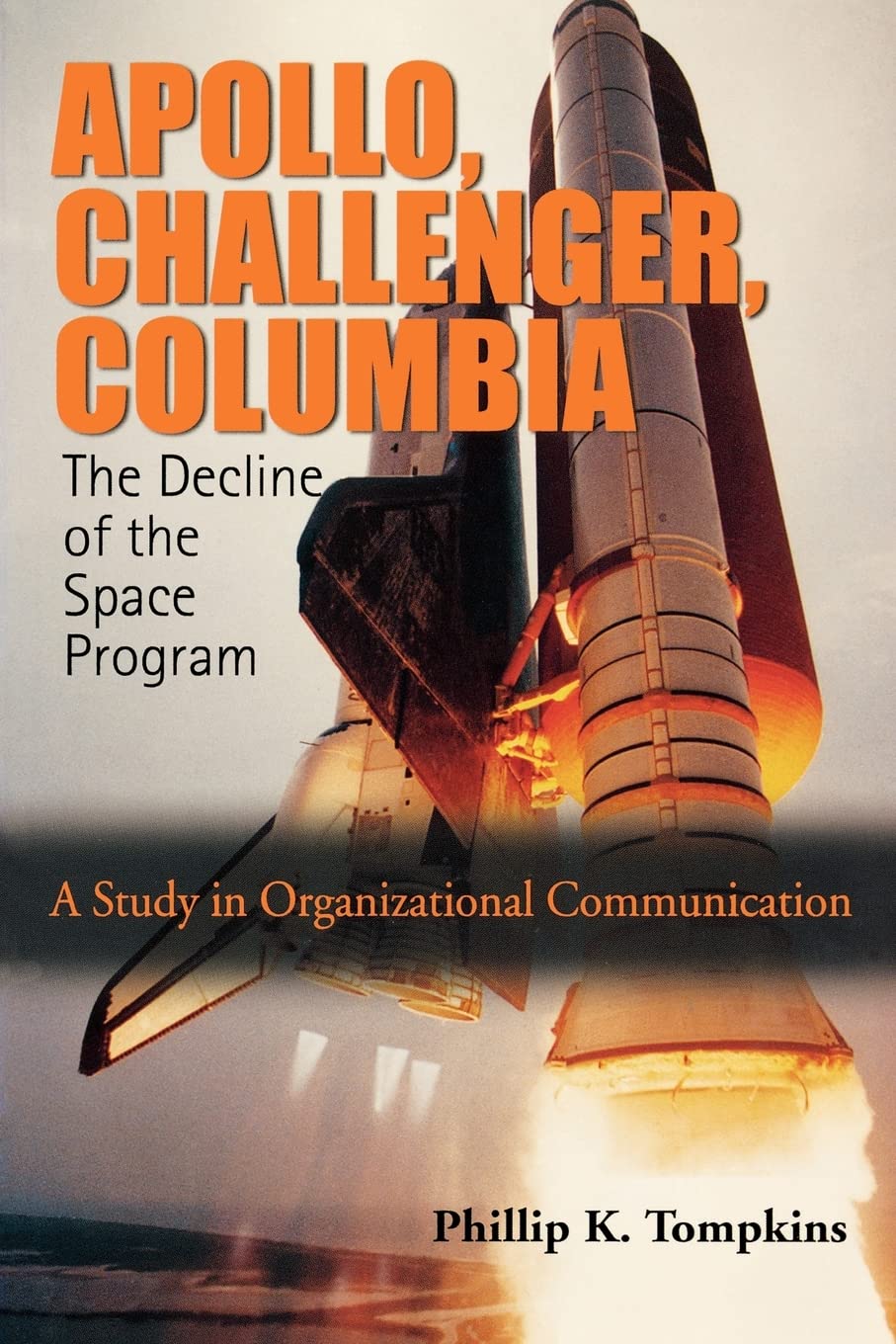
Apollo, Challenger, Columbia: The Decline Of The Space Program: A Study In Organizational Communication,New
Sold by Ergodebooks, an authorized reseller.
Returns accepted within 30 days | support@ergodebooks.com
Shipping Information
- Free Standard Shipping — United States only
- Processing Time: 3–5 business days
- Estimated Delivery: 6–10 business days after dispatch
- Double-boxed, fully insured & discreetly packaged
- Tracking number sent via email once dispatched
Returns & Refund
Returns accepted within 30 days of delivery.
Damaged or Defective Item
Free return shipping + replacement or full refund
Wrong Item Received
Free return shipping + replacement or full refund
Change of Mind
Return shipping at customer's expense · 25% restocking fee applies
Payment Option

Apollo, Challenger, Columbia: The Decline Of The Space Program Provides Unparalleled Longitudinal Insight Into The Organizational Successes And Failures Of Nasa. The Book Treats Nasa Over Its 45Year History From 1958 To 2003, Concentrating On Five 'Data Points':* 1967: When Tompkins First Served As A Summer Faculty Consultant In Organizational Communication To Legendary Rocket Scientist Wernher Von Braun During The Apollo Program.* 1968: When He Served In The Same Capacity To Help Reorganize Nasa'S Marshall Space Flight Center.* 1986: When He Investigated The Communication Failures That Caused The Explosion Of The Space Shuttle Challenger.* 1987: When He Researched Nasa'S Highly Successful Aviation Safety Reporting System.* 2003: When He Interpreted The Communication Failures Leading Up To The Catastrophic Failure Of The Space Shuttle Columbia.The Result Is A Presentation Of Concrete Communication Correlates Of Organizational Success And Failure. Tompkins Is A Master Of What Clifford Geertz Called 'Thick Description.' The Result Is A Compelling, Richly Detailed, Longitudinal Case Study Concentrating On Processual Changes In Communicationasorganization. In This Book, Tompkins Introduces Theory Subtly, Inserting It To Explain Details Of The Organization That Would Otherwise Defy Understanding.In Considering Other Organizations In Trouble, Tompkins Identifies Ten 'Communication Transgressions,' One Of Which, For Example, Is 'Ignorantia Affectata'An Affected Or Cultivated Ignorance Of Organizational Problems. In Contrast To These Failed Organizations And Their Pathologies, Tompkins Offers A Sketch Of Two Healthy Organizations That Live By 'Value Logics'Applying Ethical Values In The Organizational Workplace. There Are Lessons To Be Learned From Nasa'S Disasters. With All Of The Highprofile Ethical Lapses In U.S. Corporations, Tompkins Advocates Individuals And Organizations Taking Responsibility For Their Actions.
⚠️ WARNING (California Proposition 65):
This product may contain chemicals known to the State of California to cause cancer, birth defects, or other reproductive harm.
For more information, please visit www.P65Warnings.ca.gov.
- Q: How many pages does the book have? A: The book contains two hundred eighty-eight pages. This provides a comprehensive exploration of NASA's organizational communication over several decades.
- Q: What are the dimensions of the book? A: The book measures nine point zero two inches in length, five point nine eight inches in width, and eight point nine inches in height. These dimensions make it a convenient size for reading.
- Q: What type of binding does this book have? A: The book is available in paperback binding. This makes it lightweight and easy to handle while reading.
- Q: Who is the author of the book? A: The author of the book is Phillip K. Tompkins. He provides insightful analysis based on his experiences with NASA.
- Q: What genre does this book belong to? A: The book falls under the genre of organizational communication studies. It examines historical events and their implications for NASA.
- Q: Is this book suitable for academic use? A: Yes, this book is suitable for academic use. It offers detailed case studies and theoretical insights relevant to organizational communication.
- Q: How can I apply the lessons from this book? A: The lessons can be applied to improve communication practices in various organizations. Tompkins provides examples from NASA's successes and failures.
- Q: Is this book appropriate for beginners in organizational studies? A: Yes, the book is appropriate for beginners. It introduces key concepts through engaging narratives and case studies.
- Q: What age group is this book suitable for? A: This book is suitable for adults and college students. It addresses complex themes that require mature understanding.
- Q: How should I store this book to keep it in good condition? A: Store the book in a cool, dry place away from direct sunlight. This helps preserve the binding and pages.
- Q: Can this book be cleaned if it gets dirty? A: Yes, you can clean the book gently. Use a soft, dry cloth to remove dust without damaging the cover or pages.
- Q: What if the book arrives damaged? A: If the book arrives damaged, you should contact the seller for a replacement or refund. Most sellers have return policies for damaged items.
- Q: Is there a warranty for this book? A: No, books typically do not come with a warranty. However, check the seller's return policy for further assistance.
- Q: How does this book compare to other organizational communication books? A: This book offers a unique longitudinal perspective on NASA, making it distinct. Many other books may not provide such in-depth case studies.
- Q: Are there any practical applications of the theories discussed in the book? A: Yes, the theories can be applied to enhance communication strategies in organizations facing challenges. Tompkins provides actionable insights based on historical examples.
- Q: What if I have further questions about the book? A: For further questions, you can reach out to the publisher or check online resources for additional information about the book.