
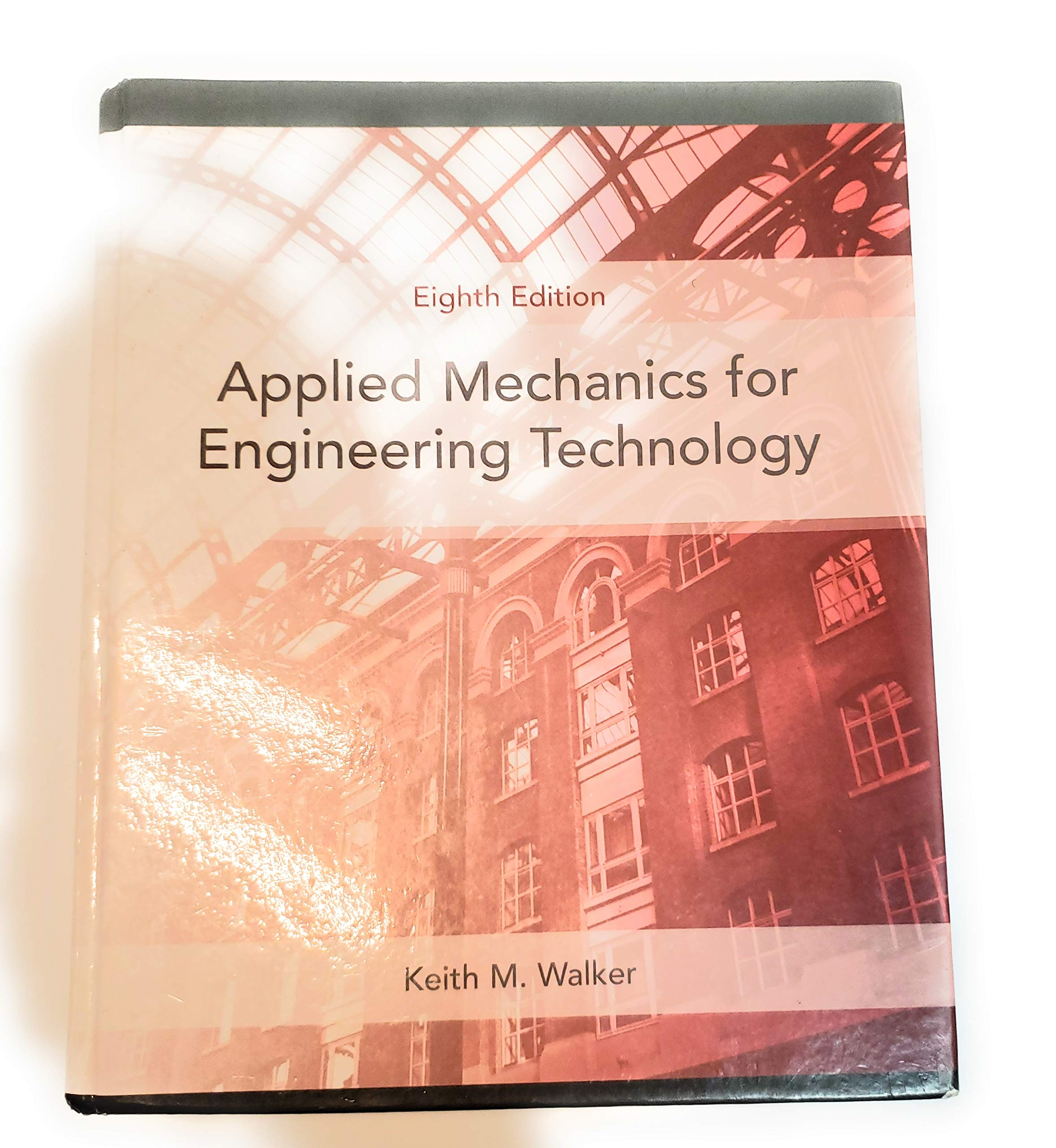
Title
Applied Mechanics for Engineering Technology,Used
Sold by Ergodebooks, an authorized reseller.
Returns accepted within 30 days | support@ergodebooks.com
Shipping Information
- Free Standard Shipping — United States only
- Processing Time: 3–5 business days
- Estimated Delivery: 6–10 business days after dispatch
- Double-boxed, fully insured & discreetly packaged
- Tracking number sent via email once dispatched
Returns & Refund
Returns accepted within 30 days of delivery.
Damaged or Defective Item
Free return shipping + replacement or full refund
Wrong Item Received
Free return shipping + replacement or full refund
Change of Mind
Return shipping at customer's expense · 25% restocking fee applies
Payment Option

For courses in Applied Mechanics, Statics/Dynamics, or Introduction to Stress Analysis.Featuring a noncalculus approach, this introduction to applied mechanics text combines a straightforward, readable foundation in underlying physics principles with a consistent method of problem solving. It presents the physics principles in small elementary steps; keeps the mathematics at a reasonable level; provides an abundance of worked examples; and features problems that are as practical as possible without becoming too involved with many extraneous details. This edition features 7% more problems, an enhanced layout and design and a logical, disciplined approach that gives students a sound background in core statics and dynamics competencies.
⚠️ WARNING (California Proposition 65):
This product may contain chemicals known to the State of California to cause cancer, birth defects, or other reproductive harm.
For more information, please visit www.P65Warnings.ca.gov.
- Q: What is the page count of this book? A: This book has six hundred pages. It provides a comprehensive overview of applied mechanics, making it a valuable resource for students.
- Q: What are the dimensions of 'Applied Mechanics for Engineering Technology'? A: The book measures seven point seventy-two inches in length, one inch in width, and nine point twenty-one inches in height. These dimensions make it a standard-sized textbook.
- Q: What type of binding does this book have? A: The book is bound in hardcover. This ensures durability and protection for the pages during use.
- Q: How do I use this book for my courses? A: You can use this book as a primary text for courses in applied mechanics or statics and dynamics. It is designed to provide a clear understanding of fundamental principles.
- Q: Is this book suitable for beginners in engineering? A: Yes, this book is suitable for beginners. It presents concepts in a non-calculus approach, making it accessible to those new to the subject.
- Q: Can this book help with problem-solving in engineering? A: Yes, it offers a consistent method for problem-solving. The abundance of worked examples aids students in understanding practical applications.
- Q: How should I store this book to keep it in good condition? A: Store the book upright on a shelf to prevent warping. Keep it away from direct sunlight and moisture to maintain its condition.
- Q: Are there any specific care instructions for the book? A: Yes, avoid exposing the book to extreme temperatures or humidity. Handle pages gently to prevent tearing.
- Q: What should I do if the book arrives damaged? A: If the book is damaged upon arrival, contact customer support for assistance. They can guide you through the return or exchange process.
- Q: Is there a warranty for this book? A: Typically, books do not come with a warranty. However, check with the retailer for their return policy.
- Q: How does this book compare to others in the same category? A: This book focuses on applied mechanics with a non-calculus approach, making it different from more advanced texts that require calculus knowledge.
- Q: Is this book suitable for self-study? A: Yes, it is suitable for self-study. The clear explanations and numerous examples facilitate independent learning.
- Q: Can this book be used for advanced engineering courses? A: While it is primarily for introductory courses, it may serve as a supplementary resource for advanced topics in applied mechanics.
- Q: What topics are covered in this book? A: Topics include statics, dynamics, and stress analysis principles. It provides a solid foundation for understanding applied mechanics.
- Q: Who is the author of this book? A: The book is authored by Keith Walker. He is known for his expertise in engineering education.
- Q: What is the target audience for this book? A: The target audience includes engineering students and instructors in courses related to applied mechanics and statics/dynamics.