
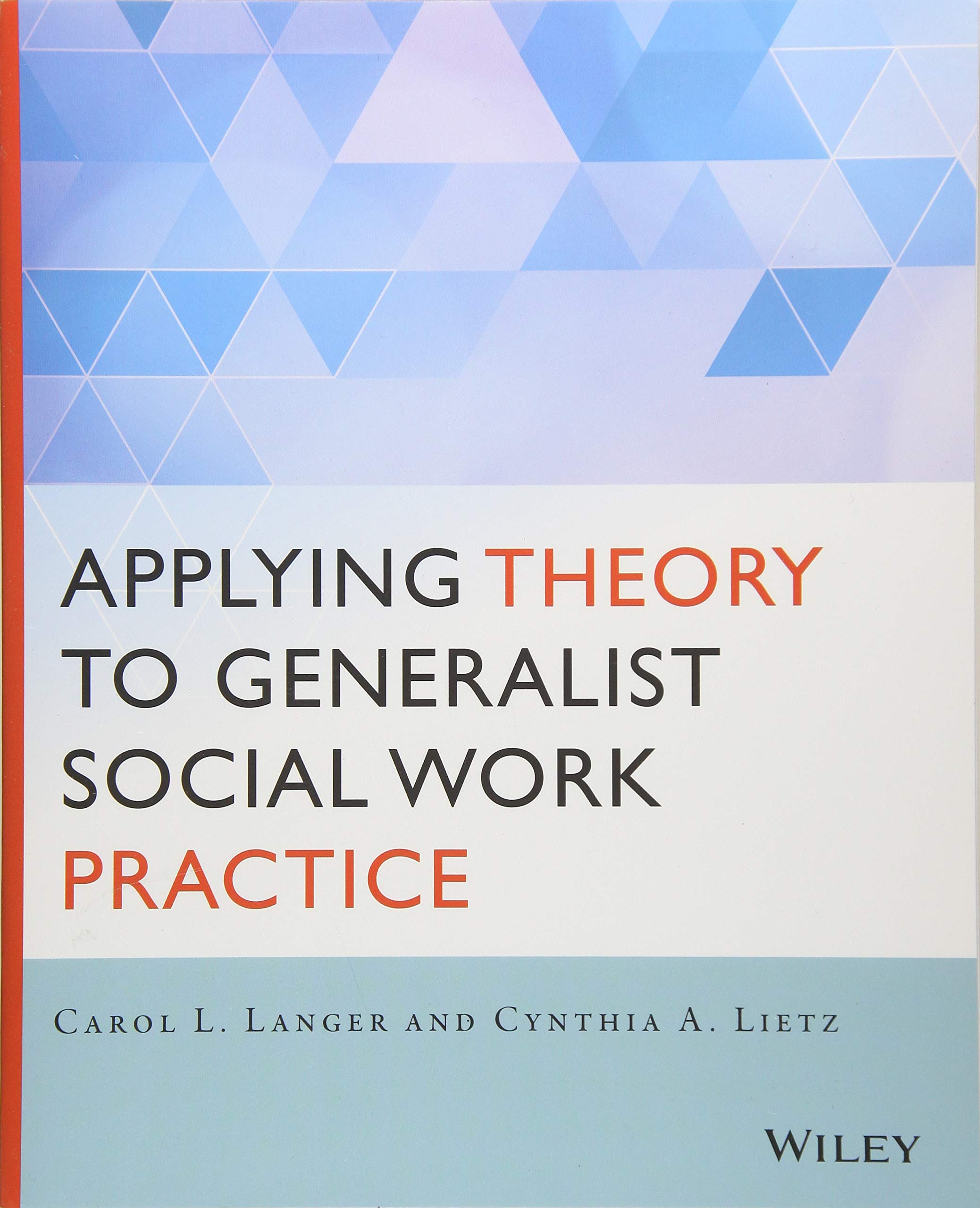
Title


Applying Theory To Generalist Social Work Practice
Sold by Ergodebooks, an authorized reseller.
Returns accepted within 30 days | support@ergodebooks.com
Shipping Information
- Free Standard Shipping — United States only
- Processing Time: 3–5 business days
- Estimated Delivery: 6–10 business days after dispatch
- Double-boxed, fully insured & discreetly packaged
- Tracking number sent via email once dispatched
Returns & Refund
Returns accepted within 30 days of delivery.
Damaged or Defective Item
Free return shipping + replacement or full refund
Wrong Item Received
Free return shipping + replacement or full refund
Change of Mind
Return shipping at customer's expense · 25% restocking fee applies
Payment Option

The Social Worker'S Guide To Integrating Theory And Practiceapplying Theory To Generalist Social Work Practice Teaches Aspiring Social Workers How To Apply Theory In Real World Practice. Fully Aligned With The Council On Social Work Education'S 2015 Educational Policy And Accreditation Standards, The Book Links Theory To Practice With Clear, Concise Instruction Including A Discussion Of Evidencebased Practice. Twelve Commonlyused Theories Are Thoroughly Explained, With Discussion Of The Strengths And Limitations Of Each, And Applied To Real Work With Individuals, Groups, Families, Communities, And Organizations. The Book Includes Case Studies And Firstperson Contributions From Practicing Social Workers To Illustrate The Realworld Scenarios In Which Different Concepts Apply. Critical Thinking Questions Help Students Strengthen Their Understanding Of The Ideas Presented. Tools Including A Test Bank, Powerpoint Slides, And An Instructor'S Manual Are Available To Facilitate Classroom Use, Providing A Singlevolume Guide To The Entire Helping Process, From Engagement To Termination.Practice Is A Core Foundational Course For Future Social Workers, But Many Practice Texts Focus On Skills While Neglecting The Theoretical Basis For Social Work. Applying Theory To Generalist Social Work Practice Fills That Gap By Covering Both Skills And Theory In A Single Text. Examines The Applications Of Prevailing Social Theories Covers The Most Common Theories Used In Micro, Mezzo, And Macro Practice Helps Readers Understand Wellestablished Approaches Like Strengths Perspective, Humanistic And Clientcentered, Taskcentered, And Solutionfocused Brief Therapy Shows How To Apply Major Theories Including Ecological/System, Cognitive/Behavioral, Conflict, Empowerment, Narrative, Crisis, Critical, And Feministan Effective Social Worker Recognizes The Link Between Theory And Practice, And How The Two Inform Each Other To Culminate In The Most Effective Intervention And Most Positive Outcome For The Client. Applying Theory To Generalist Social Work Practice Provides Students With A Roadmap To The Full Integration Of Philosophy And Application In Social Work.
⚠️ WARNING (California Proposition 65):
This product may contain chemicals known to the State of California to cause cancer, birth defects, or other reproductive harm.
For more information, please visit www.P65Warnings.ca.gov.
- Q: How many pages does this book have? A: This book has three hundred thirty-six pages. It provides comprehensive coverage of applying theory in social work practice.
- Q: What is the binding type of this book? A: The book is available in paperback binding. This makes it flexible and easy to handle for readers.
- Q: What are the dimensions of this book? A: The dimensions are seven point five inches in length, zero point eight inches in width, and nine point twenty-one inches in height. These dimensions make it portable for students.
- Q: Who is the author of this book? A: The author is Carol L. Langer. She is an experienced educator in the field of social work.
- Q: What educational standards does this book align with? A: This book aligns with the Council on Social Work Education's two thousand fifteen Educational Policy and Accreditation Standards. It ensures that the content is relevant for aspiring social workers.
- Q: How do I apply the theories discussed in this book? A: You can apply the theories by following the clear instructions and case studies provided. The book illustrates real-world scenarios to enhance understanding.
- Q: Is this book suitable for beginners in social work? A: Yes, it is suitable for beginners. The book covers both theory and skills necessary for effective social work practice.
- Q: What critical thinking tools does this book offer? A: It includes critical thinking questions to help deepen understanding. These questions challenge students to engage with the material.
- Q: Can I use this book for classroom instruction? A: Yes, it includes tools like a test bank and PowerPoint slides. These resources facilitate classroom use and enhance the learning experience.
- Q: Does this book cover evidence-based practices? A: Yes, the book discusses evidence-based practice in detail. This is crucial for applying theory effectively in real-world situations.
- Q: What theories are covered in this book? A: The book covers twelve commonly-used theories in social work. These include cognitive/behavioral, strengths perspective, and feminist theory.
- Q: Does this book include case studies? A: Yes, it includes case studies from practicing social workers. These case studies illustrate how theories apply in practical settings.
- Q: Is this book focused on theoretical knowledge or practical skills? A: It combines both theoretical knowledge and practical skills. This dual focus helps students understand the connection between theory and practice.
- Q: How does this book help with client interventions? A: It provides a roadmap for integrating theory into practice, thus enhancing effectiveness in client interventions. Theories inform the most positive outcomes.
- Q: Are there any additional resources provided with this book? A: Yes, additional resources like an instructor's manual are available. These resources support educators in teaching the material.
- Q: Is this book relevant for social work in different settings? A: Yes, it is relevant for micro, mezzo, and macro practice settings. It addresses various contexts in which social workers operate.