
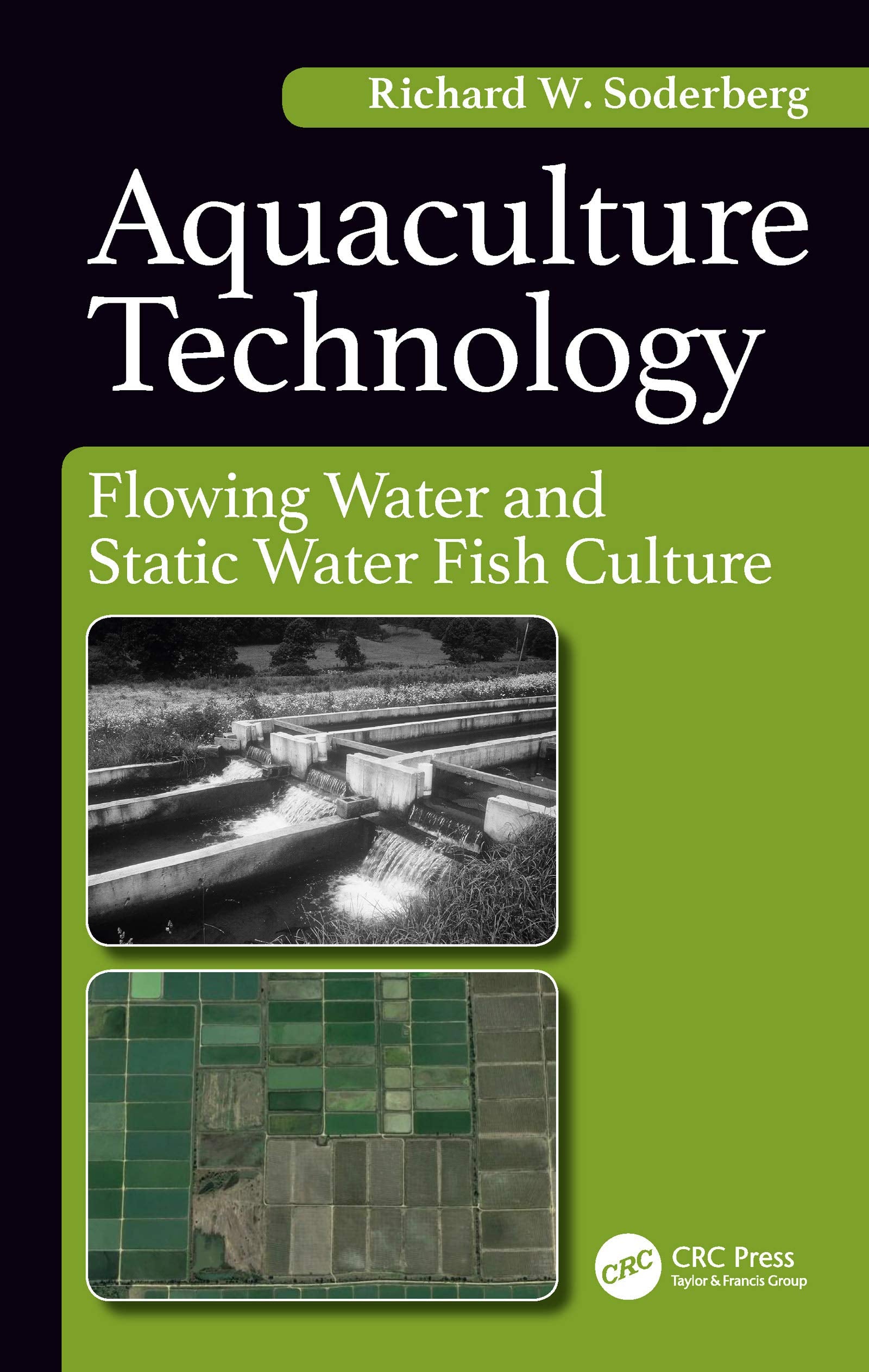
Title
Aquaculture Technology: Flowing Water And Static Water Fish Culture
Sold by Ergodebooks, an authorized reseller.
Returns accepted within 30 days | support@ergodebooks.com
Shipping Information
- Free Standard Shipping — United States only
- Processing Time: 3–5 business days
- Estimated Delivery: 6–10 business days after dispatch
- Double-boxed, fully insured & discreetly packaged
- Tracking number sent via email once dispatched
Returns & Refund
Returns accepted within 30 days of delivery.
Damaged or Defective Item
Free return shipping + replacement or full refund
Wrong Item Received
Free return shipping + replacement or full refund
Change of Mind
Return shipping at customer's expense · 25% restocking fee applies
Payment Option

Key Features: Takes A Quantitative Approach To The Science Of Aquaculture Covers The Complete Landscape Of The Scientific Basis Of Fish Culture Promotes Problem Solving And Critical Thinking Includes Sample Problems At The End Of Most Chapters Guides The Reader Through The Technical Considerations Of Intensive Aquaculture, Including Fish Growth Rates, Hydraulic Characteristics Of Fish Rearing Units, Oxygen Consumption Rates In Relation To Oxygen Solubility And Fish Tolerance Of Hypoxia, And Water Reconditioning By Reaeration And Ammonia Filtration. Discusses The Environmental Effects Of Aquaculture Includes A Chapter On Hatchery Effluent Control To Meet Receiving Water Discharge Criteriaaquaculture Technology: Flowing Water And Static Water Fish Culture Is The First Book To Provide The Skills To Raise Fish In Both A Flowing Water And A Static Water Aquaculture System With A Pragmatic And Quantitative Approach. Following In The Tradition Of The Authors Highly Praised Book, Flowing Water Fish Culture, This Work Will Stand Out As One That Makes The Reader Understand The Theory Of Each Type Of Aquaculture System; It Will Teach The User How To Think Rather Than What To Think About These Systems.The Book Presents The Scientific Basis For The Controlled Husbandry Of Fish, Whether It Be In A Stream Of Water Or A Standing Water Pool. Part 1, Flowing Water Fish Culture, Is A Major Revision Of The Authors Initial Book And Includes Greatly Expanded Coverage Of Rearing Unit Design Criteria, Fish Growth And The Use Of Liquid Oxygen, Hatchery Effluent Control, And Recirculating Systems. Part 2, Static Water Fish Culture, Presents The Scientific Basis Of Fish Culture In Standing Water Systems Including Nutrient And Dissolved Gas Dynamics, Pond Ecology, Effects Of Fertilization And Supplemental Feeding, Water Quality Management And Representative Static Water Aquacultures.Aquaculture Technology Conveys The Science In A Manner Appropriate For Use By University Students And Teachers And Others Involved In Fish Production And Aquaculture Research And Development Worldwide. It Will Enable The Reader To Adapt To Changing Technologies, Markets, And Environmental Regulations As They Occur.
⚠️ WARNING (California Proposition 65):
This product may contain chemicals known to the State of California to cause cancer, birth defects, or other reproductive harm.
For more information, please visit www.P65Warnings.ca.gov.
- Q: How many pages does the book have? A: The book contains two hundred seventy-two pages. This length provides a comprehensive exploration of aquaculture technology.
- Q: What are the dimensions of the book? A: The dimensions are six point two six inches in length, zero point seven five inches in width, and nine point two five inches in height. These dimensions make it a convenient size for both reading and reference.
- Q: What type of binding does this book have? A: The book features a hardcover binding. This type of binding ensures durability and longevity for frequent use.
- Q: What is the author's background? A: The author is Richard Soderberg W. He is recognized for his expertise in aquaculture and has previously published works on fish culture.
- Q: Is this book suitable for beginners? A: Yes, the book is suitable for beginners as well as advanced readers. It presents foundational concepts alongside advanced topics in aquaculture.
- Q: Does the book include practical examples? A: Yes, the book includes sample problems at the end of most chapters. These examples help reinforce understanding of aquaculture principles.
- Q: How should I care for this book? A: To care for the book, store it upright in a cool, dry place. Avoid exposing it to direct sunlight to prevent damage to the cover and pages.
- Q: Is this book safe for educational environments? A: Yes, the book is safe for educational environments. It contains factual content relevant to aquaculture and is appropriate for university students.
- Q: Can I return the book if I'm not satisfied? A: Yes, most retailers allow returns if you're not satisfied. Be sure to check the specific return policy of the seller.
- Q: What topics are covered in the book? A: The book covers topics such as fish growth rates, hydraulic characteristics of fish rearing units, and hatchery effluent control. It provides a thorough understanding of aquaculture systems.
- Q: Is this book recommended for research purposes? A: Yes, the book is highly recommended for research purposes. It provides a scientific basis for fish culture relevant to aquaculture research and development.
- Q: Does the book discuss environmental effects of aquaculture? A: Yes, the book discusses the environmental effects of aquaculture. It includes a chapter dedicated to hatchery effluent control to meet discharge criteria.
- Q: Are there any illustrations or diagrams in the book? A: Yes, the book includes illustrations and diagrams to help explain complex concepts. These visual aids enhance understanding of aquaculture practices.
- Q: Is the book part of a series? A: Yes, this book follows in the tradition of the author's previous work, Flowing Water Fish Culture. It builds upon established knowledge in the field.
- Q: What is the primary focus of the book? A: The primary focus of the book is on both flowing water and static water fish culture. It aims to provide a comprehensive understanding of aquaculture systems.