If you have any questions, you are always welcome to contact us. We'll get back to you as soon as possible, withing 24 hours on weekdays.
Customer service
All questions about your order, return and delivery must be sent to our customer service team by e-mail at yourstore@yourdomain.com
Sale & Press
If you are interested in selling our products, need more information about our brand or wish to make a collaboration, please contact us at press@yourdomain.com
Help
If you have any questions, you are always welcome to contact us. We'll get back to you as soon as possible, withing 24 hours on weekdays.
Customer service
All questions about your order, return and delivery must be sent to our customer service team by e-mail at yourstore@yourdomain.com
Sale & Press
If you are interested in selling our products, need more information about our brand or wish to make a collaboration, please contact us at press@yourdomain.com
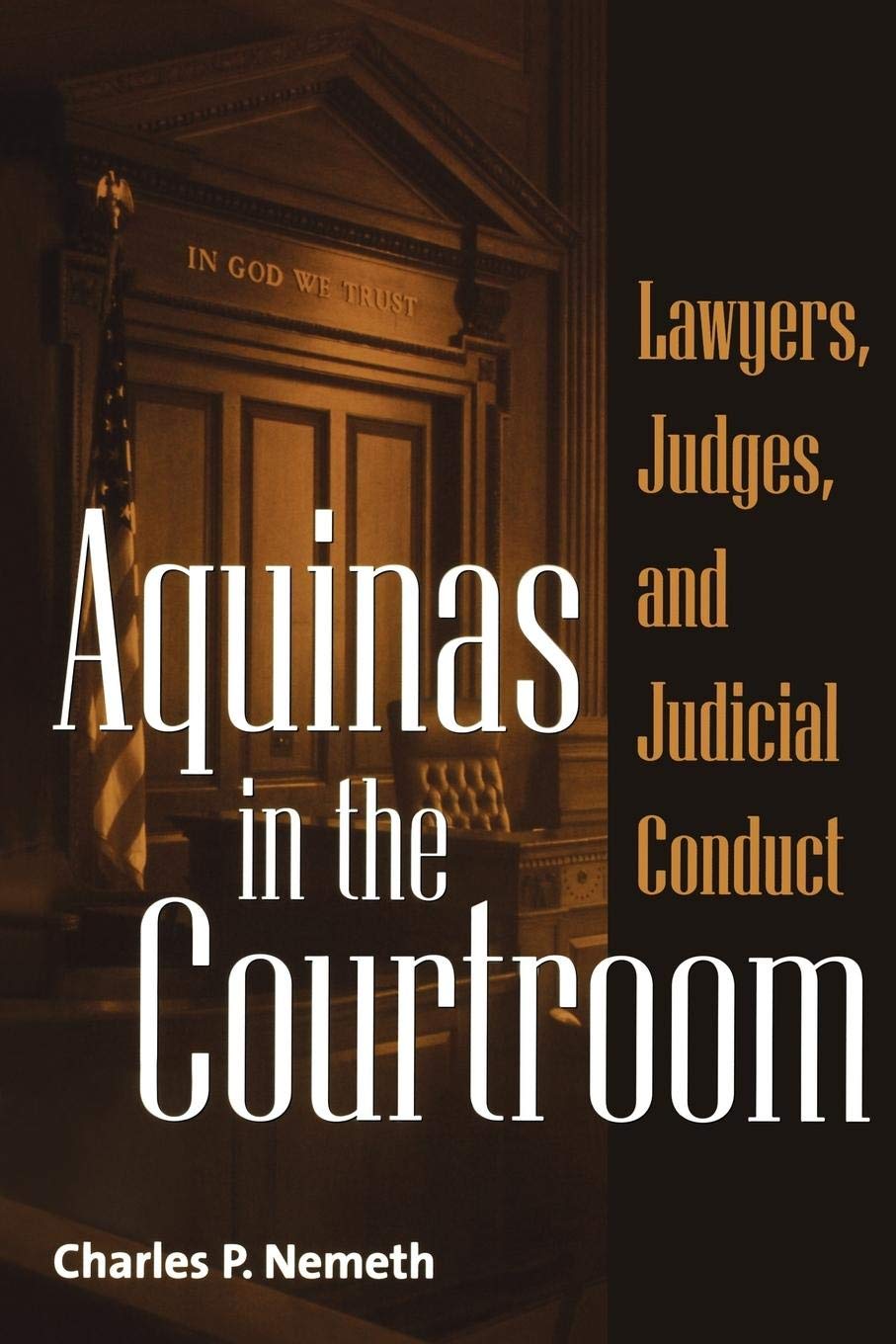
Using St. Thomas Aquinas's natural law philosophy and Divine Exemplar argument to prompt new discussion of ethical questions that lawyers and judges should confront, the author delivers a complete occupational profile for the professional conduct of judges and lawyers. St. Thomas's discourse on such topics as procedural law, judicial and advocate conduct and character, criminal and civil practice standards, and sentencing guidelines provides a blueprint for the Christian lawyer and judge by laying out the professional and ethical parameters that make the actor operate in accordance with reason and morality. This text on Thomistic jurisprudence challenges the current beliefs of law and the justice system, the functions of lawyers, advocates, and judges, and traditional views on evidence and punishment, and suggests a return to the roots of the system, in which reason, virtue, and justice guide the law and its practice. Lawyers, judges, students, and scholars should find in these pages a unique approach to renewing our beleaguered justice system.Relying on extensive quotations from the works of St. Thomas Aquinas, the author begins the text with an explication of St. Thomas's influences, legal philosophy, and thoughts on virtue and the law. He then devotes several chapters to specific concepts in Thomistic jurisprudence, including prudence, the common good, judicial process, judgment, and punishment. The final chapters analyze the role of lawyers and judges, and argues for the need for the application of the Thomistic model of jurisprudence to our criminal justice system.
⚠️ WARNING (California Proposition 65):
This product may contain chemicals known to the State of California to cause cancer,
birth defects, or other reproductive harm.
For MAP (Minimum Advertised Price) violations and Intellectual Property (IP) or Trademark concerns, please contact:
support@ergodebooks.com
⚠️ California Proposition 65 Warning: Some products sold on this website may expose you to chemicals known to the State of California to cause cancer, birth defects, or other reproductive harm. For more information, visit www.P65Warnings.ca.gov.