
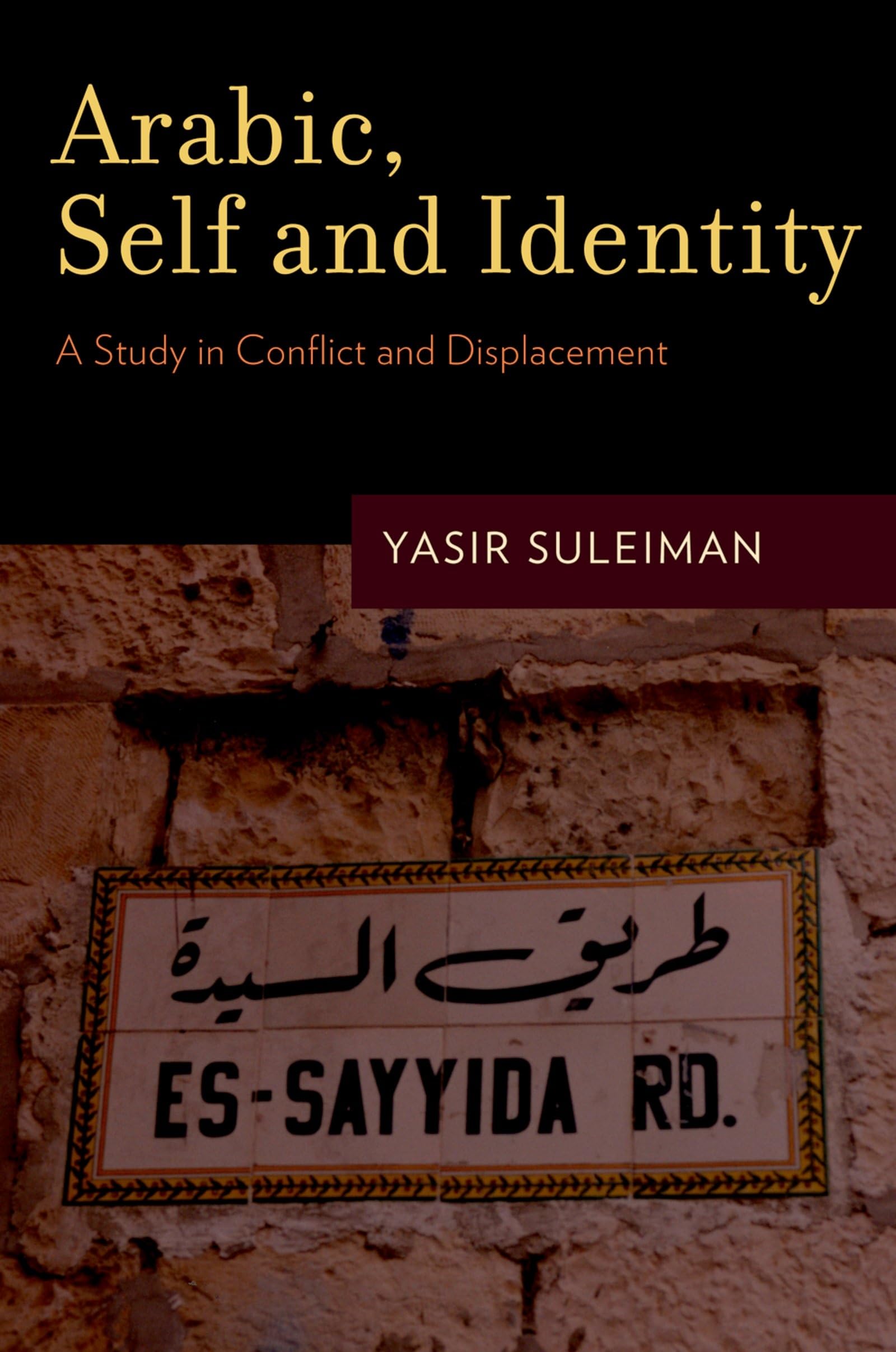
Title
Arabic, Self And Identity: A Study In Conflict And Displacement
Sold by Ergodebooks, an authorized reseller.
Returns accepted within 30 days | support@ergodebooks.com
Shipping Information
- Free Standard Shipping — United States only
- Processing Time: 3–5 business days
- Estimated Delivery: 6–10 business days after dispatch
- Double-boxed, fully insured & discreetly packaged
- Tracking number sent via email once dispatched
Returns & Refund
Returns accepted within 30 days of delivery.
Damaged or Defective Item
Free return shipping + replacement or full refund
Wrong Item Received
Free return shipping + replacement or full refund
Change of Mind
Return shipping at customer's expense · 25% restocking fee applies
Payment Option

Arabic, Self, And Identity Uses Autoethnography, Autobiography, And A Detailed Study Of Names To Investigate The Links Between Conflict And Displacement, And Between The Self And Group Identity. In The Process It Raises Questions About Trauma And Globalization, Underscoring The Complex Roles Of Language And Identity In Society.Yasir Suleiman Frames His Findings Against A Farreaching Critique Of The Dominant, Correlational Approach In Arabic Sociolinguitics. He Argues That This Approach Does Not Sufficiently Explore The Link Between Language And The Major Narratives Of Identity And Conflict In The Middle East. Instead He Advocates For Combining This Approach With Qualitative Studies That Are Nevertheless Aware Of The Limits Of Interpretation And The Positionality Of The Researcher. This Combined Endeavor, Suleiman Says, Can Generate A Richer Understanding Of The Sociopolitical Underpinnings Of Language, And Help To Bridge The Gaps Between The Various Disciplines That Converge On Language As A Field Of Investigation And Analysis.
⚠️ WARNING (California Proposition 65):
This product may contain chemicals known to the State of California to cause cancer, birth defects, or other reproductive harm.
For more information, please visit www.P65Warnings.ca.gov.
- Q: How many pages does this book have? A: This book has two hundred eighty-eight pages. It provides a comprehensive exploration of Arabic identity and conflict.
- Q: What is the binding type of this book? A: This book is a paperback edition. This makes it lightweight and flexible, ideal for reading.
- Q: What are the dimensions of this book? A: This book measures approximately eight hundred inches in length, six point one inches in width, and nine point one inches in height. These dimensions make it easy to handle and store.
- Q: Who is the author of this book? A: The author is Yasir Suleiman. He is known for his work in sociolinguistics and identity studies.
- Q: What is the main subject of this book? A: The book discusses Arabic language, self, and identity in relation to conflict and displacement. It combines various methodologies to explore these themes.
- Q: How do I read and understand this book? A: You can read this book at your own pace, as it is suitable for anyone interested in linguistics and identity. It incorporates both qualitative and theoretical approaches.
- Q: Is this book suitable for students? A: Yes, this book is suitable for students in linguistics or social sciences. It provides valuable insights into language and identity.
- Q: Can I use this book for academic research? A: Yes, this book is an excellent resource for academic research. It raises critical questions about language and identity in the Middle East.
- Q: How should I store this book to keep it in good condition? A: Store this book in a cool, dry place away from direct sunlight. This will help preserve the paperback binding and pages.
- Q: Is this book safe for young readers? A: While the book addresses complex themes, it is generally suitable for mature readers. Parents should consider the subject matter before allowing younger readers.
- Q: What if I find a damaged copy of this book? A: If you receive a damaged copy, you should contact the seller for a return or exchange. Most retailers have policies in place for such issues.
- Q: Does this book discuss trauma and globalization? A: Yes, the book discusses trauma and globalization in relation to language and identity. It highlights the interconnectedness of these themes.
- Q: What kind of research methods are used in this book? A: The book uses autoethnography and qualitative studies alongside traditional sociolinguistic methods. This combination allows for a deeper exploration of identity.
- Q: Is there a specific audience for this book? A: The book is aimed at academics, students, and anyone interested in linguistics and identity issues. It addresses complex sociopolitical topics.
- Q: What is the publisher of this book? A: The book is published by Oxford University Press, USA. They are known for their academic publications in various fields.