
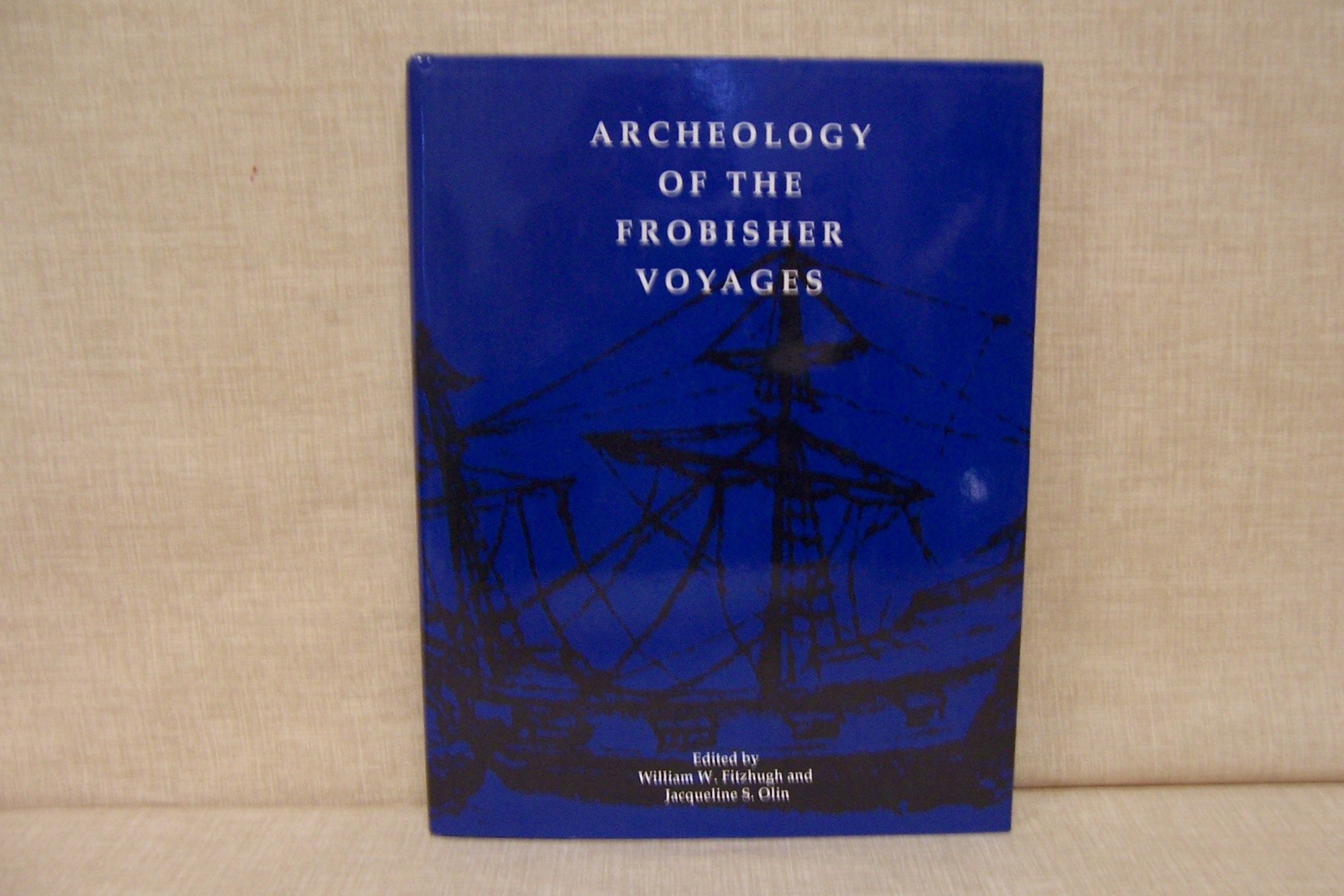
Title
Archaeology of the Frobisher Voyages,Used
Sold by Ergodebooks, an authorized reseller.
Returns accepted within 30 days | support@ergodebooks.com
Shipping Information
- Free Standard Shipping — United States only
- Processing Time: 3–5 business days
- Estimated Delivery: 6–10 business days after dispatch
- Double-boxed, fully insured & discreetly packaged
- Tracking number sent via email once dispatched
Returns & Refund
Returns accepted within 30 days of delivery.
Damaged or Defective Item
Free return shipping + replacement or full refund
Wrong Item Received
Free return shipping + replacement or full refund
Change of Mind
Return shipping at customer's expense · 25% restocking fee applies
Payment Option

The three expeditions (15761578) of English explorer Martin Frobisher were among the most ambitious and best documented of the early period of British colonial expansion. Sailing into the Canadian Arctic in search of the Northwest Passage to the Orient, Frobisher established the first, albeit transient, English settlement in the New World, bringing back to Europe not the route to Cathay but news of his encounters with Inuit peoples and tons of what he vainly hoped was gold ore.Archeology of the Frobisher Voyages draws from the material remains of the Frobisher site (houses, mines, workshops, and ship ways) and of local contemporary Inuit sites and Inuit oral history the fullest account yet available of this earliest New World settlement. The contributors are archeologists, historians, and ethnographers who discuss the background and history of the Frobisher voyages and previous investigations of the site, particularly that of Charles Francis Hall, an American explorer who in 1861 was led by Inuit legend to camp on Kodlunarn or "white man's" island, off the southern coast of Baffin Island.Examining artifacts collected by Hall as well as new evidence gathered in three Smithsonian Institution research trips, the contributors reassess the structures and activities of Frobisher's men and the Inuit with whom they traded and fought. One artifact a lump of iron yielding a problematic carbon14 date two centuries before Frobisher landed was collected by Charles Francis Hall and given to the Smithsonian in the nineteenth century. Three more of these artifacts were collected at Kodlunarn in the 1981 research trip, and their origins remain a mystery.
⚠️ WARNING (California Proposition 65):
This product may contain chemicals known to the State of California to cause cancer, birth defects, or other reproductive harm.
For more information, please visit www.P65Warnings.ca.gov.