
Title
Architectural Representation and the Perspective Hinge,Used
Sold by Ergodebooks, an authorized reseller.
Returns accepted within 30 days | support@ergodebooks.com
Shipping Information
- Free Standard Shipping — United States only
- Processing Time: 3–5 business days
- Estimated Delivery: 6–10 business days after dispatch
- Double-boxed, fully insured & discreetly packaged
- Tracking number sent via email once dispatched
Returns & Refund
Returns accepted within 30 days of delivery.
Damaged or Defective Item
Free return shipping + replacement or full refund
Wrong Item Received
Free return shipping + replacement or full refund
Change of Mind
Return shipping at customer's expense · 25% restocking fee applies
Payment Option

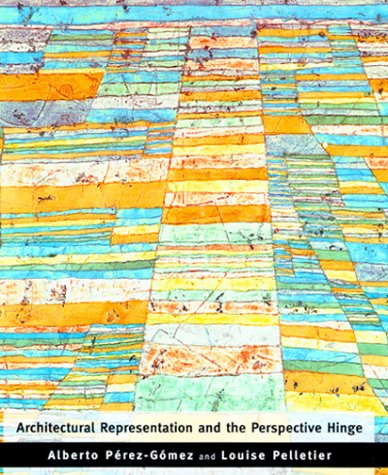
The relationship between the architectural representation and its intended producta buildinghas undergone a profound transformation over the centuries. Before the age of modern technology, the systematically predictive role of architectural drawing so taken for granted today was less dominant in the evolution from architectural idea to built work. The age of computeraided design has brought with it a stricter standard of fidelity. However, contemporary architecture need not simply accept the inevitability of a technological imperative. This book demonstrates that representation is never a neutral tool or mere picture of a future building. Writing from inside the discipline of architecture, rather than from the more common extrapolations from the history of painting and philosophy, Alberto PerezGomez and Louise Pelletier focus on the implications of the tool of perspective (and the hegemony of vision) for architectural representation. Their primary thesis is that tools of representation have a direct influence on the conceptual development of projects and generation of forms, and that there are alternatives to the reductive working methods of most contemporary practice.The book examines textual evidence across a broad historical period, concentrating on the relationship between drawing and architectural space in the period from the seventh to the twentieth century. To understand and evaluate the place of vision in the Western architectural tradition, the book includes a general introduction to optics in antiquity and the Middle Ages and addresses the question of the evolution of linear perspective. This is not, however, a general history of perspective. The book discusses such issues as optical correction and the nature of architectural drawing in selected treatises, revealing the complexity and potential contradiction inherent in any linear history of representation. The authors' ultimate aim is to probe the possibilities of the constructed worldthat is, architectureas a poetic translation, rather than prosaic transcription, of its representations.
⚠️ WARNING (California Proposition 65):
This product may contain chemicals known to the State of California to cause cancer, birth defects, or other reproductive harm.
For more information, please visit www.P65Warnings.ca.gov.
- Q: What is the main focus of 'Architectural Representation and the Perspective Hinge'? A: The book primarily explores the relationship between architectural representation and the evolution of buildings, emphasizing how tools of representation influence conceptual development and form generation.
- Q: Who are the authors of this book? A: The authors are Alberto Perez-Gomez and Louise Pelletier, who provide insights from within the field of architecture.
- Q: What is the publication date of this book? A: The book was published on October 24, 1997.
- Q: What is the condition of the used book being offered? A: The book is in good condition, as indicated in the product details.
- Q: What is the binding type of this book? A: The book is available in hardcover binding.
- Q: How many pages does the book contain? A: The book contains 505 pages.
- Q: What topics are covered in the book? A: The book covers historical perspectives on architectural drawing, optics in antiquity, the evolution of linear perspective, and the complexities of architectural representation.
- Q: Is this book suitable for students of architecture? A: Yes, the book is suitable for architecture students and professionals interested in the historical and theoretical aspects of architectural representation.
- Q: Does the book include illustrations or diagrams? A: While the product details do not specify, books on architectural representation typically include illustrations or diagrams to support the text.
- Q: What edition of the book is being offered? A: This is the first edition of 'Architectural Representation and the Perspective Hinge'.