
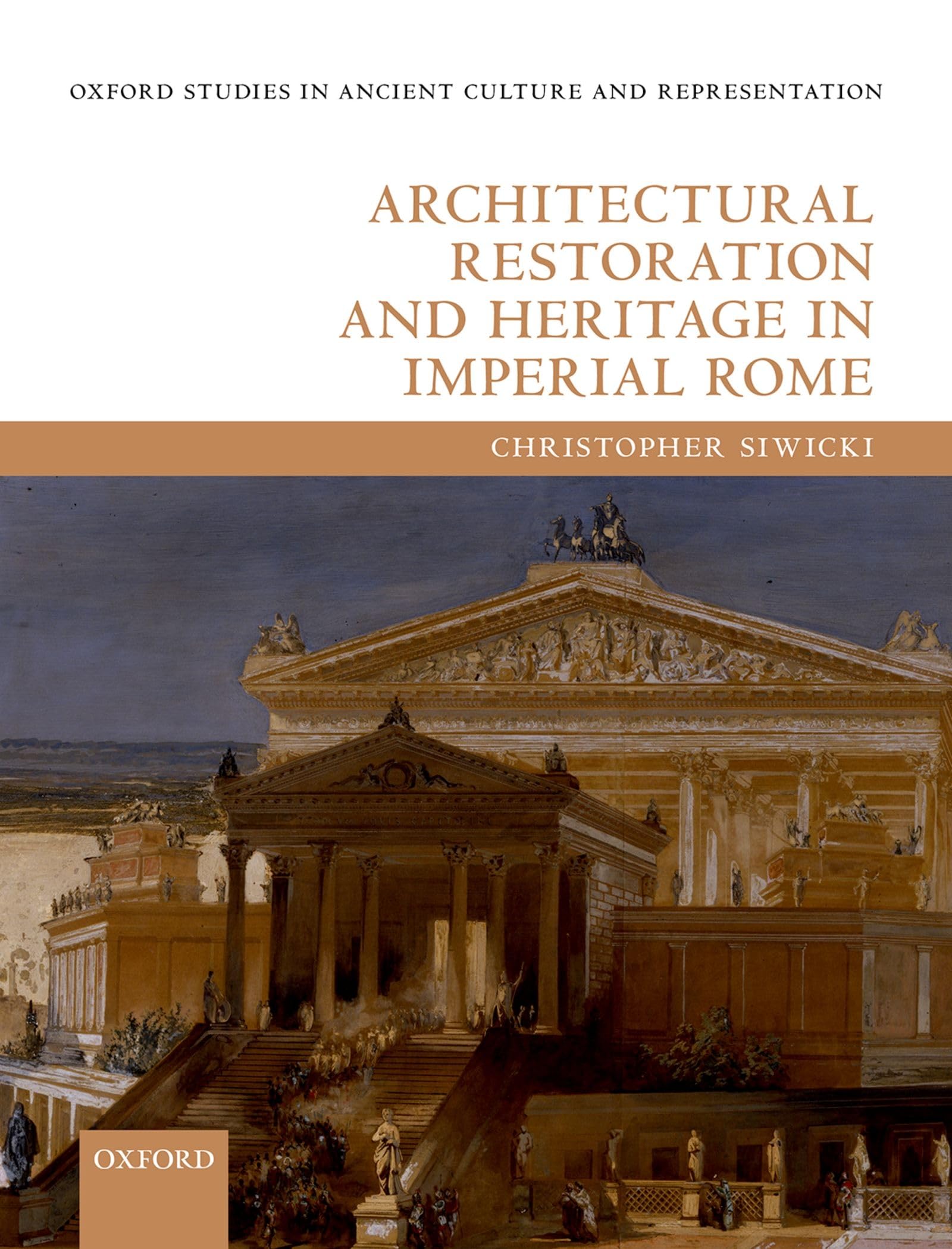
Title
Architectural Restoration and Heritage in Imperial Rome (Oxford Studies in Ancient Culture & Representation),Used
Sold by Ergodebooks, an authorized reseller.
Returns accepted within 30 days | support@ergodebooks.com
Shipping Information
- Free Standard Shipping — United States only
- Processing Time: 3–5 business days
- Estimated Delivery: 6–10 business days after dispatch
- Double-boxed, fully insured & discreetly packaged
- Tracking number sent via email once dispatched
Returns & Refund
Returns accepted within 30 days of delivery.
Damaged or Defective Item
Free return shipping + replacement or full refund
Wrong Item Received
Free return shipping + replacement or full refund
Change of Mind
Return shipping at customer's expense · 25% restocking fee applies
Payment Option

This volume addresses the treatment and perception of historic buildings in Imperial Rome, examining the ways in which public monuments were restored in order to develop an understanding of the Roman concept of built heritage. It considers examples from the first century BC to the second century AD, focusing primarily on the six decades between the Great Fire of AD 64 and the AD 120s, which constituted a period of dramatic urban transformation and architectural innovation in Rome. Through a detailed analysis of the ways in which the design, materiality, and appearance of buildings including the temple of Jupiter Capitolinus and hut of Romulus developed with successive restorations, the case is made for the existence of a consistent approach to the treatment of historic buildings in this period. This study also explores how changes to particular monuments and to the urban fabric as a whole were received by the people who experienced them firsthand, uncovering attitudes to built heritage in Roman society more widely. By examining descriptions of destruction and restoration in literature of the first and second centuries AD, including the works of Seneca the Younger, Pliny the Elder, Martial, Tacitus, and Plutarch, it forms a picture of the conflicting ways in which Rome's inhabitants responded to the redevelopment of their city. The results provide an alternative way of explaining key interventions in Rome's built environment and challenge the idea that heritage is a purely modern phenomenon.
⚠️ WARNING (California Proposition 65):
This product may contain chemicals known to the State of California to cause cancer, birth defects, or other reproductive harm.
For more information, please visit www.P65Warnings.ca.gov.