
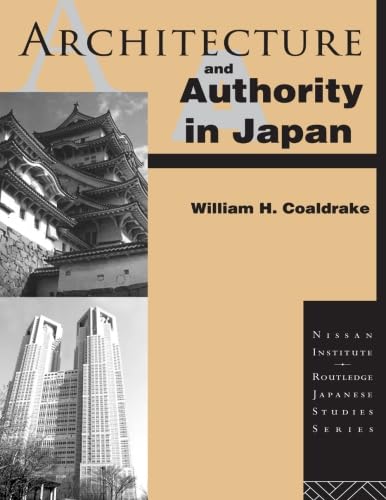
Title
Architecture and Authority in Japan (Nissan Institute/Routledge Japanese Studies),New
Sold by Ergodebooks, an authorized reseller.
Returns accepted within 30 days | support@ergodebooks.com
Shipping Information
- Free Standard Shipping — United States only
- Processing Time: 3–5 business days
- Estimated Delivery: 6–10 business days after dispatch
- Double-boxed, fully insured & discreetly packaged
- Tracking number sent via email once dispatched
Returns & Refund
Returns accepted within 30 days of delivery.
Damaged or Defective Item
Free return shipping + replacement or full refund
Wrong Item Received
Free return shipping + replacement or full refund
Change of Mind
Return shipping at customer's expense · 25% restocking fee applies
Payment Option

First published in 1996. Architecture is one of the most inspired manifestations of Japanese civilization, a pillar of both traditional society and the modern state. The rugged walls of Himeji Castle, the pristine perfection of the Ise Shrine, and the soaring skyscrapers of modern Tokyo are all examples of consummate artistic inspiration harnessed to building technology in the service of religion or the state. These buildings offer a unique opportunity to identify the ideas and institutions of authority, both religious and secular, embodied in built form. William Coaldrake argues that there is a symbiotic relationship between architecture and authority throughout Japanese history. Examination of Nara and Heian palaces, Kamakura temples and Momoyama castles reveals the changing countenance of aristocratic and warrior power. The study also shows how some buildings helped to mould power relations by creating a physical presence to intimidate and subordinate those under imperial and shogunal rule, such as the Palace of Nij o Castle. More recently, Western architectural styles have been used to restructure the way Japan presents itself to the outside world. Relating buildings to the political ambitions and religious beliefs of the age, this book makes a significant contribution to Japanese studies. By examining architecture as an expression of authority, William Coaldrake highlights many defining moments in Japanese history, opening up new avenues for study on both traditional and contemporary Japan.
⚠️ WARNING (California Proposition 65):
This product may contain chemicals known to the State of California to cause cancer, birth defects, or other reproductive harm.
For more information, please visit www.P65Warnings.ca.gov.