If you have any questions, you are always welcome to contact us. We'll get back to you as soon as possible, withing 24 hours on weekdays.
Customer service
All questions about your order, return and delivery must be sent to our customer service team by e-mail at yourstore@yourdomain.com
Sale & Press
If you are interested in selling our products, need more information about our brand or wish to make a collaboration, please contact us at press@yourdomain.com
Help
If you have any questions, you are always welcome to contact us. We'll get back to you as soon as possible, withing 24 hours on weekdays.
Customer service
All questions about your order, return and delivery must be sent to our customer service team by e-mail at yourstore@yourdomain.com
Sale & Press
If you are interested in selling our products, need more information about our brand or wish to make a collaboration, please contact us at press@yourdomain.com
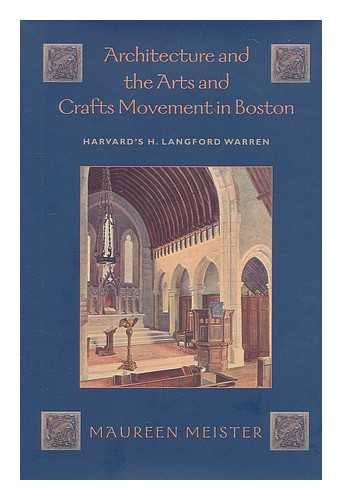
H. Langford Warren (18571917) was an important link in the chain of individuals who contributed to the architectural practice, the theories of design, and the teaching of architectural history in the United States in the early twentieth century. Best known in the Boston area, Warren first worked under the renowned architect Henry Hobson Richardson before establishing his own practice. Friends and colleagues during this period included Charles Eliot Norton, the noted art historian, and Harvard's Charles Herbert Moore, a leading Ruskinian painter. Hired by Harvard University in 1893, Warren developed its architectural curriculum. In 1897 he helped found Boston's Society of Arts and Crafts. At the time of his death in 1917, Warren was Dean of the School of Architecture at Harvard and President of the Society of Arts and Crafts.Following the ideals of John Ruskin, William Morris, and later leaders of the English Arts and Crafts movement, Warren along with his architectcolleagues promoted a close collaboration with the craftsmen who enhanced the buildings they designed. The resulting building designs represent a significant contribution to the development of American Arts and Crafts architecture, complementing the protomodern work of designers such as Frank Lloyd Wright. In fact, Arts and Crafts architecture in North America was extremely diverse. Meister examines the complexity of this architecture by exploring the eclectic historicism of Warren, a key figure in the movement that was centered in Boston.
⚠️ WARNING (California Proposition 65):
This product may contain chemicals known to the State of California to cause cancer,
birth defects, or other reproductive harm.
For MAP (Minimum Advertised Price) violations and Intellectual Property (IP) or Trademark concerns, please contact:
support@ergodebooks.com
⚠️ California Proposition 65 Warning: Some products sold on this website may expose you to chemicals known to the State of California to cause cancer, birth defects, or other reproductive harm. For more information, visit www.P65Warnings.ca.gov.