If you have any questions, you are always welcome to contact us. We'll get back to you as soon as possible, withing 24 hours on weekdays.
Customer service
All questions about your order, return and delivery must be sent to our customer service team by e-mail at yourstore@yourdomain.com
Sale & Press
If you are interested in selling our products, need more information about our brand or wish to make a collaboration, please contact us at press@yourdomain.com
Help
If you have any questions, you are always welcome to contact us. We'll get back to you as soon as possible, withing 24 hours on weekdays.
Customer service
All questions about your order, return and delivery must be sent to our customer service team by e-mail at yourstore@yourdomain.com
Sale & Press
If you are interested in selling our products, need more information about our brand or wish to make a collaboration, please contact us at press@yourdomain.com
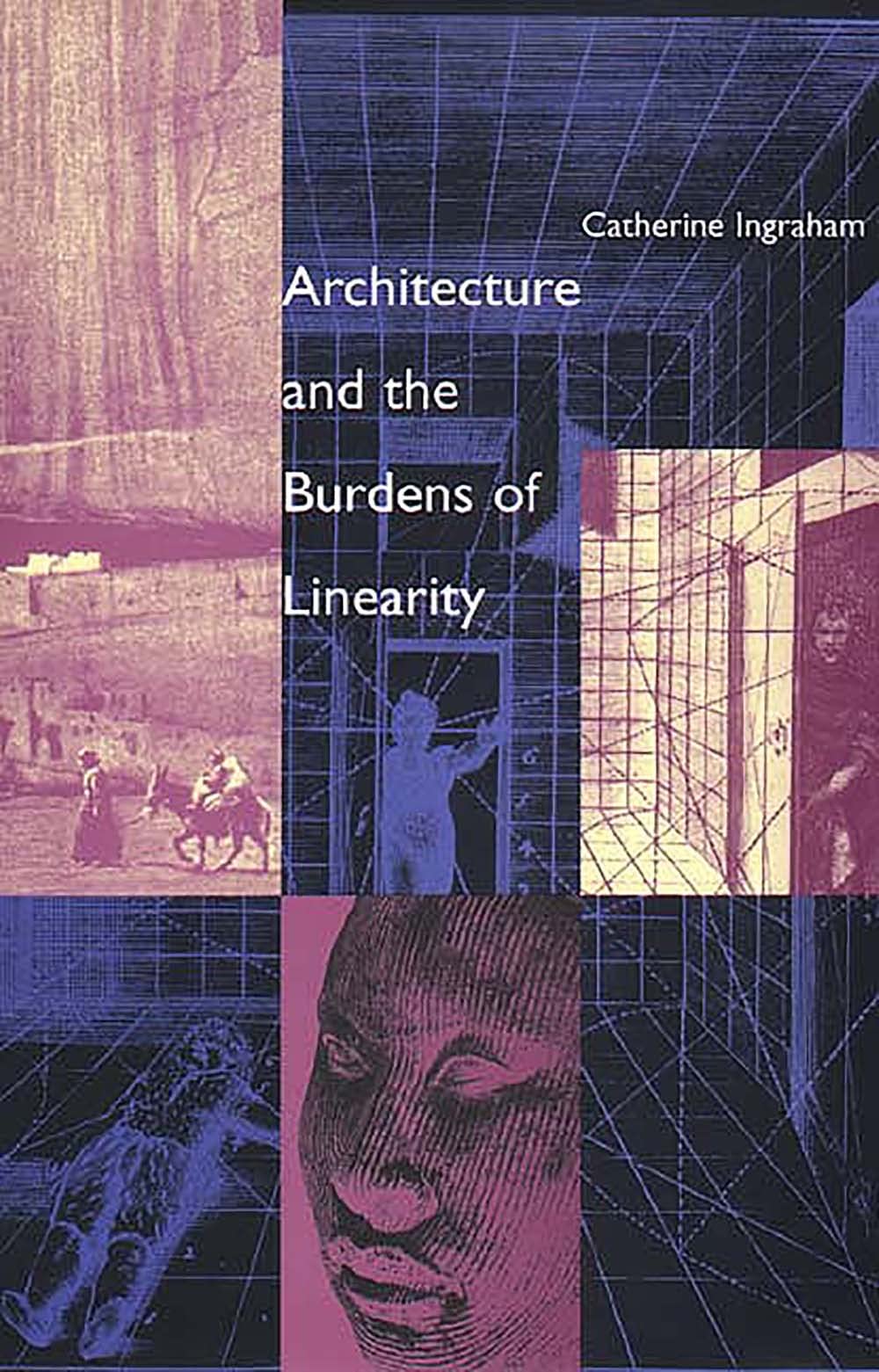
In this suggestive inquiry into the operations of linearity in architectural theory and practice, Catherine Ingraham investigates the line as both a conceptual and literal force in architecture. She approaches her subject from philosophical, theoretical, practical, and historical points of view, finding the following points of convergence: architectures relation to property, politics, and economy; architectures relation to propriety and the need to keep things 'in line'; and architectures relation to the proper name, human identity, object identity, and spatial location and demarcation.In this engaging discussion, Ingraham considers maps, architectural plans, the laws of geometry, systems of architectural knowledge, and mythologies of architectural origin in work by Le Corbusier, Vitruvius, Alberti, Tafuri, Derrida, LviStrauss, Shakespeare, Lacan, Deleuze, Rilke, and Stendhal. Entering the current complex debates about the relation between theory and practice in architecture, the author also addresses themes in psychoanalytic criticism, poststructural theory, and feminist criticism. Her examination thus moves beyond architecture and its literal structures to the notion of epistemological structure that architecture as a discipline and practice upholds and promotes.Theoretical Perspectives in Architectural History and Criticism SeriesMark Rakatansky, Editor
⚠️ WARNING (California Proposition 65):
This product may contain chemicals known to the State of California to cause cancer,
birth defects, or other reproductive harm.
For MAP (Minimum Advertised Price) violations and Intellectual Property (IP) or Trademark concerns, please contact:
support@ergodebooks.com
⚠️ California Proposition 65 Warning: Some products sold on this website may expose you to chemicals known to the State of California to cause cancer, birth defects, or other reproductive harm. For more information, visit www.P65Warnings.ca.gov.