
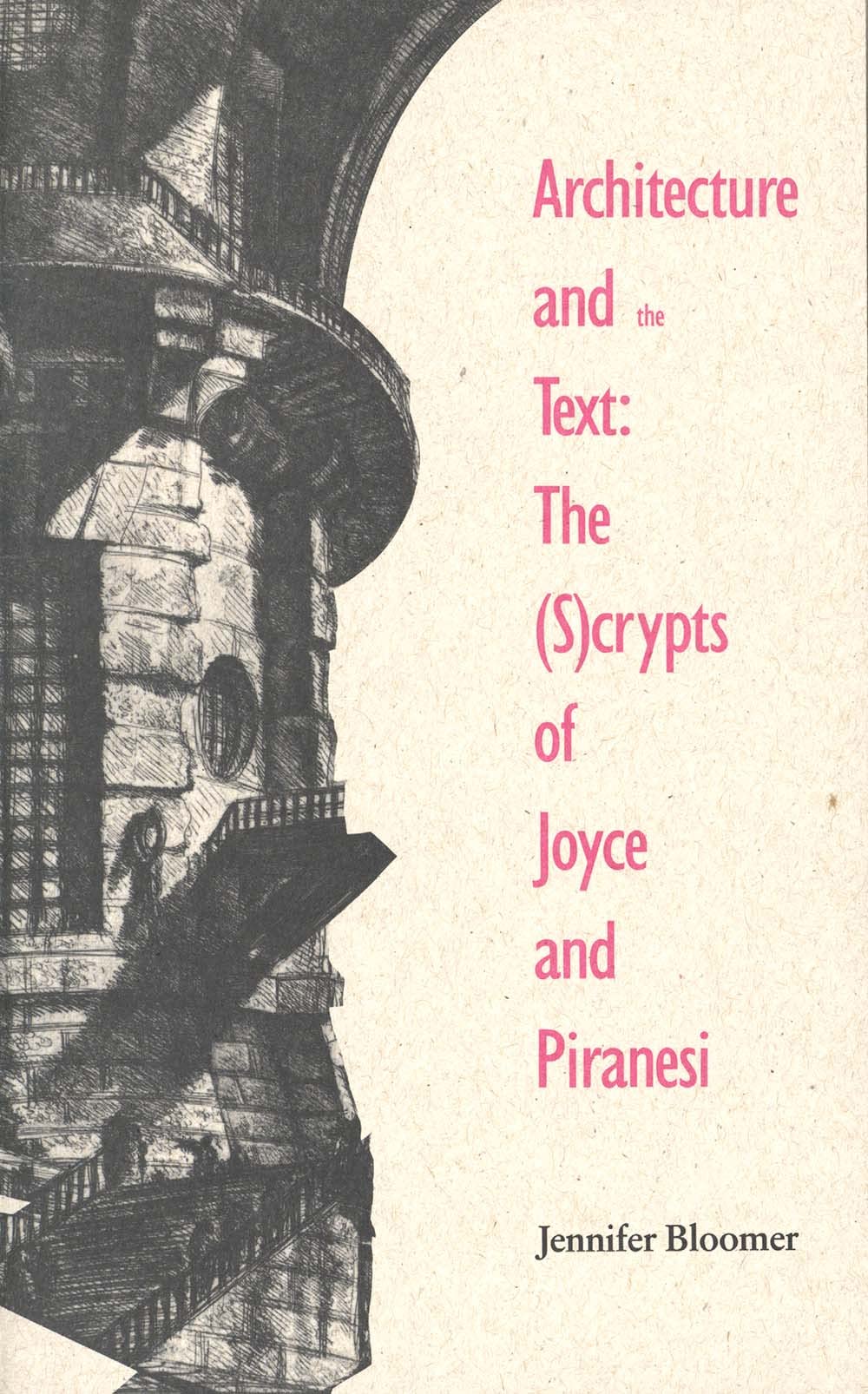
Title

Architecture And The Text: The (S)Crypts Of Joyce And Piranesi (Theoretical Perspectives In Architectural History And Criticism
Sold by Ergodebooks, an authorized reseller.
Returns accepted within 30 days | support@ergodebooks.com
Shipping Information
- Free Standard Shipping — United States only
- Processing Time: 3–5 business days
- Estimated Delivery: 6–10 business days after dispatch
- Double-boxed, fully insured & discreetly packaged
- Tracking number sent via email once dispatched
Returns & Refund
Returns accepted within 30 days of delivery.
Damaged or Defective Item
Free return shipping + replacement or full refund
Wrong Item Received
Free return shipping + replacement or full refund
Change of Mind
Return shipping at customer's expense · 25% restocking fee applies
Payment Option

In This Profoundly Original Book, Jennifer Bloomer Addresses Important Philosophical Questions Concerning The Relation Between Writing And Architecture. Drawing Together Two Cultural Fantasies From Different Periodsone Literary And One Architecturalbloomer Uses The Allegorical Strategies She Finds In James Joyce'S Finnegans Wake To Analyze Three Works Of Giambattista Piranesi (Campo Marzio, Collegio, And The Carceri). Bloomer Argues That Architecture Is A System Of Representation, With Signifying Possibilities That Go Beyond The Merely Symbolic.Bloomer Reads The Texts And Ideas Of Joyce And Piranesi Against One Another, Further Illuminating Them With Insights From Myth, Religion, Linguistics, Film Theory, Nursery Rhymes, And Personal Anecdotes, As Well As From Poststructuralist, Marxist, And Feminist Criticism. Combining The Strategies Of Finnegans Wake, Which Joyce Himself Called Architectural, With Conventional Strategies Of Architectural Thinking, Bloomer Creates A New Way Of Thinking Architecturally That Is Not Dominated By Linear Models And That Appropriates Ideas, Parts, And Theoretical Frameworks From Many Other Disciplines. Demonstrating Her Argument By Dramatic Example, Bloomer'S Treatiselike Joyce'S Wordplay And Piranesi'S Play With Visual Representationoffers The Pleasure Of Ongoing Discovery.
⚠️ WARNING (California Proposition 65):
This product may contain chemicals known to the State of California to cause cancer, birth defects, or other reproductive harm.
For more information, please visit www.P65Warnings.ca.gov.
- Q: How many pages does this book have? A: This book has two hundred forty pages. It offers a comprehensive exploration of the relationship between writing and architecture.
- Q: What is the binding type of this book? A: The binding type is paperback. This makes it lightweight and easy to handle.
- Q: What are the dimensions of this book? A: The dimensions are five point forty-five inches in length, zero point sixty-three inches in width, and eight point eighty-six inches in height. These measurements make it a convenient size for reading.
- Q: Who is the author of this book? A: The author is Jennifer Bloomer. She provides a unique perspective by connecting literature and architecture.
- Q: What is the genre of this book? A: This book falls under the category of Criticism. It critically analyzes the works of Joyce and Piranesi.
- Q: How do I approach reading this book? A: You can start by familiarizing yourself with the works of James Joyce and Giambattista Piranesi. This will enhance your understanding of Bloomer's arguments.
- Q: Is this book suitable for beginners in architectural theory? A: Yes, this book is suitable for beginners. Bloomer presents complex ideas in an accessible manner.
- Q: What themes are explored in this book? A: The book explores themes of representation, allegory, and the interplay between architecture and literature. It draws connections across various disciplines.
- Q: How should I care for this paperback book? A: To care for this paperback book, keep it in a dry place and avoid exposing it to direct sunlight. This will help preserve its condition.
- Q: Can I store this book on a bookshelf? A: Yes, you can store this book on a bookshelf. Ensure it is upright to prevent any bending of the cover or pages.
- Q: What if the book arrives damaged? A: If the book arrives damaged, you can contact the seller for a return or replacement. Make sure to keep the packaging for easier processing.
- Q: Are there any special shipping considerations for this book? A: No, there are no special shipping considerations. It can be shipped like any standard paperback book.
- Q: How does this book compare to other architectural criticism works? A: This book offers a unique blend of literary analysis and architectural criticism, distinguishing itself from other works that may focus solely on one aspect.
- Q: Is there a specific audience for this book? A: Yes, this book targets readers interested in architectural criticism and literary analysis. It appeals to both academics and casual readers.
- Q: What are the key takeaways from this book? A: Key takeaways include the relationship between text and architecture and innovative approaches to understanding representation. Bloomer encourages interdisciplinary thinking.
- Q: What if I have more questions after reading? A: If you have more questions after reading, consider reaching out to online forums or academic groups that focus on architectural theory for further discussion.