If you have any questions, you are always welcome to contact us. We'll get back to you as soon as possible, withing 24 hours on weekdays.
Customer service
All questions about your order, return and delivery must be sent to our customer service team by e-mail at yourstore@yourdomain.com
Sale & Press
If you are interested in selling our products, need more information about our brand or wish to make a collaboration, please contact us at press@yourdomain.com
Help
If you have any questions, you are always welcome to contact us. We'll get back to you as soon as possible, withing 24 hours on weekdays.
Customer service
All questions about your order, return and delivery must be sent to our customer service team by e-mail at yourstore@yourdomain.com
Sale & Press
If you are interested in selling our products, need more information about our brand or wish to make a collaboration, please contact us at press@yourdomain.com
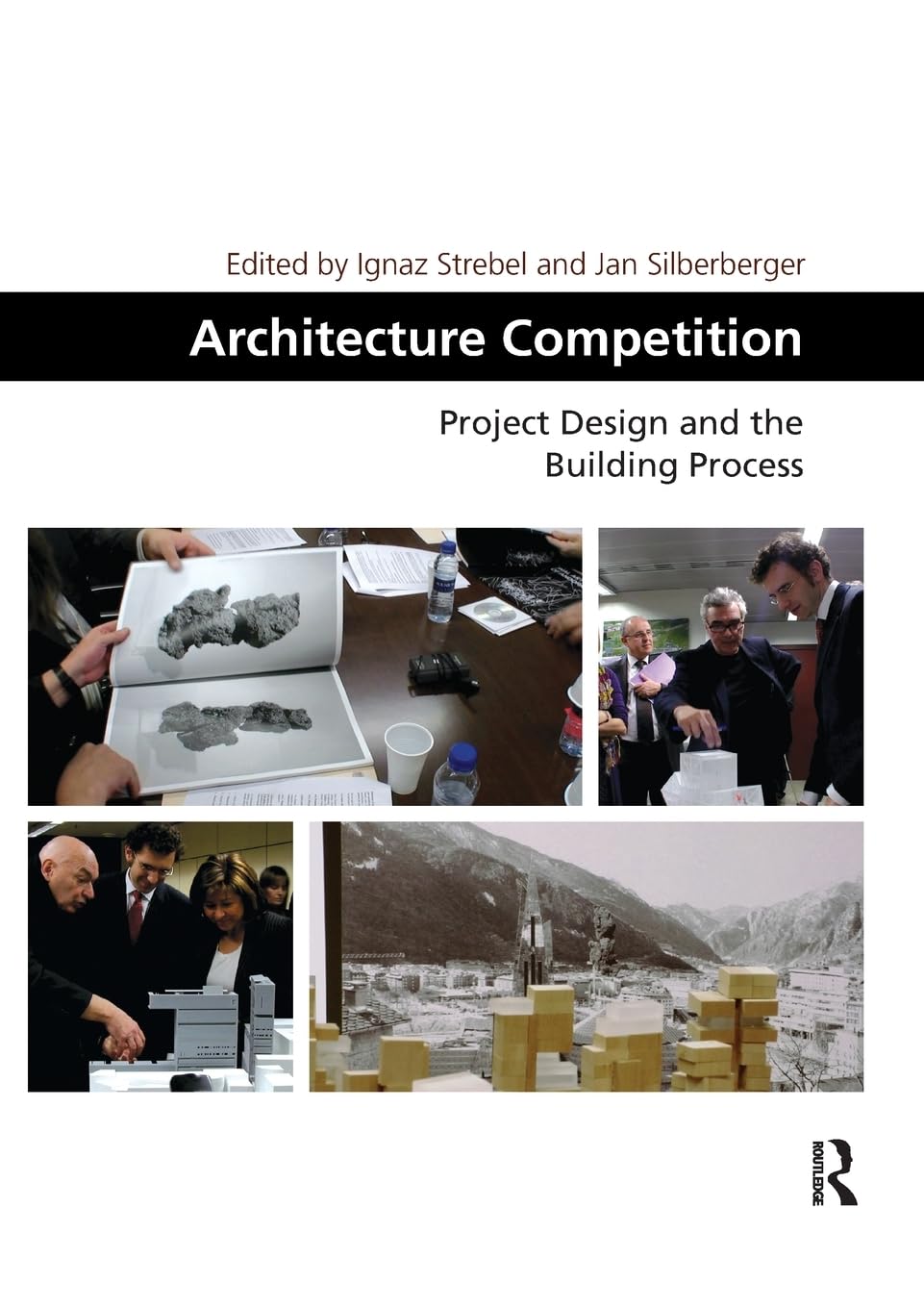
Much valued by design professionals, controversially discussed in the media, regularly misunderstood by the public and systematically regulated by public procurement; in recent years, architecture competitions have become projection screens for various and often incommensurable desires and hopes.Almost all texts on architectural competition engage it for particular reasons, whether these be for celebration of the procedure, or dismissal. Moving on from such polarised views, Architecture Competition is a revelatory study on what really happens when competitions take place. But the story is not just about architecture and design; it is about the whole construction process, from the definition of the spatial programme, to judgement and selection of projects and the realization of the building.This book explores the competition in the building process as it takes place, but also before and after its execution. It demonstrates that competitions are not just one step of many to be taken, but that competitive design procedures shape the entire process. Along the way the book exposes, among others, one of the key evolutions of design competitions that competition procedures need to be regulated in order to respond to public awarding rules and need to integrate an increasing amount of given standards regarding, for example, efficiency, fire safety and thermal comfort. These notions force competing architects to respond to inflexible and overloaded competition programmes instead of focusing on genuinely crafting an architectural project.If the architecture competition wants to be more highly valued as a design tool, it should pay attention to the iterative nature of design and to the fact that perspectives on the problem often change in process.
⚠️ WARNING (California Proposition 65):
This product may contain chemicals known to the State of California to cause cancer,
birth defects, or other reproductive harm.
For MAP (Minimum Advertised Price) violations and Intellectual Property (IP) or Trademark concerns, please contact:
support@ergodebooks.com
⚠️ California Proposition 65 Warning: Some products sold on this website may expose you to chemicals known to the State of California to cause cancer, birth defects, or other reproductive harm. For more information, visit www.P65Warnings.ca.gov.