
Title
Architecture: Form, Space, and Order,Used
Sold by Ergodebooks, an authorized reseller.
Returns accepted within 30 days | support@ergodebooks.com
Shipping Information
- Free Standard Shipping — United States only
- Processing Time: 3–5 business days
- Estimated Delivery: 6–10 business days after dispatch
- Double-boxed, fully insured & discreetly packaged
- Tracking number sent via email once dispatched
Returns & Refund
Returns accepted within 30 days of delivery.
Damaged or Defective Item
Free return shipping + replacement or full refund
Wrong Item Received
Free return shipping + replacement or full refund
Change of Mind
Return shipping at customer's expense · 25% restocking fee applies
Payment Option

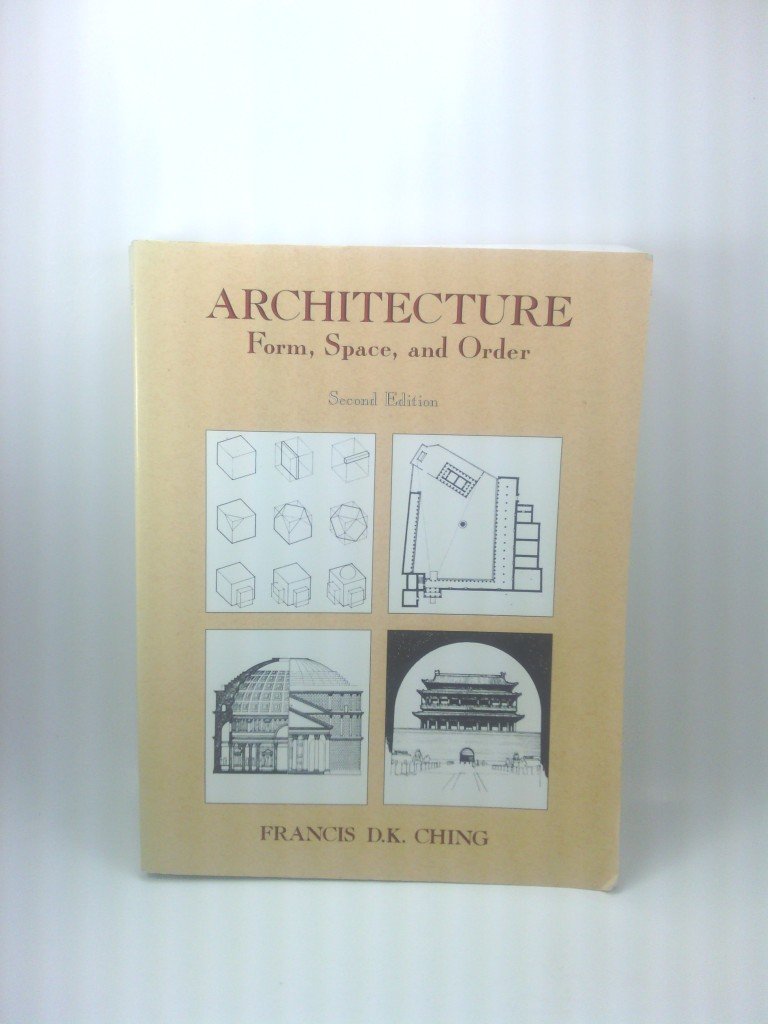
The Second Edition of this classic introduction to the principles of architecture is everything you would expect from the celebrated architect, author, and illustrator, Francis D. K. Ching. Each page has been meticulously revised to incorporate contemporary examples of the principles of form, space, and orderthe fundamental vocabulary of every designer. The result is a beautifully illustrated volume that embraces today's forms and looks at conventional models with a fresh perspective. Here, Ching examines every principal of architecture, juxtaposing images that span centuries and cross cultural boundaries to create a design vocabulary that is both elemental and timeless. Among the topics covered are point, line, plane, volume, proportion, scale, circulation, and the interdependence of form and space. While this revision continues to be a comprehensive primer on the ways form and space are interrelated and organized in the shaping of our environment, it has been refined to amplify and clarify concepts. In addition, the Second Edition contains:* Numerous new handrendered drawings* Expanded sections on openings and scale* Expanded chapter on design principles* New glossary and index categorized by the author* New 8 1/2 11 upright trimIn the Second Edition of Architecture: Form, Space, and Order, the author has opted for a larger format and crisper images. Mr. Ching has retained the style of his handlettered text, a hallmark of each of his books. This rich source of architectural prototypes, each rendered in Mr. Ching's signature style, also serves as a guide to architectural drawing. Doubtless, many will want this handsome volume for the sheer beauty of it. Architects and students alike will treasure this book for its wealth of practical information and its precise illustrations. Mr. Ching has once again created a visual reference that illuminates the world of architectural form.
⚠️ WARNING (California Proposition 65):
This product may contain chemicals known to the State of California to cause cancer, birth defects, or other reproductive harm.
For more information, please visit www.P65Warnings.ca.gov.
- Q: What are the dimensions of the book? A: The book measures eight and a half inches by ten and three quarters inches. It has a thickness of one inch.
- Q: How many pages does this book have? A: The book contains four hundred sixteen pages. These pages are filled with illustrations and architectural principles.
- Q: What type of binding does this book have? A: This book is bound in paperback. This makes it lightweight and portable for easy reading.
- Q: Who is the author of this book? A: The author is Francis D.K. Ching. He is well-known for his contributions to architectural education.
- Q: What is the genre of this book? A: This book falls under the category of architectural design and education. It serves as an introductory text for principles of architecture.
- Q: Is this book suitable for beginners? A: Yes, this book is suitable for beginners. It serves as a comprehensive primer on architectural concepts.
- Q: Can advanced students benefit from this book? A: Yes, advanced students can benefit from this book. It provides valuable insights and refined concepts for deeper understanding.
- Q: How do I read this book effectively? A: To read this book effectively, start by reviewing the glossary and index. This will help you locate specific concepts and principles.
- Q: Is this book appropriate for children? A: Yes, this book is appropriate for older children interested in architecture. However, younger children may need guidance while reading.
- Q: How should I store this book? A: Store this book in a cool, dry place, away from direct sunlight. This will help preserve the illustrations and binding.
- Q: Can I clean the book if it gets dirty? A: Yes, you can clean the book gently. Use a soft, dry cloth to remove dust and avoid using water or cleaning agents.
- Q: What if the book arrives damaged? A: If the book arrives damaged, please contact customer support for assistance. They can guide you on how to return or exchange it.
- Q: Is there a warranty for this book? A: No, there is typically no warranty for books. However, you may be able to return it if it is defective.
- Q: What if I need help with architectural concepts from the book? A: If you need help, consider joining a study group or online forum. Engaging with peers can enhance your understanding of architectural concepts.
- Q: Are there any additional resources recommended with this book? A: Yes, you may want to explore online architectural databases or other texts by Francis D.K. Ching for further learning.
- Q: How often should I refer back to this book during my studies? A: Refer back to this book frequently as it serves as a valuable reference guide. It can deepen your understanding of architectural principles.