
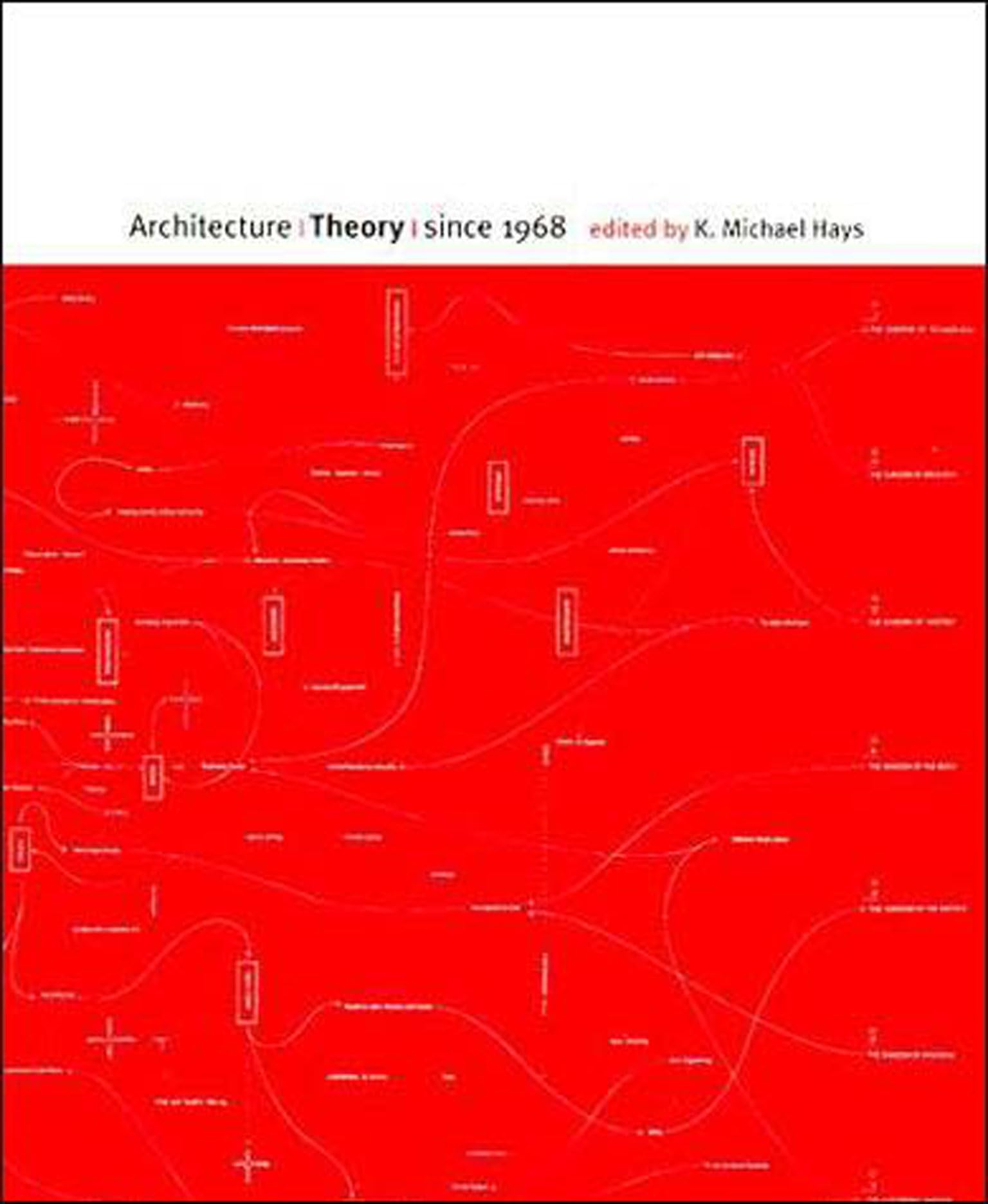
Title
Architecture Theory since 1968,Used
Sold by Ergodebooks, an authorized reseller.
Returns accepted within 30 days | support@ergodebooks.com
Shipping Information
- Free Standard Shipping — United States only
- Processing Time: 3–5 business days
- Estimated Delivery: 6–10 business days after dispatch
- Double-boxed, fully insured & discreetly packaged
- Tracking number sent via email once dispatched
Returns & Refund
Returns accepted within 30 days of delivery.
Damaged or Defective Item
Free return shipping + replacement or full refund
Wrong Item Received
Free return shipping + replacement or full refund
Change of Mind
Return shipping at customer's expense · 25% restocking fee applies
Payment Option

An anthology of the pivotal theoretical texts that have defined architecture culture in the late twentieth century.In the discussion of architecture, there is a prevailing sentiment that, since 1968, cultural production in its traditional sense can no longer be understood to rise spontaneously, as a matter of social course, but must now be constructed through ever more selfconscious theoretical procedures. The development of interpretive modes of various stripespoststructuralist, Marxian, phenomenological, psychoanalytic, as well as others dissenting or eccentrichas given scholars a range of tools for rethinking architecture in relation to other fields and for reasserting architectures general importance in intellectual discourse.This anthology presents fortyseven of the primary texts of architecture theory, introducing each with an explication of the concepts and categories necessary for its understanding and evaluation. It also presents twelve documents of projects or events that had major theoretical repercussions for the period. Several of the essays appear here in English for the first time.ContributorsDiana Agrest, Stanford Anderson, Archizoom, George Baird, Jennifer Bloomer, Massimo Cacciari, JeanLouis Cohen, Beatriz Colomina, Alan Colquhoun, Maurice Culot, Jacques Derrida, Ignasi de SolMorales, Peter Eisenman, Robin Evans, Michel Foucault, Kenneth Frampton, Mario Gandelsonas, Frank Gehry, Jrgen Habermas, John Hejduk, Denis Hollier, Bernard Huet, Catherine Ingraham, Fredric Jameson, Charles A. Jencks, Jeffrey Kipnis, Fred Koetter, Rem Koolhaas, Leon Krier, Sanford Kwinter, Henri Lefebvre, Daniel Libeskind, Mary McLeod, Alberto PrezGmez, Jos Quetglas, Aldo Rossi, Colin Rowe, Massimo Scolari, Denise Scott Brown, Robert Segrest, Jorge Silvetti, Robert Somol, Martin Steinmann, Robert A. M. Stern, James Stirling, Manfredo Tafuri, Georges Teyssot, Bernard Tschumi, Anthony Vidler, Paul Virilio, Mark Wigley
⚠️ WARNING (California Proposition 65):
This product may contain chemicals known to the State of California to cause cancer, birth defects, or other reproductive harm.
For more information, please visit www.P65Warnings.ca.gov.
- Q: What is the page count of 'Architecture Theory since 1968'? A: The book contains eight hundred twenty-four pages. This extensive anthology features pivotal texts in architecture theory.
- Q: What are the dimensions of 'Architecture Theory since 1968'? A: The book measures ten point five one inches in length, seven point five two inches in width, and one point seven seven inches in height.
- Q: What type of binding does 'Architecture Theory since 1968' have? A: The book is available in paperback binding. This makes it flexible and easy to handle for readers.
- Q: Who is the author of 'Architecture Theory since 1968'? A: The author is K. Michael Hays. He is a noted scholar in the field of architecture.
- Q: What is the main focus of 'Architecture Theory since 1968'? A: The book focuses on the pivotal theoretical texts that have shaped architecture culture since nineteen sixty-eight.
- Q: How do I use 'Architecture Theory since 1968' for my studies? A: You can use this anthology as a foundational text for understanding contemporary architectural theory. It provides insights into various interpretive modes.
- Q: Is 'Architecture Theory since 1968' suitable for beginners? A: Yes, the anthology is suitable for both beginners and advanced scholars. It introduces key concepts necessary for understanding architecture theory.
- Q: What kind of theoretical perspectives are included in the book? A: The book includes perspectives such as post-structuralist, Marxian, and phenomenological theories. These diverse viewpoints offer a comprehensive understanding of architecture.
- Q: How should I care for 'Architecture Theory since 1968'? A: To care for the book, store it in a cool, dry place and avoid exposure to direct sunlight. This will help preserve its condition.
- Q: Are there any special storage instructions for this book? A: Yes, it's best to keep it upright on a shelf to prevent warping. Ensure it is placed away from moisture.
- Q: What if 'Architecture Theory since 1968' arrives damaged? A: If the book arrives damaged, you should contact the seller for return instructions. Most retailers provide options for returning defective items.
- Q: Can I return 'Architecture Theory since 1968' if I'm not satisfied? A: Yes, you can typically return the book if you are not satisfied. Check the retailer's return policy for specific details.
- Q: How do I find specific essays in 'Architecture Theory since 1968'? A: You can refer to the table of contents to locate specific essays. The anthology is well-organized for easy navigation.
- Q: Are any essays in the book published in English for the first time? A: Yes, several essays in this anthology appear in English for the first time, enhancing its significance for readers.
- Q: What is the target audience for 'Architecture Theory since 1968'? A: The target audience includes students, scholars, and professionals interested in architecture and its theoretical frameworks.
- Q: Does 'Architecture Theory since 1968' include contributions from notable figures? A: Yes, the anthology features contributions from renowned figures like Jacques Derrida and Frank Gehry, offering diverse insights into architecture theory.