
Title
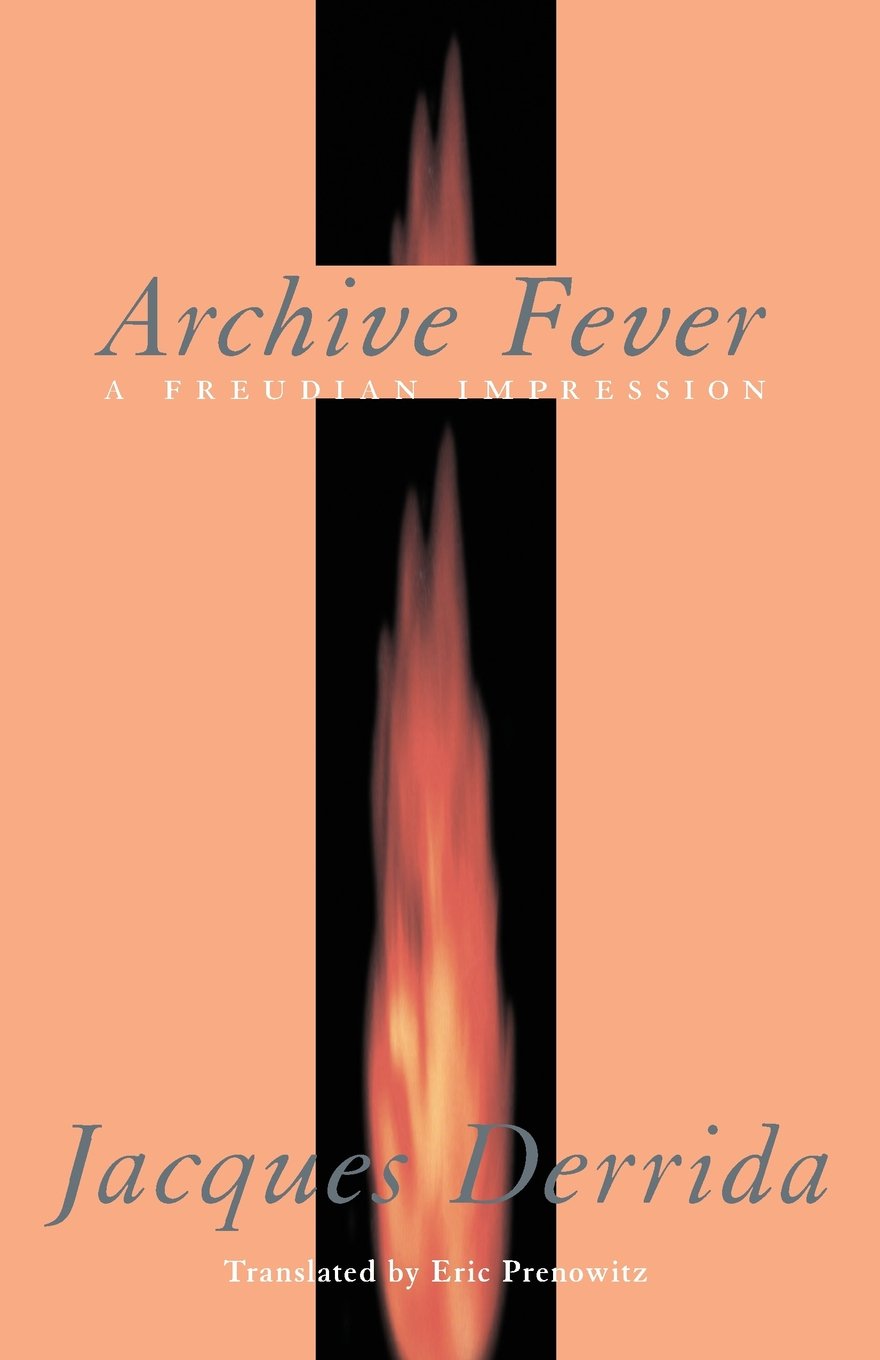
Archive Fever: A Freudian Impression (Religion And Postmodernism),New
Sold by Ergodebooks, an authorized reseller.
Returns accepted within 30 days | support@ergodebooks.com
Shipping Information
- Free Standard Shipping — United States only
- Processing Time: 3–5 business days
- Estimated Delivery: 6–10 business days after dispatch
- Double-boxed, fully insured & discreetly packaged
- Tracking number sent via email once dispatched
Returns & Refund
Returns accepted within 30 days of delivery.
Damaged or Defective Item
Free return shipping + replacement or full refund
Wrong Item Received
Free return shipping + replacement or full refund
Change of Mind
Return shipping at customer's expense · 25% restocking fee applies
Payment Option

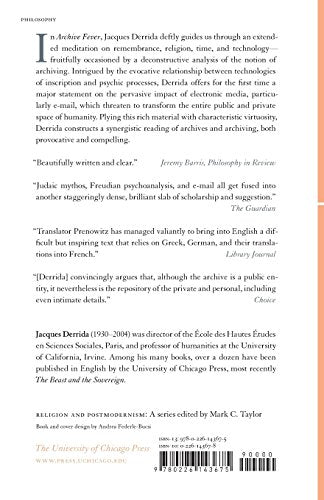
In Archive Fever, Jacques Derrida Deftly Guides Us Through An Extended Meditation On Remembrance, Religion, Time, And Technologyfruitfully Occasioned By A Deconstructive Analysis Of The Notion Of Archiving. Intrigued By The Evocative Relationship Between Technologies Of Inscription And Psychic Processes, Derrida Offers For The First Time A Major Statement On The Pervasive Impact Of Electronic Media, Particularly Email, Which Threaten To Transform The Entire Public And Private Space Of Humanity. Plying This Rich Material With Characteristic Virtuosity, Derrida Constructs A Synergistic Reading Of Archives And Archiving, Both Provocative And Compelling.'Judaic Mythos, Freudian Psychoanalysis, And Email All Get Fused Into Another Staggeringly Dense, Brilliant Slab Of Scholarship And Suggestion.'The Guardian'[Derrida] Convincingly Argues That, Although The Archive Is A Public Entity, It Nevertheless Is The Repository Of The Private And Personal, Including Even Intimate Details.'Choice'Beautifully Written And Clear.'Jeremy Barris, Philosophy In Review'Translator Prenowitz Has Managed Valiantly To Bring Into English A Difficult But Inspiring Text That Relies On Greek, German, And Their Translations Into French.'Library Journal
⚠️ WARNING (California Proposition 65):
This product may contain chemicals known to the State of California to cause cancer, birth defects, or other reproductive harm.
For more information, please visit www.P65Warnings.ca.gov.
- Q: How many pages are in the book 'Archive Fever'? A: The book contains one hundred twenty-eight pages. This concise length allows for a focused exploration of complex themes.
- Q: What are the dimensions of 'Archive Fever'? A: The dimensions are five point five one inches in length, zero point six inches in width, and eight point five inches in height. This size makes it a portable paperback.
- Q: What type of binding does 'Archive Fever' have? A: It has a paperback binding. This type of binding is lightweight and flexible, making it easy to carry.
- Q: Who is the author of 'Archive Fever'? A: The author is Jacques Derrida. He is a renowned philosopher known for his work in deconstruction and postmodern thought.
- Q: What genre does 'Archive Fever' belong to? A: The book is categorized under Deconstruction. It engages deeply with philosophy, memory, and the impact of technology.
- Q: Is 'Archive Fever' suitable for beginners in philosophy? A: Yes, it can be suitable for beginners. The book presents complex ideas in an accessible manner, inviting readers to explore difficult concepts.
- Q: How does one read 'Archive Fever' effectively? A: To read it effectively, take your time to reflect on the themes presented. Consider taking notes on key concepts to enhance understanding.
- Q: Is 'Archive Fever' appropriate for all age groups? A: Yes, it is appropriate for mature readers, including those in higher education. Themes may resonate more with adults and students studying literature or philosophy.
- Q: How should I store 'Archive Fever' to keep it in good condition? A: Store it in a cool, dry place away from direct sunlight. This will help maintain the quality of the paperback binding and pages.
- Q: How do I clean the book's cover if it gets dirty? A: Wipe the cover gently with a soft, dry cloth. Avoid using water or cleaning agents to prevent damage to the material.
- Q: What should I do if 'Archive Fever' arrives damaged? A: If it arrives damaged, contact the seller for a return or exchange. Most sellers have policies in place for such issues.
- Q: Can I return 'Archive Fever' if I'm not satisfied? A: Yes, you can usually return it within a specified time frame. Check the seller's return policy for specific details.
- Q: Is there a warranty on 'Archive Fever'? A: No, books typically do not come with a warranty. However, retailers may offer return policies.
- Q: How does 'Archive Fever' compare to other philosophical works? A: It offers a unique perspective by blending Freudian analysis with contemporary technology. This sets it apart from other philosophical texts.
- Q: Is there any specific audience that would benefit more from reading 'Archive Fever'? A: Students and scholars in philosophy, literature, and cultural studies may find it particularly beneficial. Its insights are profound for those examining modernity.