If you have any questions, you are always welcome to contact us. We'll get back to you as soon as possible, withing 24 hours on weekdays.
Customer service
All questions about your order, return and delivery must be sent to our customer service team by e-mail at yourstore@yourdomain.com
Sale & Press
If you are interested in selling our products, need more information about our brand or wish to make a collaboration, please contact us at press@yourdomain.com
Help
If you have any questions, you are always welcome to contact us. We'll get back to you as soon as possible, withing 24 hours on weekdays.
Customer service
All questions about your order, return and delivery must be sent to our customer service team by e-mail at yourstore@yourdomain.com
Sale & Press
If you are interested in selling our products, need more information about our brand or wish to make a collaboration, please contact us at press@yourdomain.com
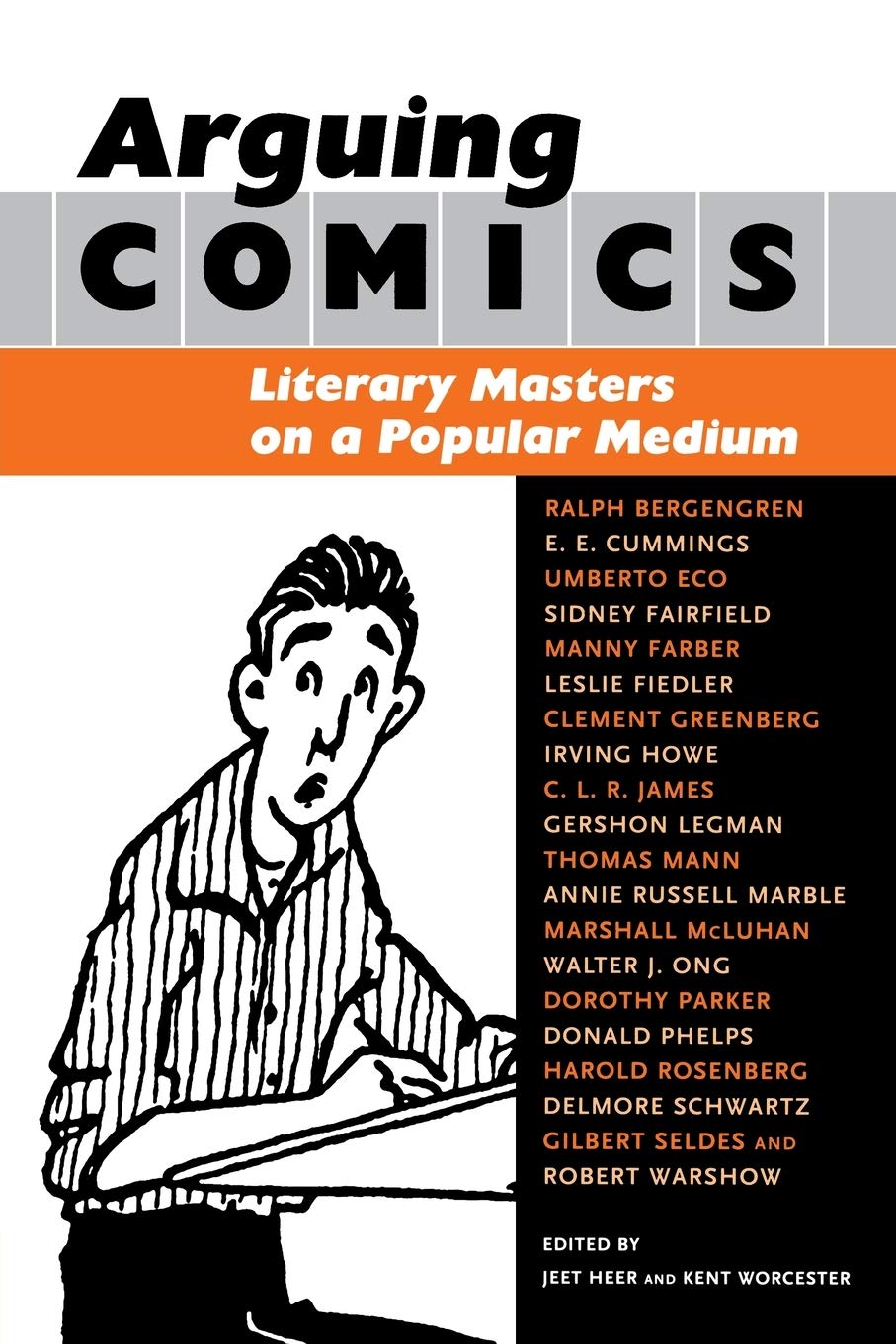
When Art Spiegelman's Mausa twopart graphic novel about the Holocaustwon a Pulitzer Prize in 1992, comics scholarship grew increasingly popular and notable. The rise of serious comics has generated growing levels of interest as scholars, journalists, and public intellectuals continue to explore the history, aesthetics, and semiotics of the comics medium.Yet those who write about the comics often assume analysis of the medium didn't begin until the cultural studies movement was underway. Arguing Comics: Literary Masters on a Popular Medium brings together nearly two dozen essays by major writers and intellectuals who analyzed, embraced, and even attacked comic strips and comic books in the period between the turn of the century and the 1960s. From e. e. cummings, who championed George Herriman's Krazy Kat, to Irving Howe, who fretted about Harold Gray's Little Orphan Annie, this volume shows that comics have provided a key battleground in the culture wars for over a century.With substantive essays by Umberto Eco, Marshall McLuhan, Leslie Fiedler, Gilbert Seldes, Dorothy Parker, Irving Howe, Delmore Schwartz, and others, this anthology shows how all of these writers took up comicsrelated topics as a point of entry into wider debates over modern art, cultural standards, daily life, and mass communication.Arguing Comics shows how prominent writers from the Jazz Age and the Depression era to the heyday of the New York Intellectuals in the 1950s thought about comics and, by extension, popular culture as a whole.
⚠️ WARNING (California Proposition 65):
This product may contain chemicals known to the State of California to cause cancer,
birth defects, or other reproductive harm.
For MAP (Minimum Advertised Price) violations and Intellectual Property (IP) or Trademark concerns, please contact:
support@ergodebooks.com
⚠️ California Proposition 65 Warning: Some products sold on this website may expose you to chemicals known to the State of California to cause cancer, birth defects, or other reproductive harm. For more information, visit www.P65Warnings.ca.gov.