If you have any questions, you are always welcome to contact us. We'll get back to you as soon as possible, withing 24 hours on weekdays.
Customer service
All questions about your order, return and delivery must be sent to our customer service team by e-mail at yourstore@yourdomain.com
Sale & Press
If you are interested in selling our products, need more information about our brand or wish to make a collaboration, please contact us at press@yourdomain.com
Help
If you have any questions, you are always welcome to contact us. We'll get back to you as soon as possible, withing 24 hours on weekdays.
Customer service
All questions about your order, return and delivery must be sent to our customer service team by e-mail at yourstore@yourdomain.com
Sale & Press
If you are interested in selling our products, need more information about our brand or wish to make a collaboration, please contact us at press@yourdomain.com
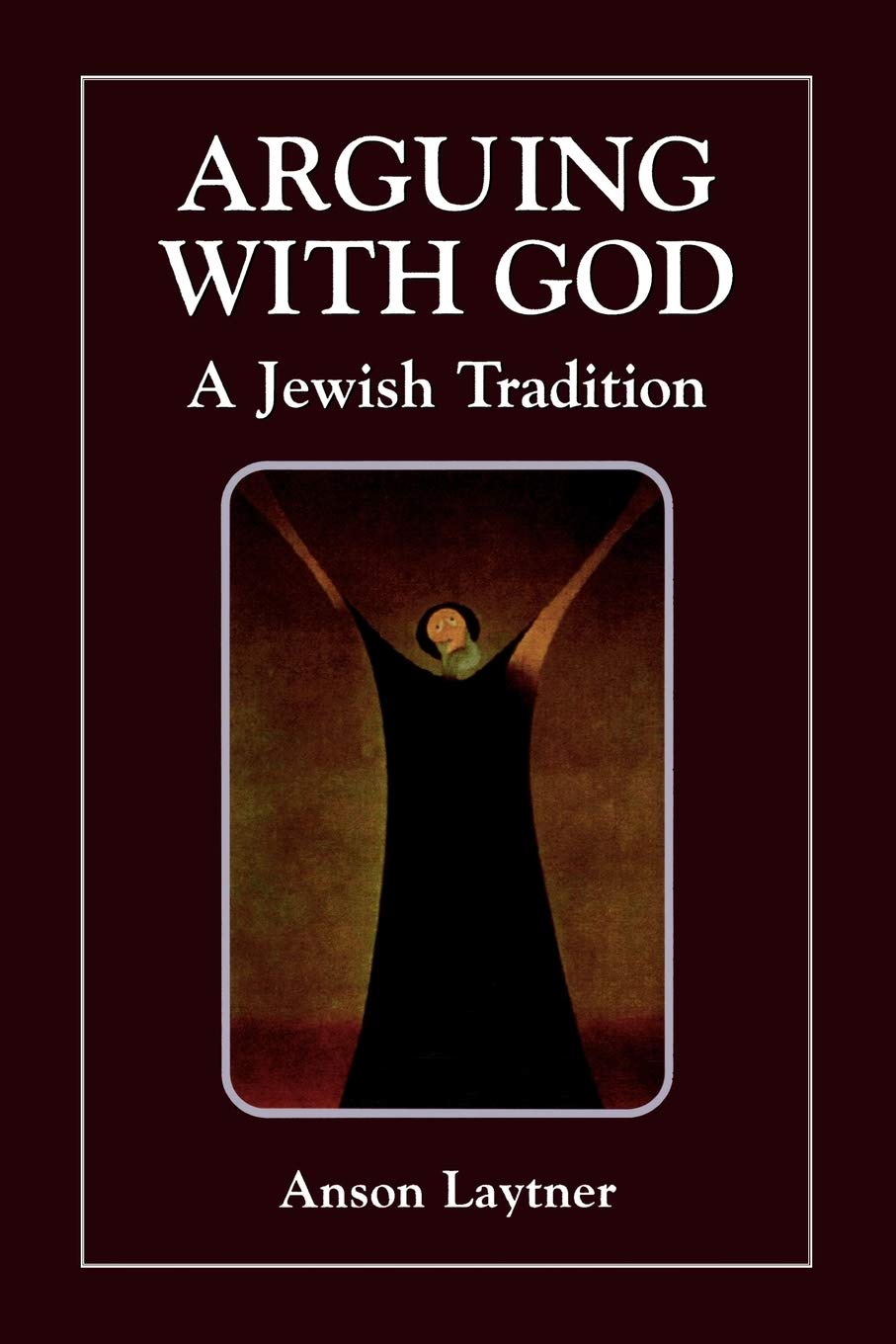
As an old proverb puts it, "Two Jews, three opinions." In the long, rich, tumultuous history of the Jewish people, this characteristic contentiousness has often been extended even unto Heaven. Arguing with God is a highly original and utterly absorbing study that skates along the edge of this theological thin iceat times verging dangerously close to blasphemyyet also a source of some of the most poignant and deeply soulful expressions of human anguish and yearning.The name Israel literally denotes one who "wrestles with God." And, from Jacob's battle with the angel to Elie Wiesel's haunting questions about the Holocaust that hang in the air like still smoke over our own age, Rabbi Laytner admirably details Judaism's rich and pervasive tradition of calling God to task over human suffering and experienced injustice.It is a tradition that originated in the biblical period itself. Abraham, Moses, Elijah, and others all petitioned for divine intervention in their lives, or appealed forcefully to God to alter His proposed decree. Other biblical arguments focused on personal or communal suffering and anger: Jeremiah, Job, and certain Psalms and Lamentations. Rabbi Laytner delves beneath the surface of these "blasphemies" and reveals how they implicitly helped to refute the claims of opponent religions and advance Jewish doctrines and teachings.
⚠️ WARNING (California Proposition 65):
This product may contain chemicals known to the State of California to cause cancer,
birth defects, or other reproductive harm.
For MAP (Minimum Advertised Price) violations and Intellectual Property (IP) or Trademark concerns, please contact:
support@ergodebooks.com
⚠️ California Proposition 65 Warning: Some products sold on this website may expose you to chemicals known to the State of California to cause cancer, birth defects, or other reproductive harm. For more information, visit www.P65Warnings.ca.gov.