
Title
Ariadne's Clue: A Guide to the Symbols of Humankind (Mythos: The Princeton/Bollingen Series in World Mythology),Used
Sold by Ergodebooks, an authorized reseller.
Returns accepted within 30 days | support@ergodebooks.com
Shipping Information
- Free Standard Shipping — United States only
- Processing Time: 3–5 business days
- Estimated Delivery: 6–10 business days after dispatch
- Double-boxed, fully insured & discreetly packaged
- Tracking number sent via email once dispatched
Returns & Refund
Returns accepted within 30 days of delivery.
Damaged or Defective Item
Free return shipping + replacement or full refund
Wrong Item Received
Free return shipping + replacement or full refund
Change of Mind
Return shipping at customer's expense · 25% restocking fee applies
Payment Option

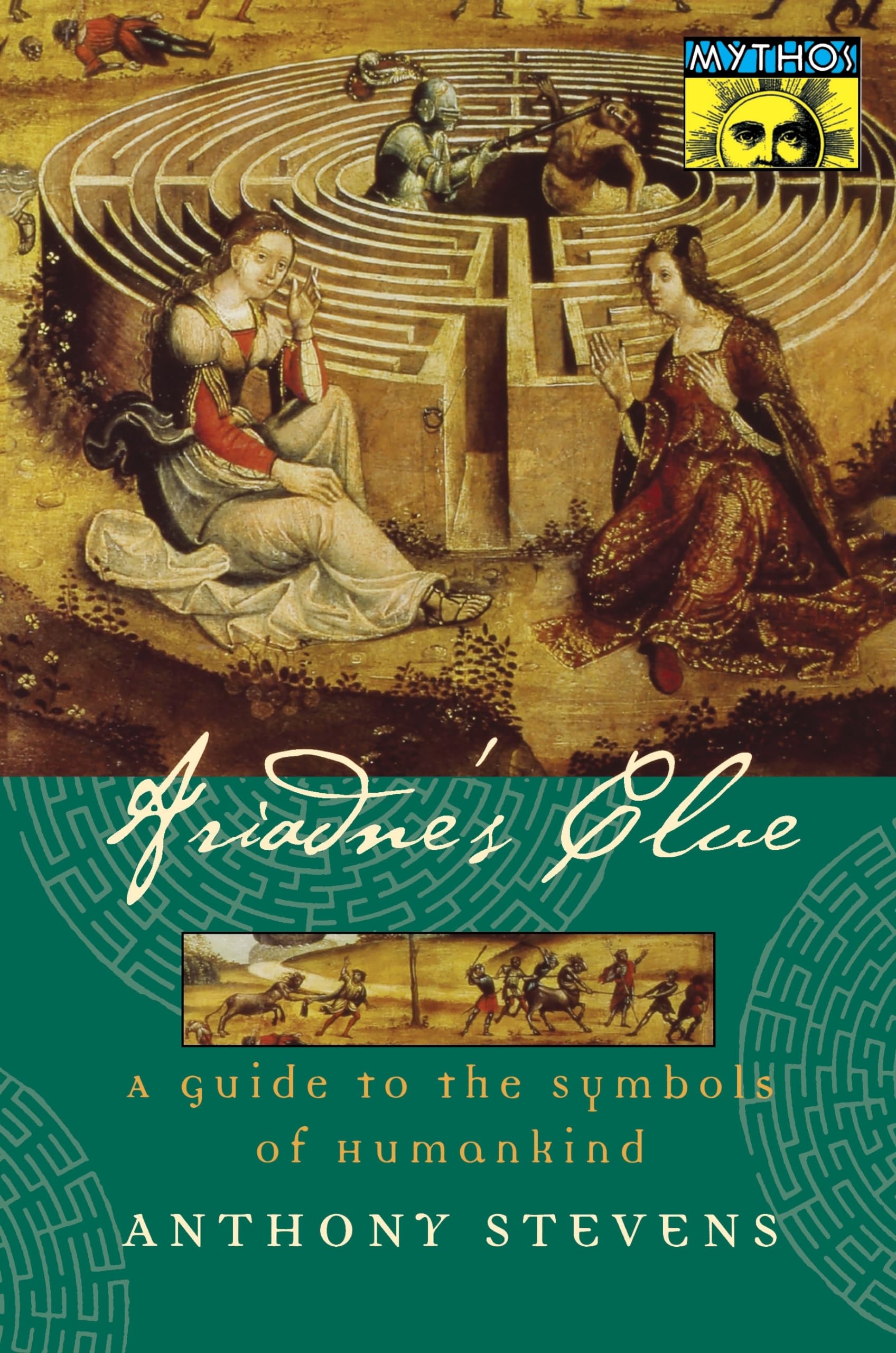
Symbolism is the most powerful and ancient means of communication available to humankind. For centuries people have expressed their preoccupations and concerns through symbolism in the form of myths, stories, religions, and dreams. The meaning of symbols has long been debated among philosophers, antiquarians, theologians, and, more recently, anthropologists and psychologists. In Ariadne's Clue, distinguished analyst and psychiatrist Anthony Stevens explores the nature of symbols and explains how and why we create the symbols we do.The book is divided into two parts: an interpretive section that concerns symbols in general and a 'dictionary' that lists hundreds of symbols and explains their origins, their resemblances to other symbols, and the belief systems behind them. In the first section, Stevens takes the ideas of C. G. Jung a stage further, asserting not only that we possess an innate symbolforming propensity that exists as a creative and integral part of our psychic makeup, but also that the human mind evolved this capacity as a result of selection pressures encountered by our species in the course of its evolutionary history. Stevens argues that symbol formation has an adaptive function: it promotes our grasp on reality and in dreams often corrects deficient modes of psychological functioning. In the second section, Stevens examines symbols under four headings: 'The Physical Environment,' 'Culture and Psyche,' 'People, Animals, and Plants,' and 'The Body.' Many of the symbols are illustrated in the book's rich variety of woodcuts. From the ancient symbol of the serpent to the archetypal masculine and feminine, from the earth to the stars, from the primordial landscape of the savannah to the mysterious depths of the sea, Stevens traces a host of common symbols back through time to reveal their psychodynamic functioning and looks at their deeprooted effects on the lives of modern men, women, and children.
⚠️ WARNING (California Proposition 65):
This product may contain chemicals known to the State of California to cause cancer, birth defects, or other reproductive harm.
For more information, please visit www.P65Warnings.ca.gov.
- Q: What is the page count of 'Ariadne's Clue'? A: The book contains four hundred eighty pages. This extensive length provides a deep exploration of symbolism in human culture.
- Q: What dimensions does this book have? A: The book measures six inches in length, one point twenty-five inches in width, and nine inches in height. These dimensions make it easy to handle and read.
- Q: What type of binding does 'Ariadne's Clue' have? A: This book is published in paperback binding. The paperback format is lightweight and flexible, making it portable.
- Q: How can I best understand the symbols discussed in the book? A: To understand the symbols, read both parts of the book. The first section discusses symbols generally, while the second acts as a dictionary of symbols.
- Q: Is 'Ariadne's Clue' suitable for beginners in mythology? A: Yes, it is suitable for beginners. The author explains complex ideas in an accessible manner, making it easy for new readers.
- Q: What themes are explored in 'Ariadne's Clue'? A: The book explores themes of symbolism in myths, culture, and psychology. It connects symbols to human experiences throughout history.
- Q: How should I care for my copy of 'Ariadne's Clue'? A: To care for your book, store it in a cool, dry place. Avoid exposing it to direct sunlight to prevent fading of the cover and pages.
- Q: Is it safe to read 'Ariadne's Clue' for children? A: Yes, it is generally safe for older children. The content discusses symbolism in a thoughtful manner, but parental guidance may be beneficial.
- Q: Can I lend my copy of 'Ariadne's Clue' to friends? A: Yes, you can lend your book. Sharing it may encourage discussions about its insights into symbolism and mythology.
- Q: What if my book arrives damaged? A: If your book arrives damaged, contact the seller for a return or replacement. Most sellers have policies to address such issues.
- Q: Are there illustrations in 'Ariadne's Clue'? A: Yes, the book includes various woodcut illustrations. These visuals enhance the understanding of the symbols discussed.
- Q: How does the author explore symbols in the book? A: The author explores symbols by categorizing them into physical environments, culture, and human experiences. This structured approach aids comprehension.
- Q: Is there a specific audience for 'Ariadne's Clue'? A: The book appeals to anyone interested in mythology, psychology, or anthropology. Its broad themes attract a diverse readership.
- Q: What makes 'Ariadne's Clue' unique? A: Its unique approach lies in combining psychological analysis with historical symbolism. This blend offers a fresh perspective on ancient symbols.
- Q: Can 'Ariadne's Clue' help in personal development? A: Yes, the insights into symbols can aid personal growth. Understanding symbols may enhance self-awareness and improve psychological functioning.