If you have any questions, you are always welcome to contact us. We'll get back to you as soon as possible, withing 24 hours on weekdays.
Customer service
All questions about your order, return and delivery must be sent to our customer service team by e-mail at yourstore@yourdomain.com
Sale & Press
If you are interested in selling our products, need more information about our brand or wish to make a collaboration, please contact us at press@yourdomain.com
Help
If you have any questions, you are always welcome to contact us. We'll get back to you as soon as possible, withing 24 hours on weekdays.
Customer service
All questions about your order, return and delivery must be sent to our customer service team by e-mail at yourstore@yourdomain.com
Sale & Press
If you are interested in selling our products, need more information about our brand or wish to make a collaboration, please contact us at press@yourdomain.com
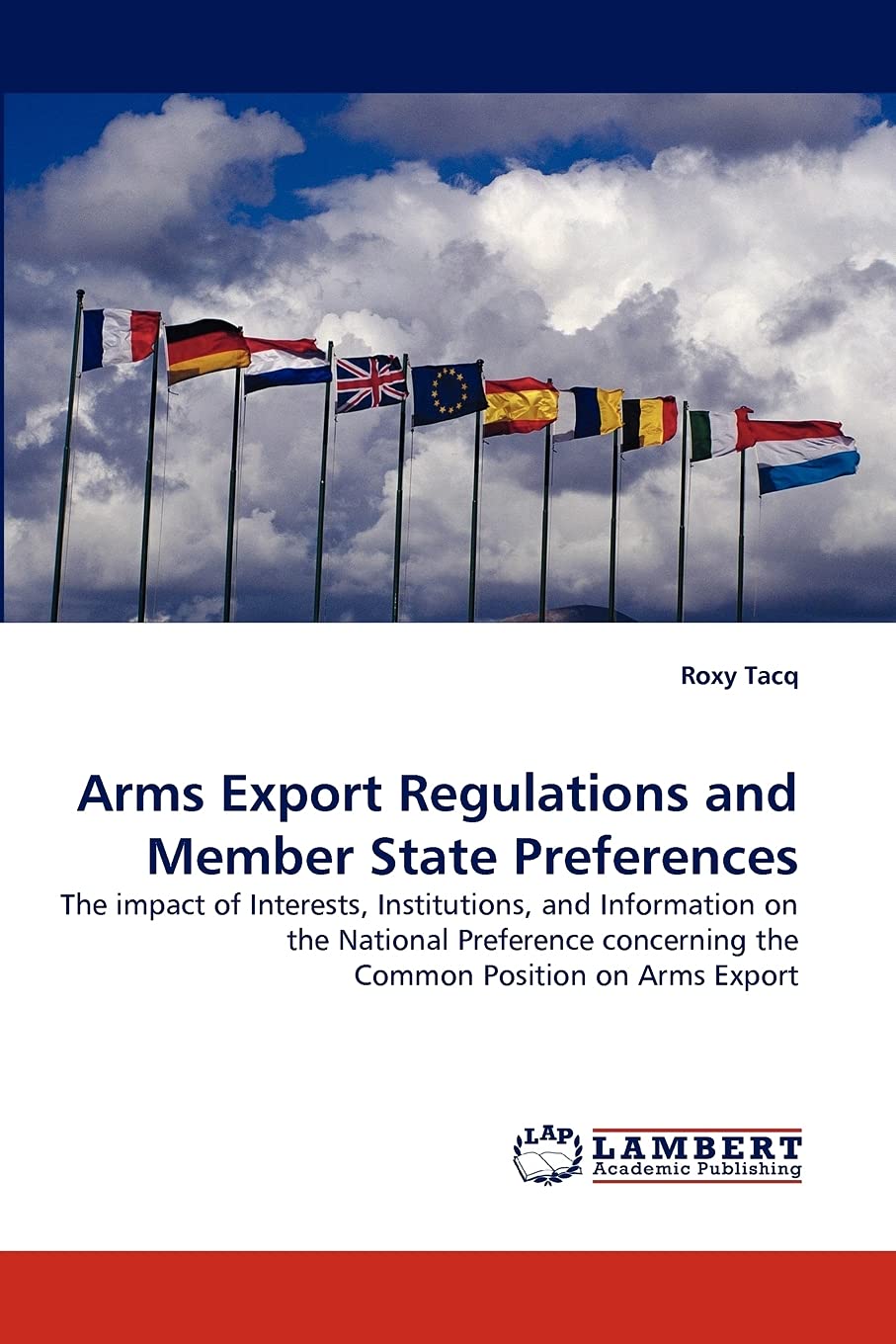
The European Union is working together to regulate the export and transfer of strategic goods from EU countries, in order to prevent misuse of these goods. The decisionmaking process on a improved regime in the form of a Common Position status of the framework was bocked by a view Member States for a long time. This research analyses why some Member States bocked the decisionmaking process. The preferences of two Member States on the Common Position status are central in this analysis. The main theory used to do a case study research is based on the theory of Milner, which she represents in her book ?Interest, institutions, and information?. The case study research on France and the United Kingdom illustrates how the theory of Milner can be applied on decisionmaking within the European Union. The results of this research shows the possibilities and limitation of an applied version of this theory.
⚠️ WARNING (California Proposition 65):
This product may contain chemicals known to the State of California to cause cancer,
birth defects, or other reproductive harm.
For MAP (Minimum Advertised Price) violations and Intellectual Property (IP) or Trademark concerns, please contact:
support@ergodebooks.com
⚠️ California Proposition 65 Warning: Some products sold on this website may expose you to chemicals known to the State of California to cause cancer, birth defects, or other reproductive harm. For more information, visit www.P65Warnings.ca.gov.