
Title


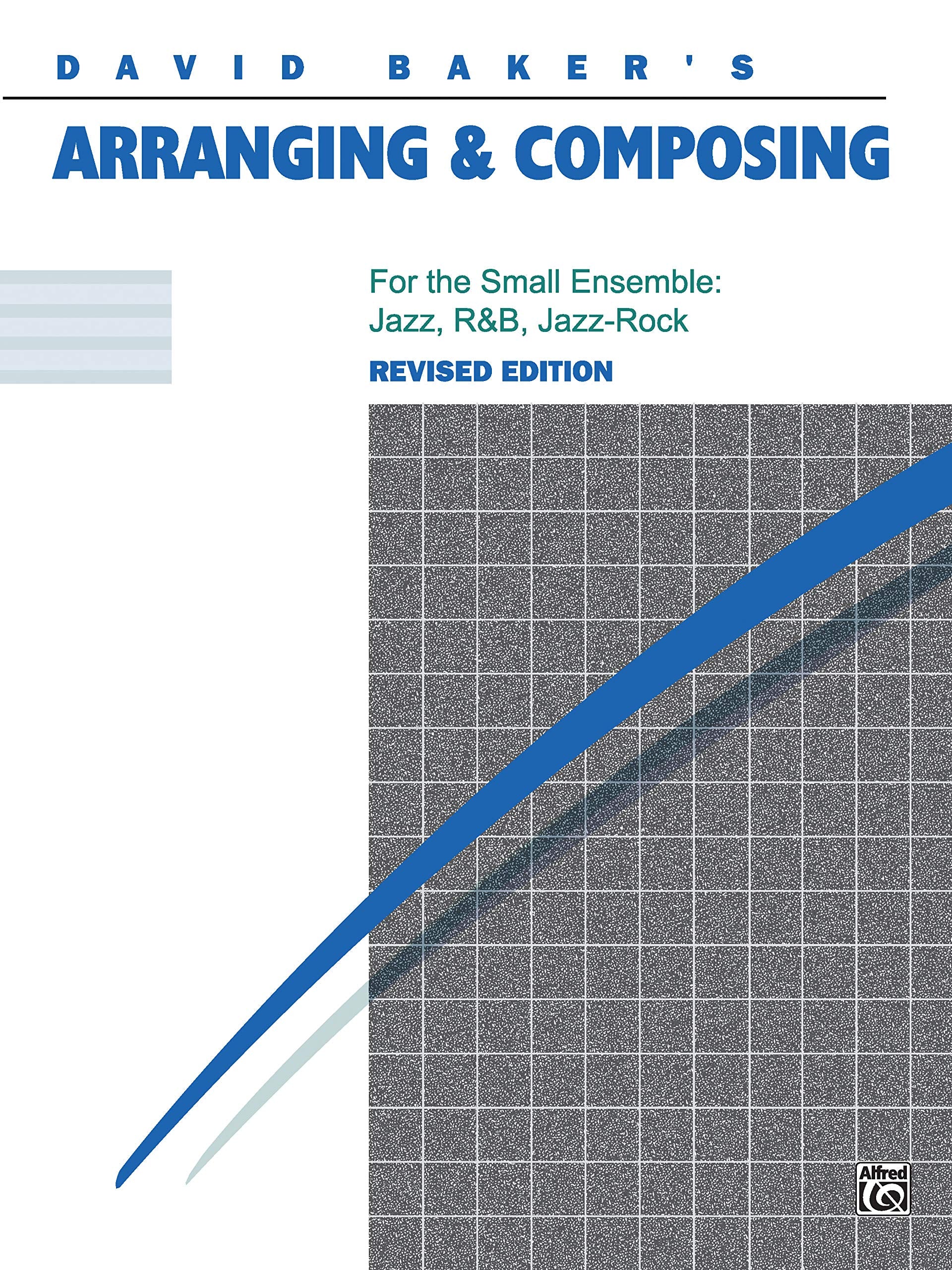
Arranging & Composing,Used
Sold by Ergodebooks, an authorized reseller.
Returns accepted within 30 days | support@ergodebooks.com
Shipping Information
- Free Standard Shipping — United States only
- Processing Time: 3–5 business days
- Estimated Delivery: 6–10 business days after dispatch
- Double-boxed, fully insured & discreetly packaged
- Tracking number sent via email once dispatched
Returns & Refund
Returns accepted within 30 days of delivery.
Damaged or Defective Item
Free return shipping + replacement or full refund
Wrong Item Received
Free return shipping + replacement or full refund
Change of Mind
Return shipping at customer's expense · 25% restocking fee applies
Payment Option

This Professional Manual Lets You Share The Secrets Of David Baker'S Success. Baker Explains His Practical Working Techniques For Piano Trio, Jazz Quartet, Four And Fivepart Writing, Chord Substitutions, Voicings, Bass Patterns And Much More.
⚠️ WARNING (California Proposition 65):
This product may contain chemicals known to the State of California to cause cancer, birth defects, or other reproductive harm.
For more information, please visit www.P65Warnings.ca.gov.
- Q: How many pages does the book 'Arranging & Composing' have? A: This book has one hundred seventy-six pages. It provides a comprehensive guide to arranging and composing music.
- Q: What is the binding type of 'Arranging & Composing'? A: The book is paperback bound. This makes it lightweight and easy to handle.
- Q: What are the dimensions of the book? A: The book measures nine point zero two inches in length, zero point seven five inches in width, and twelve point zero one inches in height. These dimensions make it a suitable size for reading and reference.
- Q: Who is the author of 'Arranging & Composing'? A: The book is authored by David Baker. He is known for his expertise in jazz composition and arrangement.
- Q: What is the main focus of 'Arranging & Composing'? A: The book focuses on practical working techniques for various music ensembles. It covers topics such as chord substitutions, voicings, and bass patterns.
- Q: Is 'Arranging & Composing' suitable for beginners? A: Yes, the book is suitable for beginners as well as experienced musicians. It provides valuable insights for anyone interested in music arrangement.
- Q: How can I use the techniques from 'Arranging & Composing'? A: You can apply the techniques by practicing them with your instrument or ensemble. The book includes examples and exercises to facilitate learning.
- Q: Is this book appropriate for students? A: Yes, this book is appropriate for students studying music composition. It offers practical advice that can enhance their skills.
- Q: Can 'Arranging & Composing' help with jazz quartet arrangements? A: Yes, it specifically addresses techniques for jazz quartets. The book includes strategies for writing for various ensemble sizes.
- Q: How should I store 'Arranging & Composing' to keep it in good condition? A: Store the book in a cool, dry place away from direct sunlight. This will help preserve its binding and pages.
- Q: Is it safe to write in 'Arranging & Composing'? A: Yes, you can write in the book as it is meant for study and practice. Taking notes can help reinforce learning.
- Q: What if 'Arranging & Composing' arrives damaged? A: If the book arrives damaged, you should contact the seller for a return or exchange. Most sellers have a return policy in place.
- Q: Does 'Arranging & Composing' include exercises? A: Yes, it includes exercises to practice the techniques discussed. These exercises are designed to reinforce learning.
- Q: Is 'Arranging & Composing' a good resource for self-study? A: Yes, it is an excellent resource for self-study. The clear explanations and practical examples make it easy to follow.
- Q: Are there any prerequisites to read 'Arranging & Composing'? A: No specific prerequisites are required. However, having a basic understanding of music theory can be beneficial.
- Q: Can I use 'Arranging & Composing' for different music genres? A: Yes, while it focuses on jazz, the techniques can be adapted for various music genres. The principles of arrangement apply broadly.