
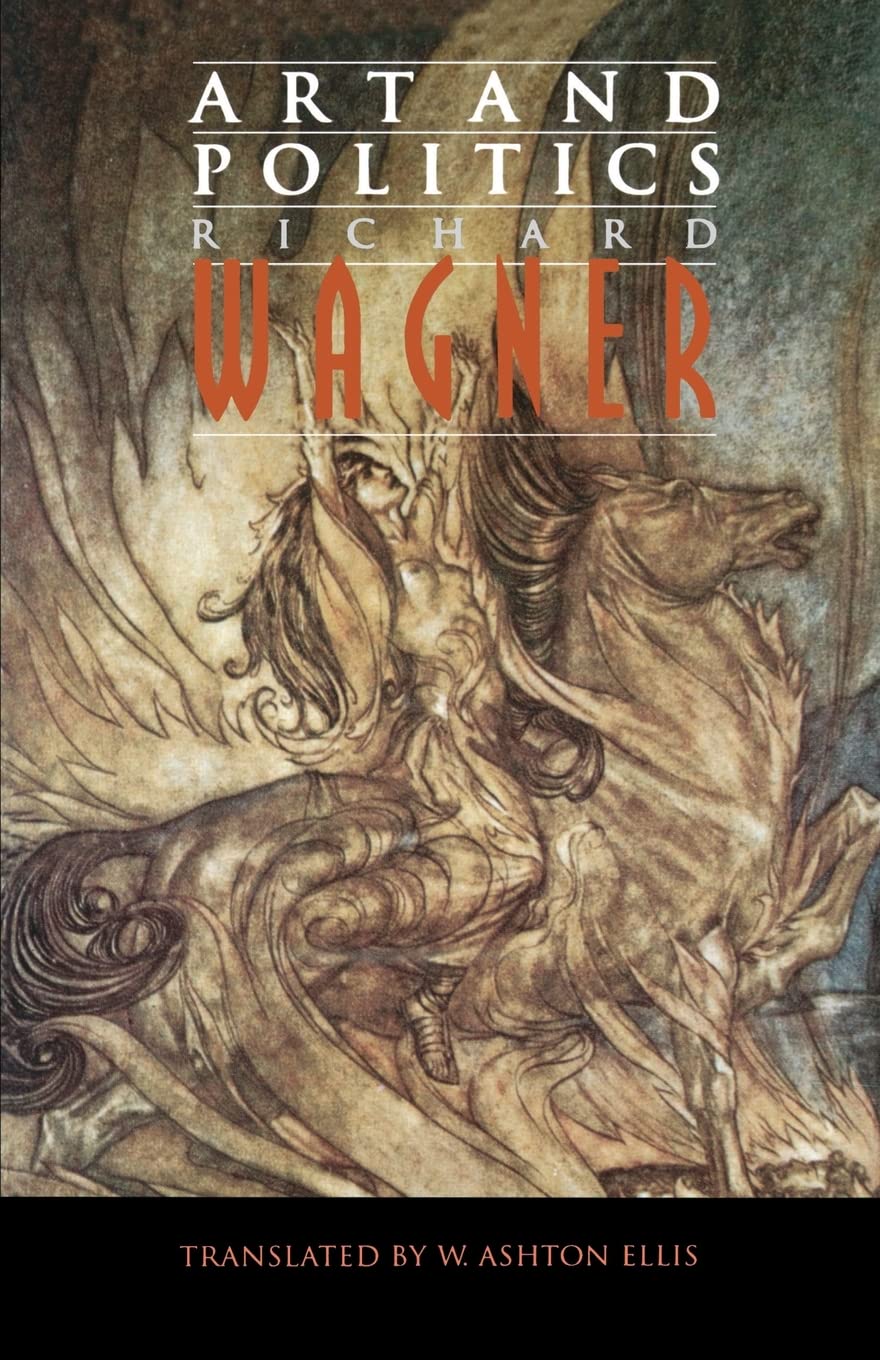
Title
Art And Politics,New
Sold by Ergodebooks, an authorized reseller.
Returns accepted within 30 days | support@ergodebooks.com
Shipping Information
- Free Standard Shipping — United States only
- Processing Time: 3–5 business days
- Estimated Delivery: 6–10 business days after dispatch
- Double-boxed, fully insured & discreetly packaged
- Tracking number sent via email once dispatched
Returns & Refund
Returns accepted within 30 days of delivery.
Damaged or Defective Item
Free return shipping + replacement or full refund
Wrong Item Received
Free return shipping + replacement or full refund
Change of Mind
Return shipping at customer's expense · 25% restocking fee applies
Payment Option

A master of mystery and paradox, Wagner spent his life composing himself while composing music. Written between 1864 and 1878, the essays in Art and Politics converge upon Wagners desire to define and reform German culture. He was deeply annoyed that Germany seemed to satisfy itself with cheap theater, vulgar songs, and clumsy imitations of French art. In What Is German? he declared that German culture must rise above the common ruck. Citing Musics wonderman Johann Sebastian Bach as his precursor, Wagner fought to persuade his readers that German culture had a historic destiny, and that destiny was shaped first and foremost by music.As usual, embroiled in the defense of his operas and his person, Wagner recognized that his rescue from attack and poverty could not be expected from FrancoJudaicoGerman democracy. He instead fixed his hopes elsewhere: the embodied voucher for fundamental law, the Monarch. He found himself at a turning point in his career. In 1864 King Ludwig II of Bavaria befriended Wagner and gave him badly needed financial support. This alliance aroused Wagners enemies into further fits of jealousy. Yet, amid the public scorn, he worked on the production of Tristan und Isolde, drafted the libretto for Parsifal, and composed sections of Siegfried and Die Meistersinger.In these essays Wagner resumes his considerations of the close ties between religion and art. He calls art the kindly Lifesaviour who does not really and wholly lead us out beyond this life, but, within it, lifts us up above it and shews it as itself a game of play. These essays express his artistic credo and the knowledge of German literature that underpinned his claims for German genius. Following his ideals, he proclaimed his intention to raise the quality of German opera, by himself if necessary.This edition includes the full text of volume 4 of the translation of Wagners works commissioned in 1895 by the London Wagner Society.
⚠️ WARNING (California Proposition 65):
This product may contain chemicals known to the State of California to cause cancer, birth defects, or other reproductive harm.
For more information, please visit www.P65Warnings.ca.gov.