
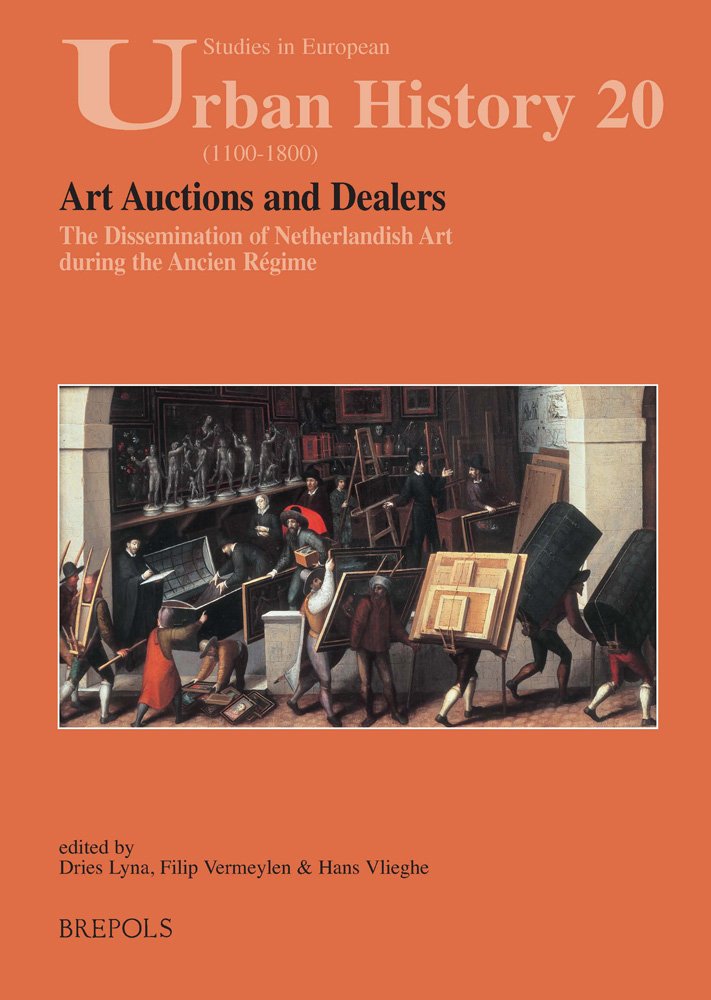
Title
Art Auctions And Dealers: The Dissemination Of Netherlandish Art During The Ancien Regime (Studies In European Urban History 110
Sold by Ergodebooks, an authorized reseller.
Returns accepted within 30 days | support@ergodebooks.com
Shipping Information
- Free Standard Shipping — United States only
- Processing Time: 3–5 business days
- Estimated Delivery: 6–10 business days after dispatch
- Double-boxed, fully insured & discreetly packaged
- Tracking number sent via email once dispatched
Returns & Refund
Returns accepted within 30 days of delivery.
Damaged or Defective Item
Free return shipping + replacement or full refund
Wrong Item Received
Free return shipping + replacement or full refund
Change of Mind
Return shipping at customer's expense · 25% restocking fee applies
Payment Option

The Seventeenth And Eighteenth Centuries Saw An Explosion Of Art Auctions As A Means Of Trading In New And Secondhand Works. This Study Examines This Phenomenon And The Inception Of The Custom Of Public Art Auctions. Lyna (Urban History, University Of Antwerp) Vermeylen (Cultural Economics, Erasmus University, Rotterdam) And Vlieghe (Art History, University Of Leuven, Emeritus) Have Selected Essays That Emphasize The Positive And Negative Sides Of The Auctions, The Actions Of The Dealers And The International Nature Of The Operation. The Lottery As A Means For Artists' Guilds To Raise Funds Is Also Looked At. The Guild As A Player In The Selling Of Art Is Also Part Of An Article On Competition Between It And Art Auctioneers. Prosopographical Studies Of Individual Dealers Or Families Give A Human Face To The Subject. Articles On The Sale Of Art By Or For Royal Houses Point Out The Change In Society From One In Which Art Was Commissioned To One In Which It Was Something To Be Collected. The Role Of The Printing Press In Disseminating Presale Catalogue Information Is Mentioned Several Times As A Contributing Factor In The Popularity Of The Art Auction. Distributed In North America By The David Brown Book Co. Annotation 2010 Book News, Inc., Portland, Or (Booknews.Com)
⚠️ WARNING (California Proposition 65):
This product may contain chemicals known to the State of California to cause cancer, birth defects, or other reproductive harm.
For more information, please visit www.P65Warnings.ca.gov.
- Q: What is the page count of this book? A: This book has one hundred seventy-four pages. It provides an in-depth exploration of art auctions during the seventeenth and eighteenth centuries.
- Q: What is the binding type of this book? A: This book is paperback bound. This makes it lightweight and flexible for easy handling.
- Q: What are the dimensions of the book? A: The book measures seven point twenty-five inches in length, zero point fifty-one inches in width, and ten inches in height. These dimensions make it a convenient size for reading and storage.
- Q: How do I read this book? A: You can read this book in any comfortable setting. It is suitable for anyone interested in art history or urban studies.
- Q: Is this book appropriate for beginners in art history? A: Yes, this book is appropriate for beginners. It covers foundational topics related to art auctions and dealers in an accessible manner.
- Q: What themes are explored in this book? A: This book explores themes of art auctions, the role of dealers, and the impact of the printing press on art dissemination. It provides a comprehensive view of the art world during the Ancien Regime.
- Q: How should I store this book? A: Store this book in a dry, cool place to maintain its condition. Keep it upright on a shelf or in a bookcase to prevent bending.
- Q: Can I clean the book cover? A: Yes, you can gently wipe the cover with a dry cloth. Avoid using water or cleaning solutions to prevent damage.
- Q: What if the book arrives damaged? A: If the book arrives damaged, contact customer service for assistance with returns or exchanges. Ensure you have your order details ready.
- Q: Is there a warranty for this book? A: No, books typically do not come with a warranty. However, check the return policy for options if you encounter issues.
- Q: How does this book compare to other art history books? A: This book focuses specifically on art auctions and dealers, offering a unique perspective compared to broader art history texts. It delves into the economic and cultural aspects of art trading.
- Q: Is this book suitable for academic study? A: Yes, this book is suitable for academic study. It contains essays by scholars from various fields, making it a valuable resource for research.
- Q: What audience is this book intended for? A: This book is intended for readers interested in art history, urban studies, and cultural economics. It appeals to both scholars and general readers.
- Q: How do I find more information about the authors? A: You can find more information about the authors, Dries Lyna, Koenraad Vlieghe, and Lyna Vermeylen, through academic publications and biographies available online.
- Q: Are there illustrations in this book? A: Yes, the book includes illustrations related to art auctions and dealers. These visual elements enhance the understanding of the text.
- Q: What is the main focus of the book's essays? A: The main focus of the essays is the evolution of public art auctions and the roles of dealers during the Ancien Regime.