
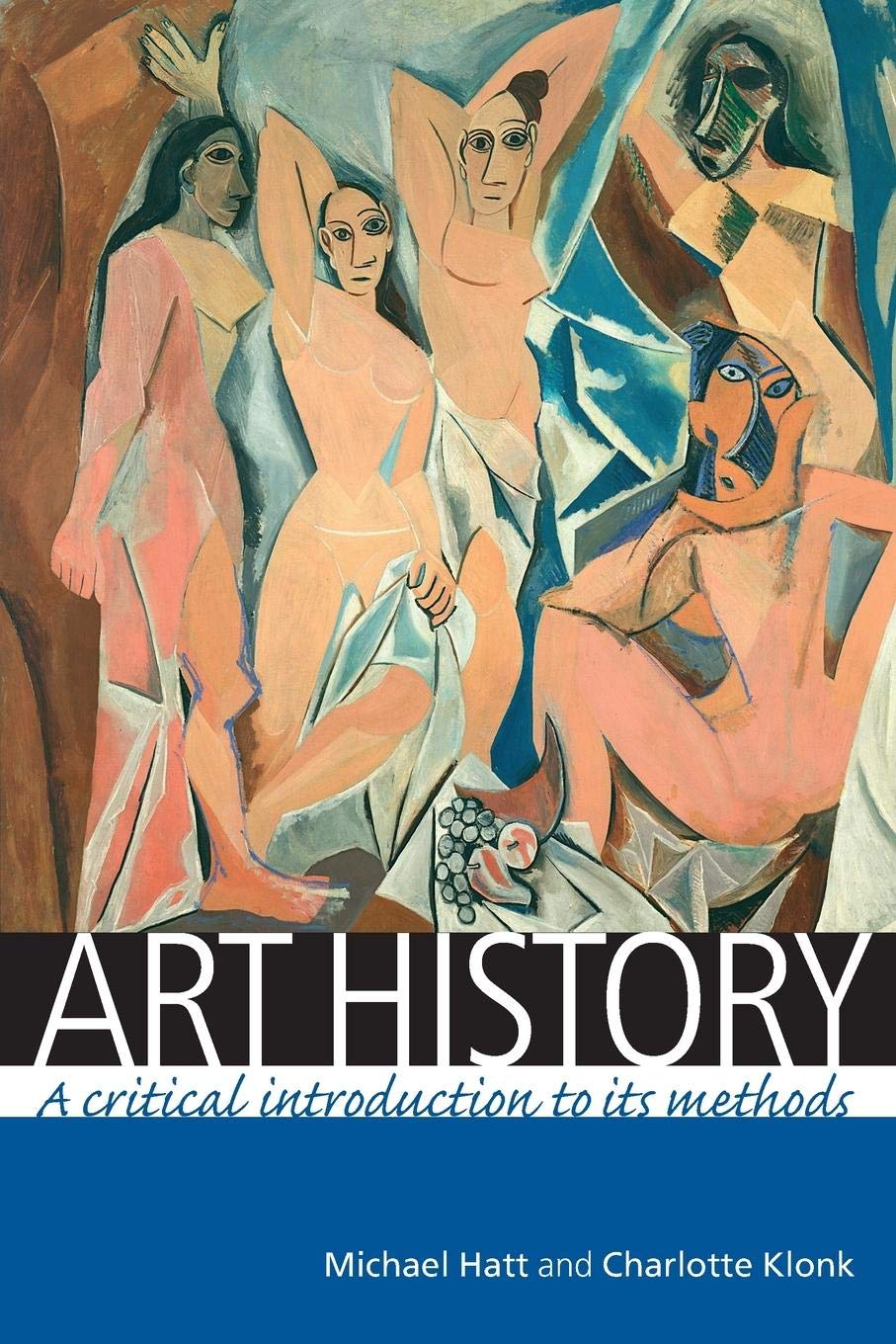
Title
Art History: A Critical Introduction To Its Methods,New
Sold by Ergodebooks, an authorized reseller.
Returns accepted within 30 days | support@ergodebooks.com
Shipping Information
- Free Standard Shipping — United States only
- Processing Time: 3–5 business days
- Estimated Delivery: 6–10 business days after dispatch
- Double-boxed, fully insured & discreetly packaged
- Tracking number sent via email once dispatched
Returns & Refund
Returns accepted within 30 days of delivery.
Damaged or Defective Item
Free return shipping + replacement or full refund
Wrong Item Received
Free return shipping + replacement or full refund
Change of Mind
Return shipping at customer's expense · 25% restocking fee applies
Payment Option

Art History: A Critical Introduction To Its Methods Provides A Lively And Stimulating Introduction To Methodological Debates Within Art History. Offering A Lucid Account Of Approaches From Hegel To Postcolonialism, The Book Provides A Sense Of Art Historys Own History As A Discipline From Its Emergence In The Lateeighteenth Century To Contemporary Debates. By Explaining The Underlying Philosophical And Political Assumptions Behind Each Method, Along With Clear Examples Of How These Are Brought To Bear On Visual And Historical Analysis, The Authors Show That An Adherence To A Certain Method Is, In Effect, A Commitment To A Set Of Beliefs And Values. The Book Makes A Strong Case For The Vitality Of The Discipline And Its Methodological Centrality To New Fields Such As Visual Culture.This Book Will Be Of Enormous Value To Undergraduate And Graduate Students, And Also Makes Its Own Contributions To Ongoing Scholarly Debates About Theory And Method.
⚠️ WARNING (California Proposition 65):
This product may contain chemicals known to the State of California to cause cancer, birth defects, or other reproductive harm.
For more information, please visit www.P65Warnings.ca.gov.
- Q: How many pages does this book have? A: This book has two hundred sixty-four pages. It provides an in-depth exploration of methods in art history.
- Q: What is the binding type of this book? A: The binding type is paperback. This makes it lightweight and easy to handle for reading.
- Q: What are the dimensions of this book? A: The dimensions of the book are six point fourteen inches by nine point twenty-one inches by zero point seventy-two inches. These measurements make it a portable size for both study and leisure.
- Q: Who is the author of this book? A: The author of this book is Michael Hatt. He offers insights into various art historical methods.
- Q: What topics does this book cover? A: This book covers methodological debates in art history, including approaches from Hegel to post-colonialism. It aims to inform readers about the evolution of art history as a discipline.
- Q: Is this book suitable for undergraduate students? A: Yes, this book is suitable for undergraduate and graduate students. It provides a foundational understanding of art historical methods.
- Q: How should I approach reading this book? A: You can approach this book by engaging with its chapters that discuss different methodologies. It’s beneficial to take notes on the examples provided.
- Q: Is this book appropriate for beginners in art history? A: Yes, this book is appropriate for beginners. It introduces complex topics in an accessible manner, making it a good starting point.
- Q: Can this book be used for academic research? A: Yes, this book can be used for academic research. It contributes to ongoing scholarly debates about theory and method in art history.
- Q: How do I keep this book in good condition? A: To keep this book in good condition, avoid exposure to moisture and direct sunlight. Store it upright on a shelf to prevent bending.
- Q: What if the book arrives damaged? A: If the book arrives damaged, you should contact the seller for a return or exchange. Most sellers have policies in place for such situations.
- Q: Is there a warranty for this book? A: No, typically there is no warranty for books. However, check with the seller for their specific return policy.
- Q: What topics can I explore further after reading this book? A: After reading this book, you might explore visual culture and post-colonial studies. It provides a strong foundation for these advanced topics.
- Q: Is this book considered a classic in art history? A: Yes, this book is considered a significant contribution to art history literature. It is well-regarded for its methodological insights.
- Q: Can I gift this book to someone interested in art? A: Yes, this book makes a great gift for someone interested in art history. It offers valuable insights and is engagingly written.