
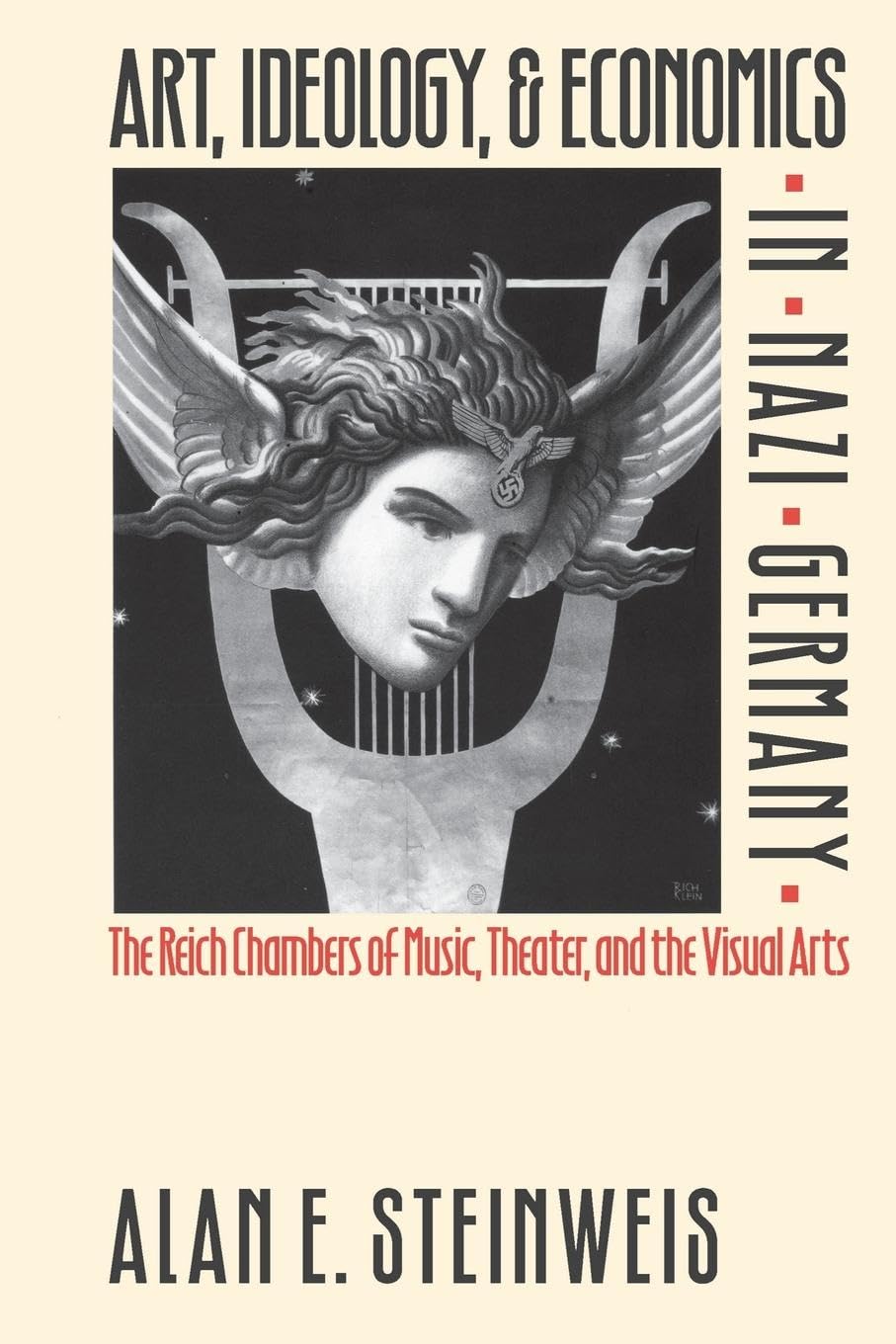
Title
Art, Ideology, And Economics In Nazi Germany: The Reich Chambers Of Music, Theater, And The Visual Arts
Sold by Ergodebooks, an authorized reseller.
Returns accepted within 30 days | support@ergodebooks.com
Shipping Information
- Free Standard Shipping — United States only
- Processing Time: 3–5 business days
- Estimated Delivery: 6–10 business days after dispatch
- Double-boxed, fully insured & discreetly packaged
- Tracking number sent via email once dispatched
Returns & Refund
Returns accepted within 30 days of delivery.
Damaged or Defective Item
Free return shipping + replacement or full refund
Wrong Item Received
Free return shipping + replacement or full refund
Change of Mind
Return shipping at customer's expense · 25% restocking fee applies
Payment Option

From 1933 To 1945, The Reich Chamber Of Culture Exercised A Profound Influence Over Hundreds Of Thousands Of German Artists And Entertainers. Alan Steinweis Focuses On The Fields Of Music, Theater, And The Visual Arts In This First Major Study Of Nazi Cultural Administration, Examining A Complex Pattern Of Interaction Among Leading Nazi Figures, German Cultural Functionaries, Ordinary Artists, And Consumers Of Culture. Steinweis Gives Special Attention To Nazi Efforts To Purge The Arts Of Jews And Other Socalled Undesirables.Steinweis Describes The Political, Professional, And Economic Environment In Which German Artists Were Compelled To Function And Explains The Structure Of Decision Making, Thus Showing In Whose Interest Cultural Policies Were Formulated. He Discusses Such Issues As Insurance, Minimum Wage Statutes, And Certification Guidelines, All Of Which Were Matters Of High Priority To The Art Professions Before 1933 As Well As After The Nazi Seizure Of Power. By Elucidating The Economic And Professional Context Of Cultural Life, Steinweis Helps To Explain The Widespread Acquiescence Of German Artists To Artistic Censorship And Racial 'Purification.' His Work Also Sheds New Light On The Purge Of Jews From German Cultural Life.
⚠️ WARNING (California Proposition 65):
This product may contain chemicals known to the State of California to cause cancer, birth defects, or other reproductive harm.
For more information, please visit www.P65Warnings.ca.gov.
- Q: What is the page count of this book? A: This book has two hundred fifty-six pages. It provides an in-depth examination of Nazi cultural administration in Germany.
- Q: What are the dimensions of this book? A: The book measures six point fourteen inches in length, zero point sixty-four inches in width, and nine point twenty-one inches in height. These dimensions make it a manageable size for reading.
- Q: What binding type does this book have? A: This book is available in paperback binding. This type of binding is lightweight and flexible, making it easy to carry.
- Q: Who is the author of this book? A: The author is Alan E. Steinweis. He is known for his expertise in Nazi cultural history.
- Q: What category does this book fall under? A: This book falls under the Performing Arts category. It specifically explores the intersection of art and ideology in Nazi Germany.
- Q: What is the primary focus of this book? A: The primary focus is on the influence of the Reich Chamber of Culture on German artists and entertainers. It examines various cultural fields including music, theater, and visual arts.
- Q: Is this book suitable for academic study? A: Yes, this book is suitable for academic study. It provides a scholarly analysis of cultural policies during the Nazi regime.
- Q: Does this book contain illustrations or images? A: No, this book does not specifically mention illustrations or images. It primarily contains text focusing on historical analysis.
- Q: What age group is this book appropriate for? A: This book is intended for adult readers. It discusses complex themes related to Nazi ideology and cultural policies.
- Q: How should this book be stored? A: Store this book in a cool, dry place to prevent damage. Keeping it upright on a shelf will help maintain its shape.
- Q: Can this book be read for pleasure? A: Yes, this book can be read for pleasure. It offers insights into a fascinating yet dark period of art and culture.
- Q: What should I do if I receive a damaged copy? A: If you receive a damaged copy, contact the seller for a return or exchange. Ensure you have your order details ready for a smooth process.
- Q: Is there a warranty for this book? A: No, there is typically no warranty for books. However, check the seller's return policy for any guarantees.
- Q: Can I find this book in libraries? A: Yes, this book may be available in libraries. Check your local library's catalog for availability.
- Q: What topics are discussed in this book? A: Topics include the political and economic environment affecting artists under Nazi rule. It also discusses censorship and the purge of Jewish artists.
- Q: Is this book part of a series? A: No, this book is not part of a series. It stands alone as a comprehensive study of Nazi culture.