If you have any questions, you are always welcome to contact us. We'll get back to you as soon as possible, withing 24 hours on weekdays.
Customer service
All questions about your order, return and delivery must be sent to our customer service team by e-mail at yourstore@yourdomain.com
Sale & Press
If you are interested in selling our products, need more information about our brand or wish to make a collaboration, please contact us at press@yourdomain.com
Help
If you have any questions, you are always welcome to contact us. We'll get back to you as soon as possible, withing 24 hours on weekdays.
Customer service
All questions about your order, return and delivery must be sent to our customer service team by e-mail at yourstore@yourdomain.com
Sale & Press
If you are interested in selling our products, need more information about our brand or wish to make a collaboration, please contact us at press@yourdomain.com
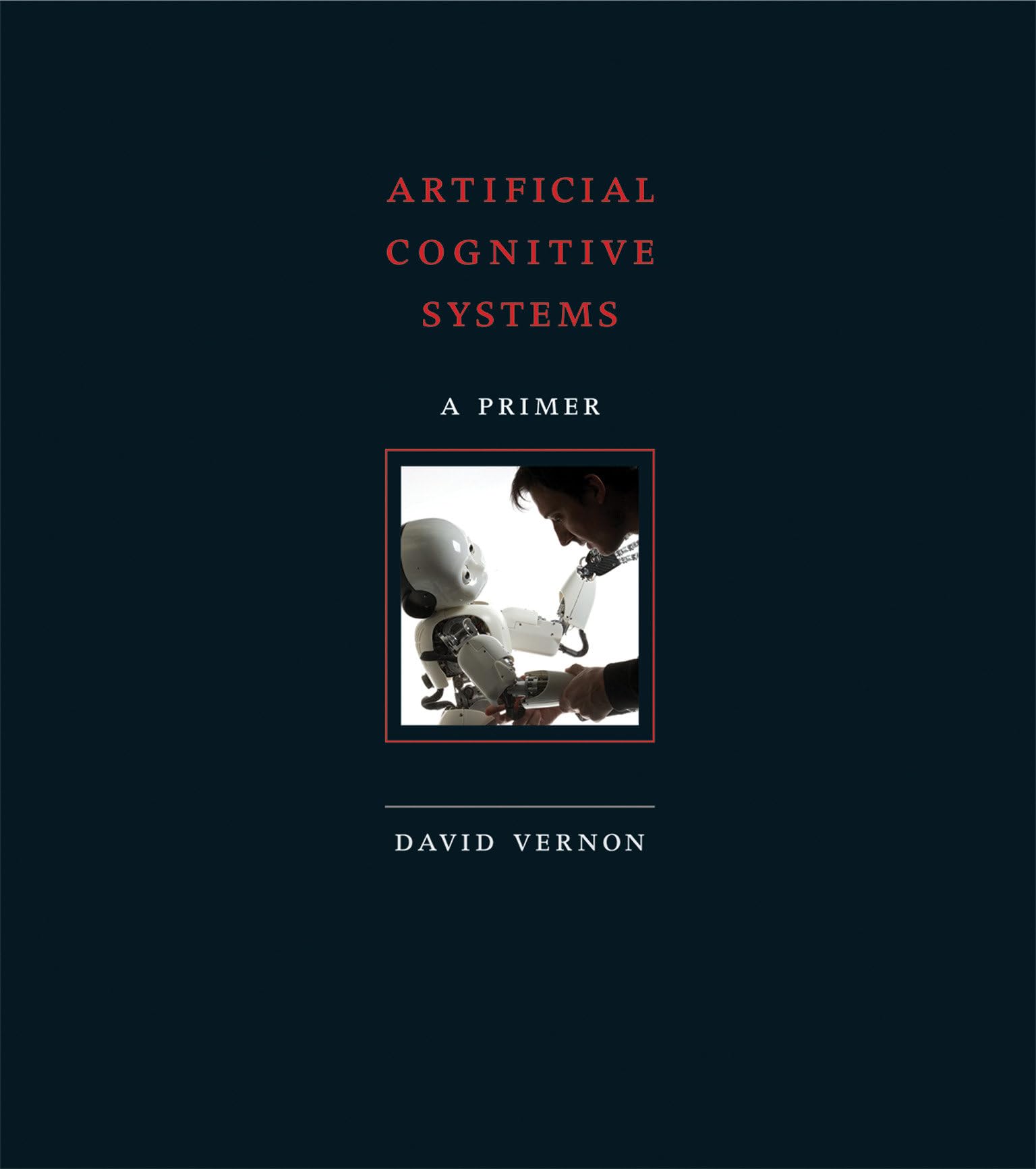
A concise introduction to a complex field, bringing together recent work in cognitive science and cognitive robotics to offer a solid grounding on key issues.This book offers a concise and accessible introduction to the emerging field of artificial cognitive systems. Cognition, both natural and artificial, is about anticipating the need for action and developing the capacity to predict the outcome of those actions. Drawing on artificial intelligence, developmental psychology, and cognitive neuroscience, the field of artificial cognitive systems has as its ultimate goal the creation of computerbased systems that can interact with humans and serve society in a variety of ways. This primer brings together recent work in cognitive science and cognitive robotics to offer readers a solid grounding on key issues.The book first develops a working definition of cognitive systemsbroad enough to encompass multiple views of the subject and deep enough to help in the formulation of theories and models. It surveys the cognitivist, emergent, and hybrid paradigms of cognitive science and discusses cognitive architectures derived from them. It then turns to the key issues, with chapters devoted to autonomy, embodiment, learning and development, memory and prospection, knowledge and representation, and social cognition. Ideas are introduced in an intuitive, natural order, with an emphasis on the relationships among ideas and building to an overview of the field. The main text is straightforward and succinct; sidenotes drill deeper on specific topics and provide contextual links to further reading.
⚠️ WARNING (California Proposition 65):
This product may contain chemicals known to the State of California to cause cancer,
birth defects, or other reproductive harm.
For MAP (Minimum Advertised Price) violations and Intellectual Property (IP) or Trademark concerns, please contact:
support@ergodebooks.com
⚠️ California Proposition 65 Warning: Some products sold on this website may expose you to chemicals known to the State of California to cause cancer, birth defects, or other reproductive harm. For more information, visit www.P65Warnings.ca.gov.