If you have any questions, you are always welcome to contact us. We'll get back to you as soon as possible, withing 24 hours on weekdays.
Customer service
All questions about your order, return and delivery must be sent to our customer service team by e-mail at yourstore@yourdomain.com
Sale & Press
If you are interested in selling our products, need more information about our brand or wish to make a collaboration, please contact us at press@yourdomain.com
Help
If you have any questions, you are always welcome to contact us. We'll get back to you as soon as possible, withing 24 hours on weekdays.
Customer service
All questions about your order, return and delivery must be sent to our customer service team by e-mail at yourstore@yourdomain.com
Sale & Press
If you are interested in selling our products, need more information about our brand or wish to make a collaboration, please contact us at press@yourdomain.com
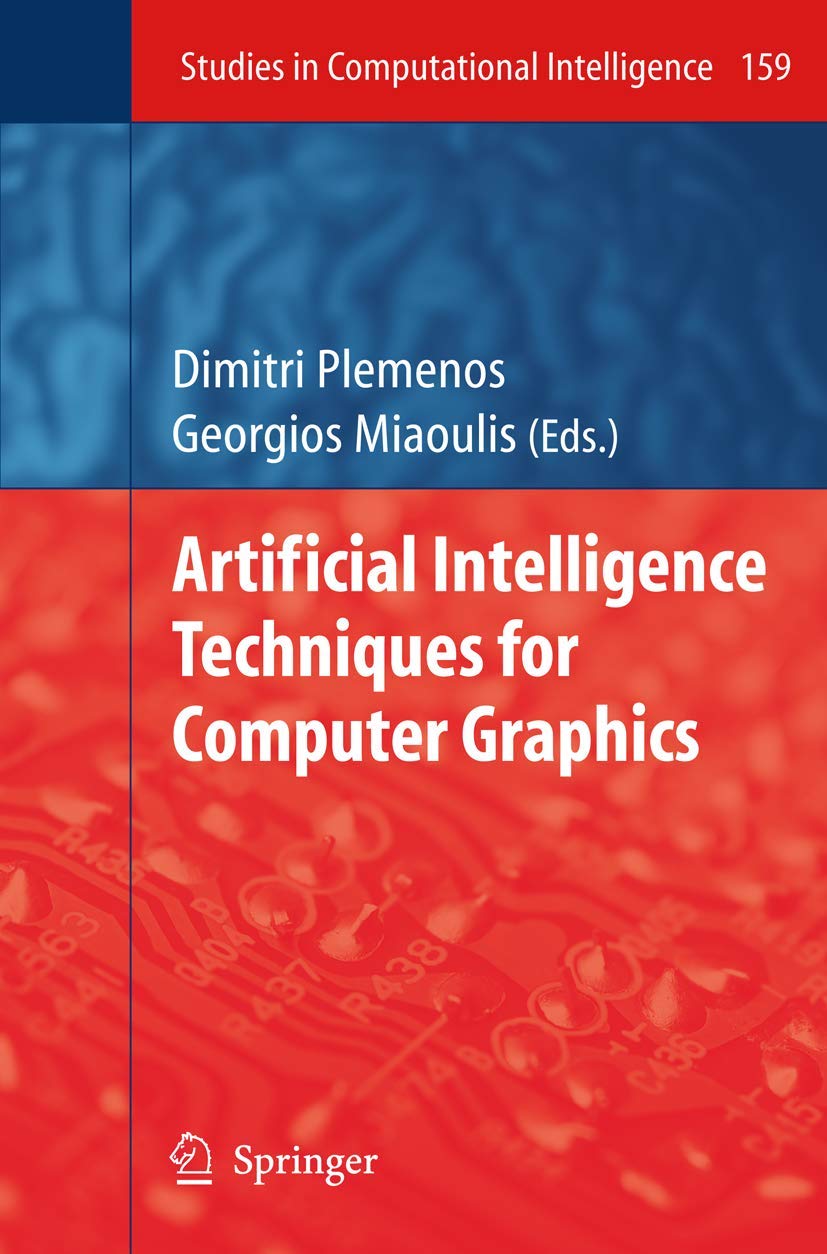
The purpose of this volume is to present current work of the Intelligent Computer Graphics community, a community growing up year after year. Indeed, if at the beg ning of Computer Graphics the use of Artificial Intelligence techniques was quite unknown, more and more researchers all over the world are nowadays interested in intelligent techniques allowing substantial improvements of traditional Computer Graphics methods. The other main contribution of intelligent techniques in Computer Graphics is to allow invention of completely new methods, often based on automation of a lot of tasks assumed in the past by the user in an imprecise and (human) time consuming manner. The history of research in Computer Graphics is very edifying. At the beginning, due to the slowness of computers in the years 1960, the unique research concern was visualisation. The purpose of Computer Graphics researchers was to find new visua sation algorithms, less and less time consuming, in order to reduce the enormous time required for visualisation. A lot of interesting algorithms were invented during these first years of research in Computer Graphics. The scenes to be displayed were very simple because the computing power of computers was very low. So, scene modelling was not necessary and scenes were designed directly by the user, who had to give coordinates of vertices of scene polygons.
⚠️ WARNING (California Proposition 65):
This product may contain chemicals known to the State of California to cause cancer,
birth defects, or other reproductive harm.
For MAP (Minimum Advertised Price) violations and Intellectual Property (IP) or Trademark concerns, please contact:
support@ergodebooks.com
⚠️ California Proposition 65 Warning: Some products sold on this website may expose you to chemicals known to the State of California to cause cancer, birth defects, or other reproductive harm. For more information, visit www.P65Warnings.ca.gov.