
Title
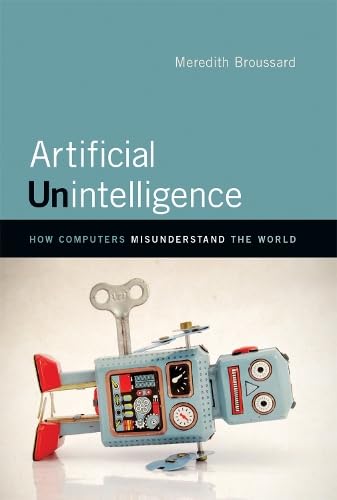
Artificial Unintelligence: How Computers Misunderstand the World,Used
Sold by Ergodebooks, an authorized reseller.
Returns accepted within 30 days | support@ergodebooks.com
Shipping Information
- Free Standard Shipping — United States only
- Processing Time: 3–5 business days
- Estimated Delivery: 6–10 business days after dispatch
- Double-boxed, fully insured & discreetly packaged
- Tracking number sent via email once dispatched
Returns & Refund
Returns accepted within 30 days of delivery.
Damaged or Defective Item
Free return shipping + replacement or full refund
Wrong Item Received
Free return shipping + replacement or full refund
Change of Mind
Return shipping at customer's expense · 25% restocking fee applies
Payment Option

A guide to understanding the inner workings and outer limits of technology and why we should never assume that computers always get it right.In Artificial Unintelligence, Meredith Broussard argues that our collective enthusiasm for applying computer technology to every aspect of life has resulted in a tremendous amount of poorly designed systems. We are so eager to do everything digitallyhiring, driving, paying bills, even choosing romantic partnersthat we have stopped demanding that our technology actually work. Broussard, a software developer and journalist, reminds us that there are fundamental limits to what we can (and should) do with technology. With this book, she offers a guide to understanding the inner workings and outer limits of technologyand issues a warning that we should never assume that computers always get things right.Making a case against technochauvinismthe belief that technology is always the solutionBroussard argues that it's just not true that social problems would inevitably retreat before a digitally enabled Utopia. To prove her point, she undertakes a series of adventures in computer programming. She goes for an alarming ride in a driverless car, concluding the cyborg future is not coming any time soon; uses artificial intelligence to investigate why students can't pass standardized tests; deploys machine learning to predict which passengers survived the Titanic disaster; and attempts to repair the U.S. campaign finance system by building AI software. If we understand the limits of what we can do with technology, Broussard tells us, we can make better choices about what we should do with it to make the world better for everyone.
⚠️ WARNING (California Proposition 65):
This product may contain chemicals known to the State of California to cause cancer, birth defects, or other reproductive harm.
For more information, please visit www.P65Warnings.ca.gov.