
Title
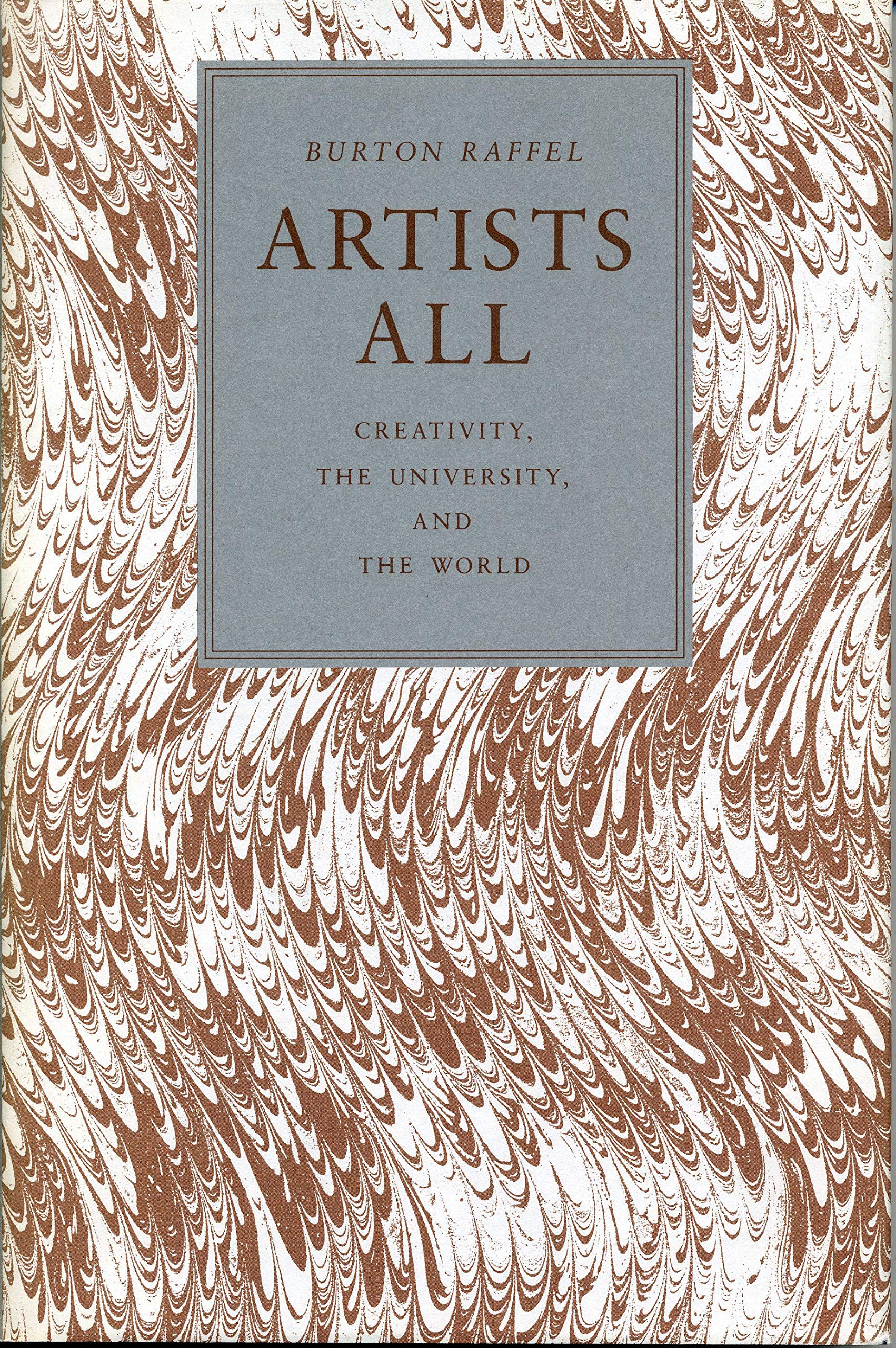
Artists All: Creativity, the University, and the World,Used
Sold by Ergodebooks, an authorized reseller.
Returns accepted within 30 days | support@ergodebooks.com
Shipping Information
- Free Standard Shipping — United States only
- Processing Time: 3–5 business days
- Estimated Delivery: 6–10 business days after dispatch
- Double-boxed, fully insured & discreetly packaged
- Tracking number sent via email once dispatched
Returns & Refund
Returns accepted within 30 days of delivery.
Damaged or Defective Item
Free return shipping + replacement or full refund
Wrong Item Received
Free return shipping + replacement or full refund
Change of Mind
Return shipping at customer's expense · 25% restocking fee applies
Payment Option

Basic human drivescuriosity, passion, the need to provide shape and structure, the excitement of discoveryunderlie all human creativity. Different minds and sensibilities necessarily focus on different aspects of human experience. However, in our educational systems and professional lives, we give undue and untrue emphasis to our differences rather than to our similarities. In Artists All Burton Raffel demonstrates that the creative force in the natural and social sciences is essentially the same as the creative energies of the arts; that the arts and aesthetic experiences frequently inspire insight in scientists and sociologist; that the arts themselves, though mutually untranslatable, share a deep unity; that disciplinary boundaries and divisions can frequently stunt creativity; that "what we chose to call artistic creativity is nothing more or less than the heightened engagement of human beings with themselves, their fellows, and their environment"; and that there is always "a link between what artists produce and their stance toward their society's place and posture in the world."When used to define intellectual disciplines, the very word Interdisciplinary is a misnomer, almost a contradiction in terms, Raffel contends, because it implies boundaries rather than interconnectedness and interrelationships. Since it is his own primary concern, Raffel uses literature as a touchstone, analyzing its relationships with social science, natural science, music, and the visual arts. He then provides practical recommendations, addressed to the academic community as a whole, about ways of restructuring universities to reflect functioning interdisciplinary realities rather than convenient but artificial and seriously constrictive disciplinary boundaries. Written with humor and sensitivity, Artists All makes a significant contribution to current thinking about higher education.
⚠️ WARNING (California Proposition 65):
This product may contain chemicals known to the State of California to cause cancer, birth defects, or other reproductive harm.
For more information, please visit www.P65Warnings.ca.gov.