
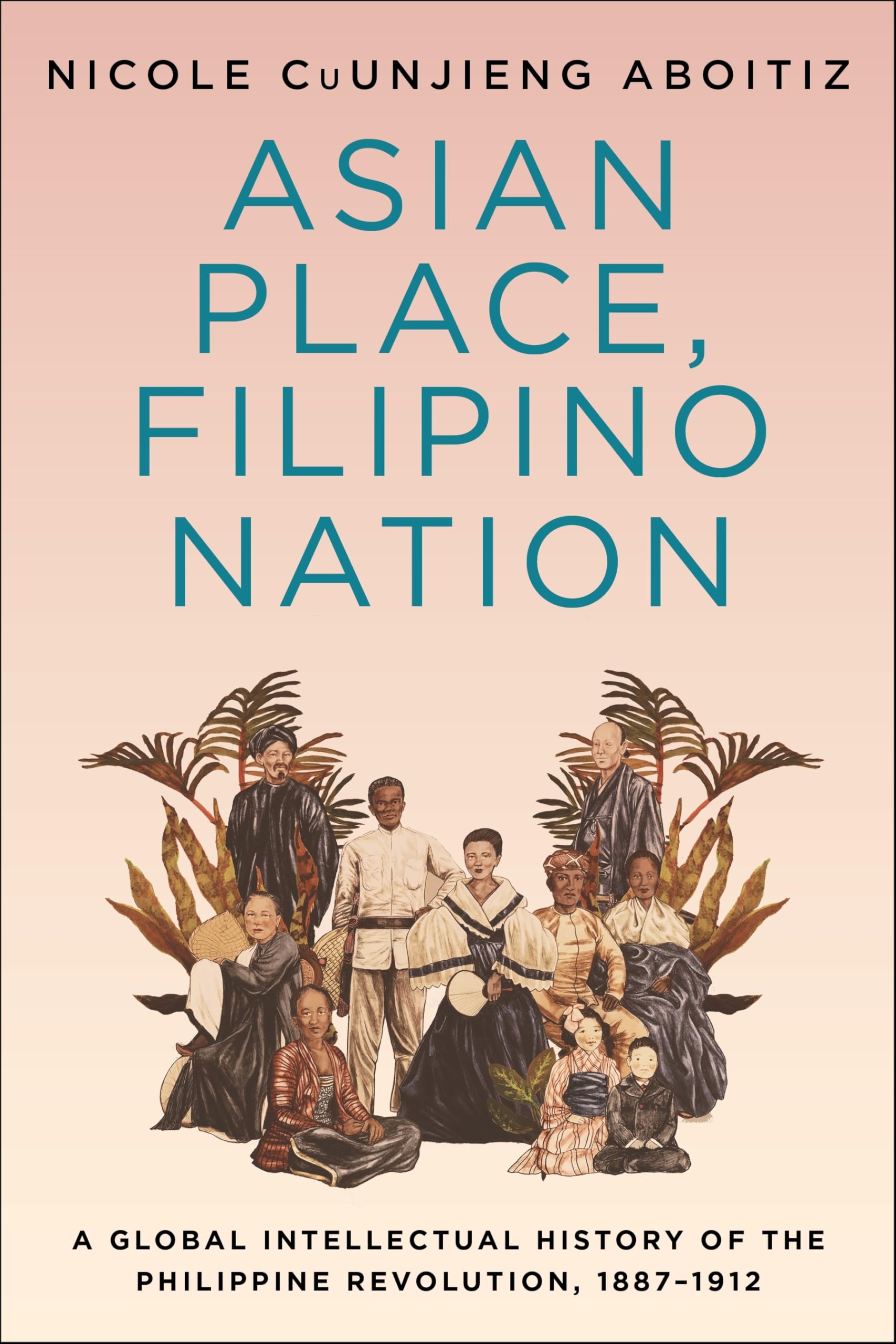
Title
Asian Place, Filipino Nation: A Global Intellectual History of the Philippine Revolution, 18871912 (Columbia Studies in Interna,New
Sold by Ergodebooks, an authorized reseller.
Returns accepted within 30 days | support@ergodebooks.com
Shipping Information
- Free Standard Shipping — United States only
- Processing Time: 3–5 business days
- Estimated Delivery: 6–10 business days after dispatch
- Double-boxed, fully insured & discreetly packaged
- Tracking number sent via email once dispatched
Returns & Refund
Returns accepted within 30 days of delivery.
Damaged or Defective Item
Free return shipping + replacement or full refund
Wrong Item Received
Free return shipping + replacement or full refund
Change of Mind
Return shipping at customer's expense · 25% restocking fee applies
Payment Option

The Philippine Revolution of 18961905, which began against Spain and continued against the United States, took place in the context of imperial subjugation and local resistance across Southeast Asia. Yet scholarship on the revolution and the turn of the twentieth century in Asia more broadly has largely approached this pivotal moment in terms of relations with the West, at the expense of understanding the EastEast and Global South connections that knit together the regions experience. Asian Place, Filipino Nation reconnects the Philippine Revolution to the histories of Southeast and East Asia through an innovative consideration of its transnational political setting and regional intellectual foundations.Nicole CuUnjieng Aboitiz charts turnofthetwentiethcentury Filipino thinkers and revolutionaries Asianist political organizing and protonational thought, scrutinizing how their constructions of the place of Asia connected them to their regional neighbors. She details their material and affective engagement with PanAsianism, tracing how colonized peoples in the periphery of this imagined Asiafocusing on Filipinos, but with comparison to the Vietnamesereformulated a political and intellectual project that envisioned anticolonial Asian solidarity with the Asian center of Japan. CuUnjieng Aboitiz argues that the revolutionary First Philippine Republics harnessing of transnational networks of support, activism, and association represents the crucial first instance of PanAsianists lending material aid toward anticolonial revolution against a Western power. Uncovering the PanAsianism of the periphery and its critical role in shaping modern Asia, Asian Place, Filipino Nation offers a vital new perspective on the Philippine Revolutions global context and content.
⚠️ WARNING (California Proposition 65):
This product may contain chemicals known to the State of California to cause cancer, birth defects, or other reproductive harm.
For more information, please visit www.P65Warnings.ca.gov.