
Title
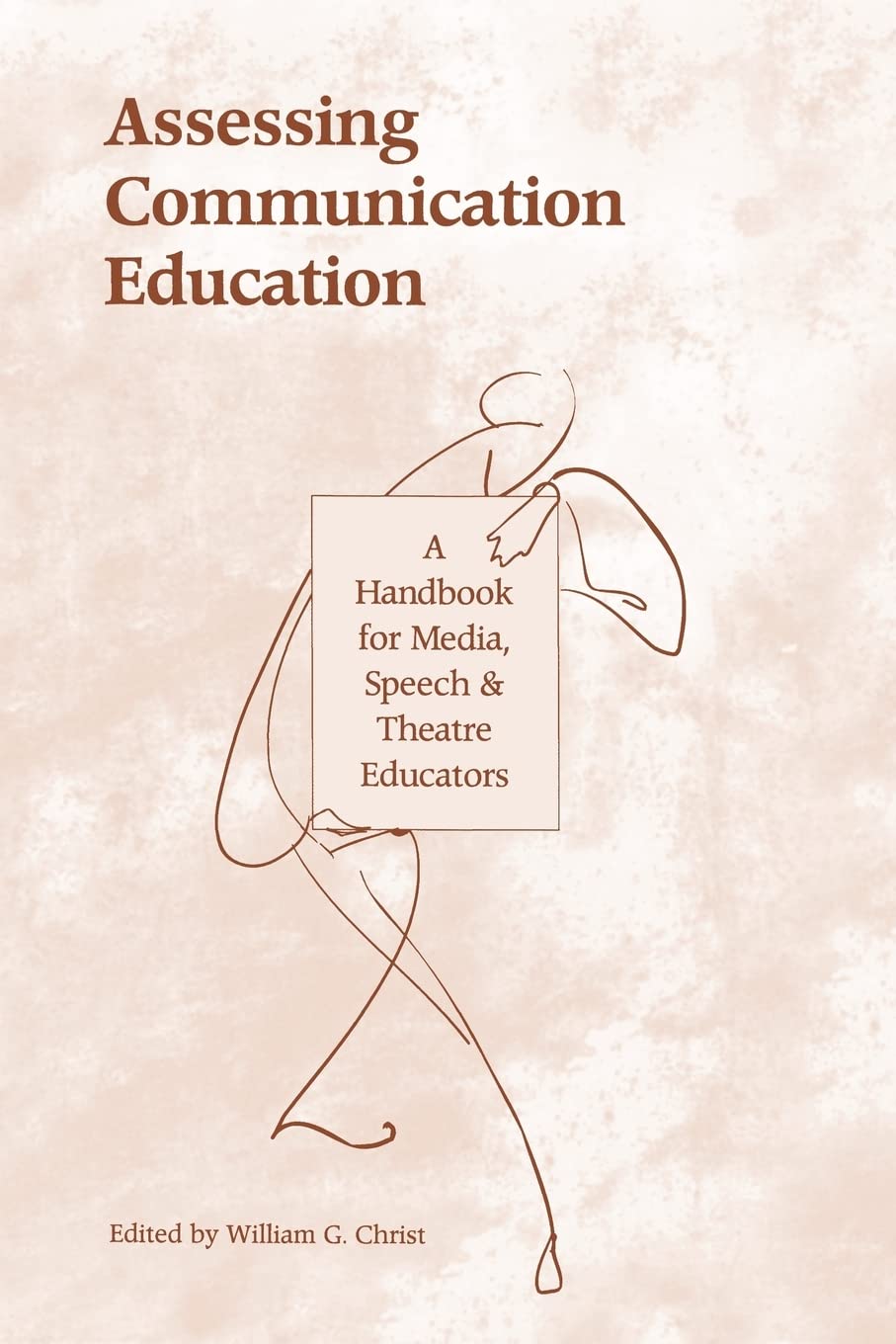
Assessing Communication Education: A Handbook For Media, Speech, And Theatre Educators (Routledge Communication Series),Used
Sold by Ergodebooks, an authorized reseller.
Returns accepted within 30 days | support@ergodebooks.com
Shipping Information
- Free Standard Shipping — United States only
- Processing Time: 3–5 business days
- Estimated Delivery: 6–10 business days after dispatch
- Double-boxed, fully insured & discreetly packaged
- Tracking number sent via email once dispatched
Returns & Refund
Returns accepted within 30 days of delivery.
Damaged or Defective Item
Free return shipping + replacement or full refund
Wrong Item Received
Free return shipping + replacement or full refund
Change of Mind
Return shipping at customer's expense · 25% restocking fee applies
Payment Option

Designed as a handbook, this text provides media, speech (public speaking, interpersonal, small group, and organizational communication), and theatre educators with both the theoretical and practical ammunition to fight the assessment battles on their campuses. The philosophical implications of accountability are balanced with concrete, specific, and usable assessment strategies. Stressing student, faculty, course, program, department, and institutional assessment, this book's aim is to provide, in one place, information that will help diverse and complex communication programs face the growing challenges in assessment.The book is divided into three sections: background and foundational information for assessment; broad assessment strategies that apply to a variety of media, 'speech,' and theatre courses and programs; and contextspecific assessment strategies. While covering a host of topics, it:* provides an overview of assessment and suggests how it might impact communication education,* discusses the elements of program assessment and how linkage of mission statements with outcomes can lead to strong, innovative programs,* compares and contrasts regional association requirements and presents a specific howto strategy for writing outcome statements,* discusses teaching evaluation and argues that we need to identify the 'what' of teaching before we try to measure the 'how,'* looks at creative ways for formative and summative course evaluation that starts with the creation of an explicit syllabus,* discusses the use of capstone courses as a way of evaluating not only their major but also how students have integrated their 'total' educational experience,* suggests the variety of ways that interpersonal communication can be assessed and calls for future research that stresses the 'knowledge' component of learning,* reports on a strategy for developing small group communication assessment measures, and* provides media, speech, and theatre faculty and administrators with the background, understanding and tools to build stonger programs and develop better courses and educational experiences for their students.
⚠️ WARNING (California Proposition 65):
This product may contain chemicals known to the State of California to cause cancer, birth defects, or other reproductive harm.
For more information, please visit www.P65Warnings.ca.gov.