
Title
Assessing Vulnerability to Global Environmental Change: Making Research Useful for Adaptation Decision Making and Policy,Used
Sold by Ergodebooks, an authorized reseller.
Returns accepted within 30 days | support@ergodebooks.com
Shipping Information
- Free Standard Shipping — United States only
- Processing Time: 3–5 business days
- Estimated Delivery: 6–10 business days after dispatch
- Double-boxed, fully insured & discreetly packaged
- Tracking number sent via email once dispatched
Returns & Refund
Returns accepted within 30 days of delivery.
Damaged or Defective Item
Free return shipping + replacement or full refund
Wrong Item Received
Free return shipping + replacement or full refund
Change of Mind
Return shipping at customer's expense · 25% restocking fee applies
Payment Option

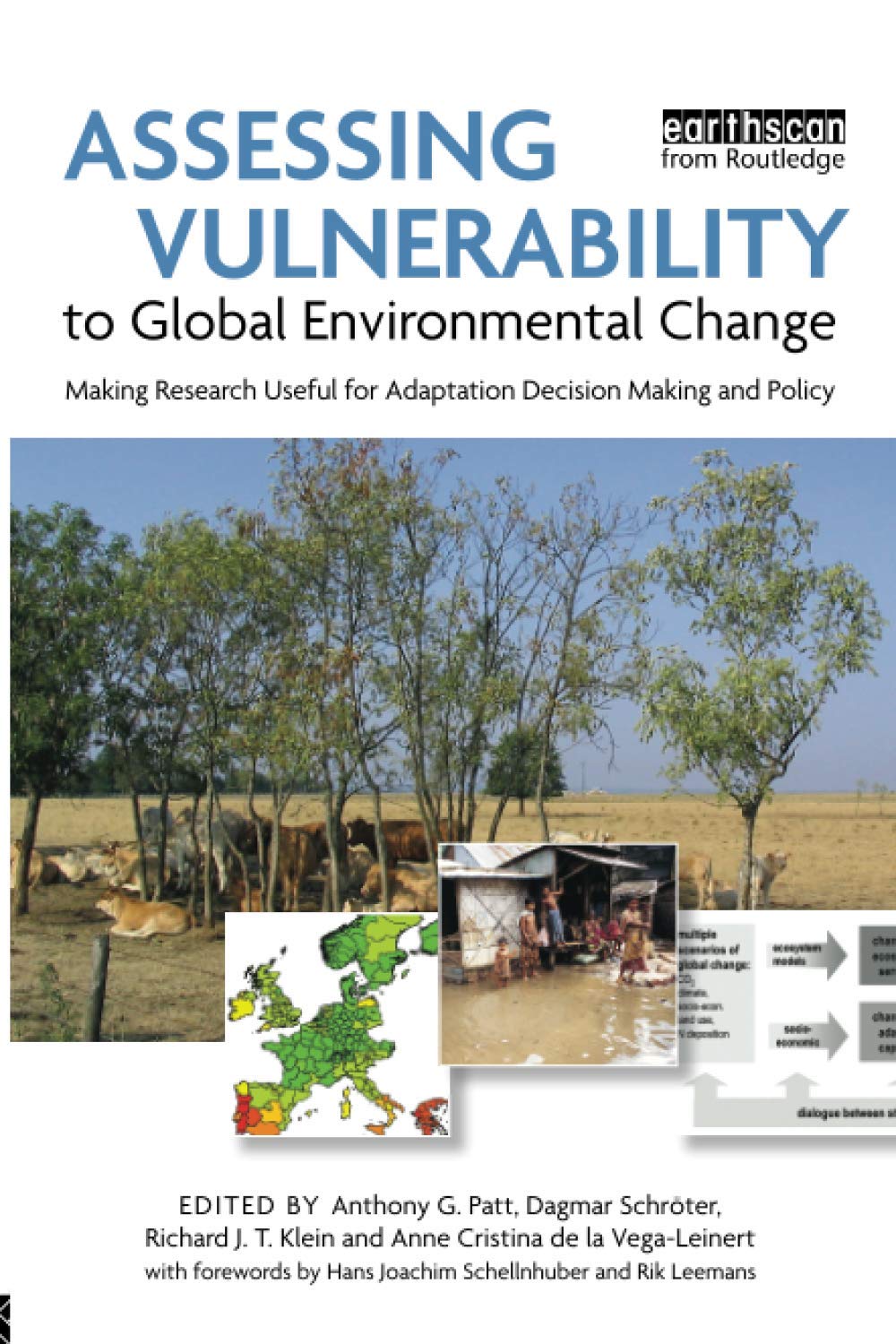
Assessing the vulnerability of human populations to global environmental change, particularly climate change, is now the main imperative of research and international action. However, much of the research into vulnerability is not designed to feed directly into decision making and policy, creating a gap between the knowledge created by researchers and what is required by decision makers.This book seeks to rectify this problem and bridge the gap. It discusses vulnerability as the central theme and brings together many different applications from disaster studies, climate change impact studies and several other fields and provides the most comprehensive synthesis of definitions, theories, formalization and applications to date, illustrated with examples from different disciplines, regions and periods, and from local through to regional, national and international levels.Case study topics cover sea level rise, vulnerability to changes in ecosystem services, assessing the vulnerability of human health and 'double exposure' to climate change and trade liberalization amongst other issues. Research outcomes stress that sciencepolicy dialogues must be transparent to be effective and concentrate on a mutual understanding of the concepts used. A key research finding is that the most useful information for decision makers is that which shows the separate causes and drivers of vulnerability, rather than presenting vulnerability in an aggregated form. The book concludes with a unifying framework for analysing integrated methodologies of vulnerability assessment and guiding how research and policy can be linked to reduce vulnerability.
⚠️ WARNING (California Proposition 65):
This product may contain chemicals known to the State of California to cause cancer, birth defects, or other reproductive harm.
For more information, please visit www.P65Warnings.ca.gov.