If you have any questions, you are always welcome to contact us. We'll get back to you as soon as possible, withing 24 hours on weekdays.
Customer service
All questions about your order, return and delivery must be sent to our customer service team by e-mail at yourstore@yourdomain.com
Sale & Press
If you are interested in selling our products, need more information about our brand or wish to make a collaboration, please contact us at press@yourdomain.com
Help
If you have any questions, you are always welcome to contact us. We'll get back to you as soon as possible, withing 24 hours on weekdays.
Customer service
All questions about your order, return and delivery must be sent to our customer service team by e-mail at yourstore@yourdomain.com
Sale & Press
If you are interested in selling our products, need more information about our brand or wish to make a collaboration, please contact us at press@yourdomain.com
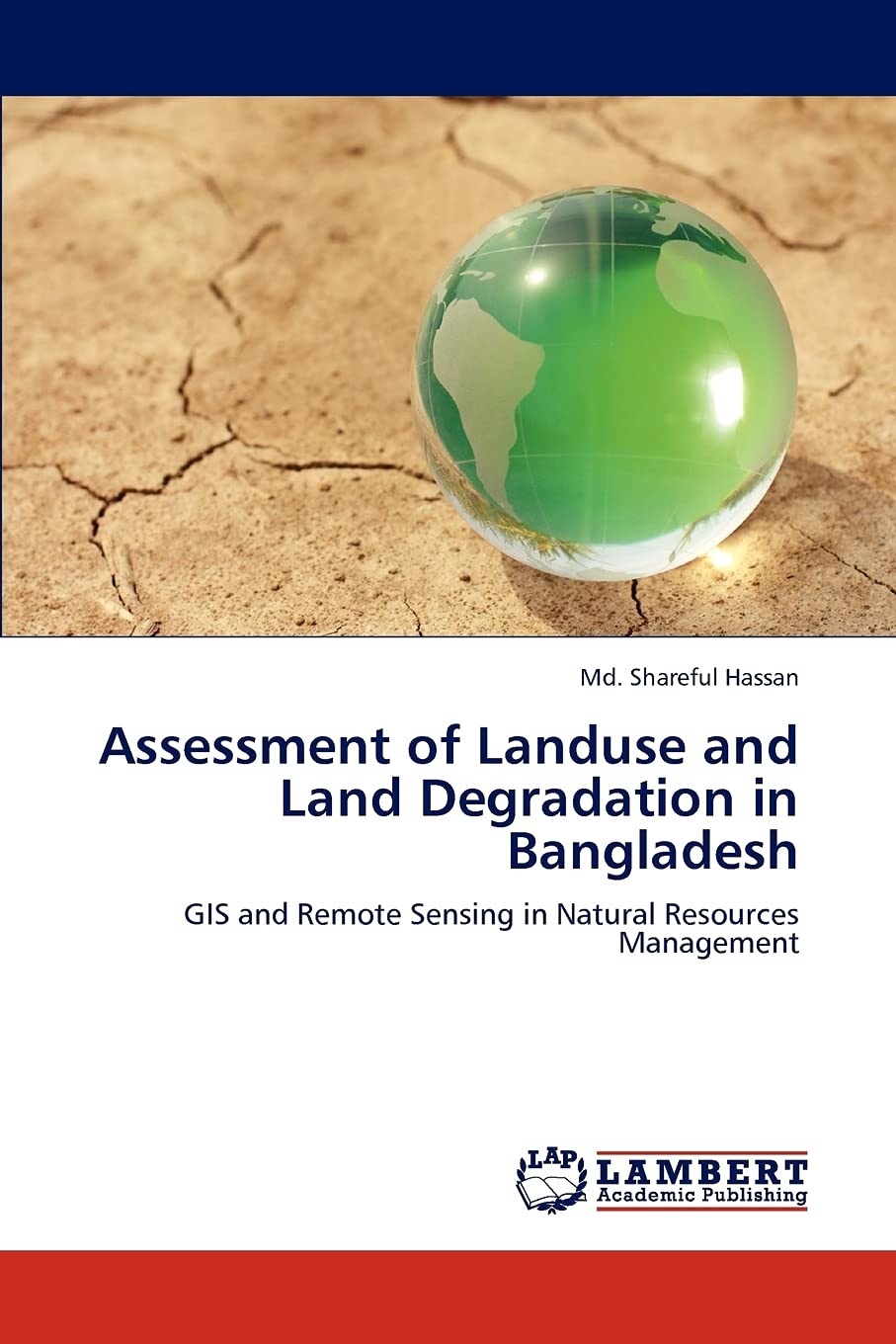
In recent years, the NorthWestern part of Bangladesh has been experiencing land degradation as well as changing landuse patterns due to huge population and their socioeconomic activities. To perform this research, Landsat TM and ETM+ of 1989 and 2001 were used to identify land degradation and to assess landuse change over 12 years in the study area. According to the change detection report from 1989 to 2001, irrigated agriculture increased about 156 Km2 while winter agriculture is decreased about 49 Km2 over the areas. During this period, forest has decreased whereas settlements increased by 13 Km2. The overall accuracy and Kappa coefficient of the change detection were 80 % and 77%, respectively. The brightness image of a Tasseled Cap Transform (TCT) was used to extract dry soil in this study. Degraded soils have increased from 1989 (3% of total lands) to 2001 (6% of total lands) while forest and winter agriculture changed to irrigated agriculture and settlements. The resulting images show water bodies increased due to new excavation of ponds, lakes, and canals over 12 years in the study area.
⚠️ WARNING (California Proposition 65):
This product may contain chemicals known to the State of California to cause cancer,
birth defects, or other reproductive harm.
For MAP (Minimum Advertised Price) violations and Intellectual Property (IP) or Trademark concerns, please contact:
support@ergodebooks.com
⚠️ California Proposition 65 Warning: Some products sold on this website may expose you to chemicals known to the State of California to cause cancer, birth defects, or other reproductive harm. For more information, visit www.P65Warnings.ca.gov.