
Title
Assessment Tools for Recreational Therapy and Related Fields,New
Sold by Ergodebooks, an authorized reseller.
Returns accepted within 30 days | support@ergodebooks.com
Shipping Information
- Free Standard Shipping — United States only
- Processing Time: 3–5 business days
- Estimated Delivery: 6–10 business days after dispatch
- Double-boxed, fully insured & discreetly packaged
- Tracking number sent via email once dispatched
Returns & Refund
Returns accepted within 30 days of delivery.
Damaged or Defective Item
Free return shipping + replacement or full refund
Wrong Item Received
Free return shipping + replacement or full refund
Change of Mind
Return shipping at customer's expense · 25% restocking fee applies
Payment Option

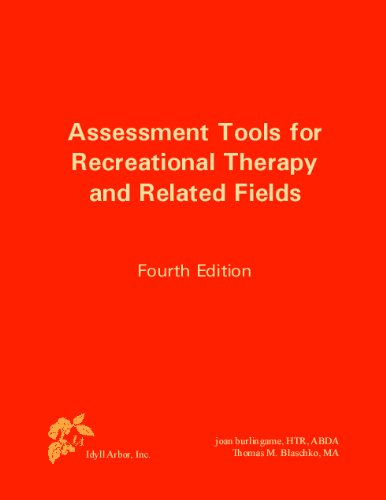
Since its first edition in 1990, this has become the standard reference book on assessment in Recreational Therapy. As with the earlier editions, the purpose of this book is to provide both the therapist and the student with specific, critical information about the assessment process, specific tools, and specific standards related to assessment. The information on national assessments, such as the RAI/MDS for longterm care, is especially important to therapists. The fourth edition has 726 pages with five new assessments and updated information on all national and international standards. This book is used in over fifty colleges and nine different countries!
⚠️ WARNING (California Proposition 65):
This product may contain chemicals known to the State of California to cause cancer, birth defects, or other reproductive harm.
For more information, please visit www.P65Warnings.ca.gov.
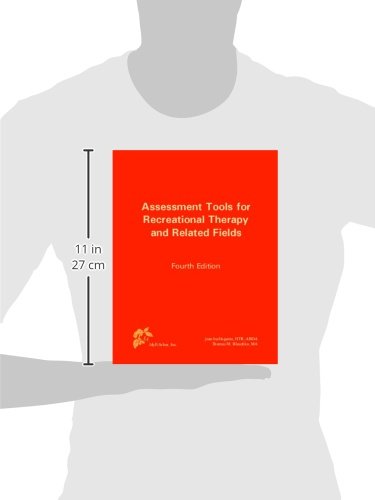
- Q: What are the dimensions of this book? A: The book measures eight point seven inches in length, one point seven inches in width, and eleven inches in height. These dimensions make it a standard-sized hardcover that is easy to handle.
- Q: How many pages does this book have? A: This book contains seven hundred twenty-six pages. It offers extensive information on assessment tools in Recreational Therapy and related fields.
- Q: What is the binding type of the book? A: The book is bound in hardcover. This type of binding ensures durability and longevity for frequent use.
- Q: Who is the author of this book? A: The author of this book is Joan Burlingame. She is recognized for her expertise in Recreational Therapy assessment.
- Q: Is this book suitable for beginners? A: Yes, this book is suitable for beginners. It provides critical information on assessment processes and tools for those new to Recreational Therapy.
- Q: Can this book be used in educational settings? A: Yes, this book is used in over fifty colleges across nine different countries. It serves as a crucial resource for students and educators alike.
- Q: How should I care for this book? A: To care for this book, keep it in a dry place away from direct sunlight. Avoid bending the pages and ensure it is stored upright to maintain its condition.
- Q: Is this book safe for library use? A: Yes, this book is safe for library use. Its hardcover binding makes it resilient to wear and tear commonly associated with library circulation.
- Q: What is the recommended audience for this book? A: The recommended audience includes both therapists and students in the field of Recreational Therapy. It provides valuable insights applicable to both groups.
- Q: What if I receive a damaged book? A: If you receive a damaged book, you should contact the seller for a return or exchange. Most retailers have policies in place to address such issues.
- Q: Are there updates in the latest edition? A: Yes, the fourth edition includes updated information on national and international standards, along with five new assessments. This keeps the content relevant and useful.
- Q: Can I find this book in different countries? A: Yes, this book is available in nine different countries. Its international reach highlights its importance in the field of Recreational Therapy.
- Q: Is there a digital version of this book? A: No, the current product listing is for a hardcover edition only. There is no mention of a digital version available for this book.
- Q: What topics are covered in this book? A: The book covers various topics related to the assessment process in Recreational Therapy, including specific tools and standards. It serves as a comprehensive resource.
- Q: Does this book include practical examples? A: Yes, this book includes practical examples and standards applicable to assessment in Recreational Therapy, enhancing its usefulness for practitioners.
- Q: What makes this book a standard reference? A: This book is considered a standard reference due to its extensive coverage of assessment tools and processes, along with its long-standing reputation since 1990.