
Title
Assets, Livelihoods, And Social Policy (New Frontiers Of Social Policy Series),New
Sold by Ergodebooks, an authorized reseller.
Returns accepted within 30 days | support@ergodebooks.com
Shipping Information
- Free Standard Shipping — United States only
- Processing Time: 3–5 business days
- Estimated Delivery: 6–10 business days after dispatch
- Double-boxed, fully insured & discreetly packaged
- Tracking number sent via email once dispatched
Returns & Refund
Returns accepted within 30 days of delivery.
Damaged or Defective Item
Free return shipping + replacement or full refund
Wrong Item Received
Free return shipping + replacement or full refund
Change of Mind
Return shipping at customer's expense · 25% restocking fee applies
Payment Option

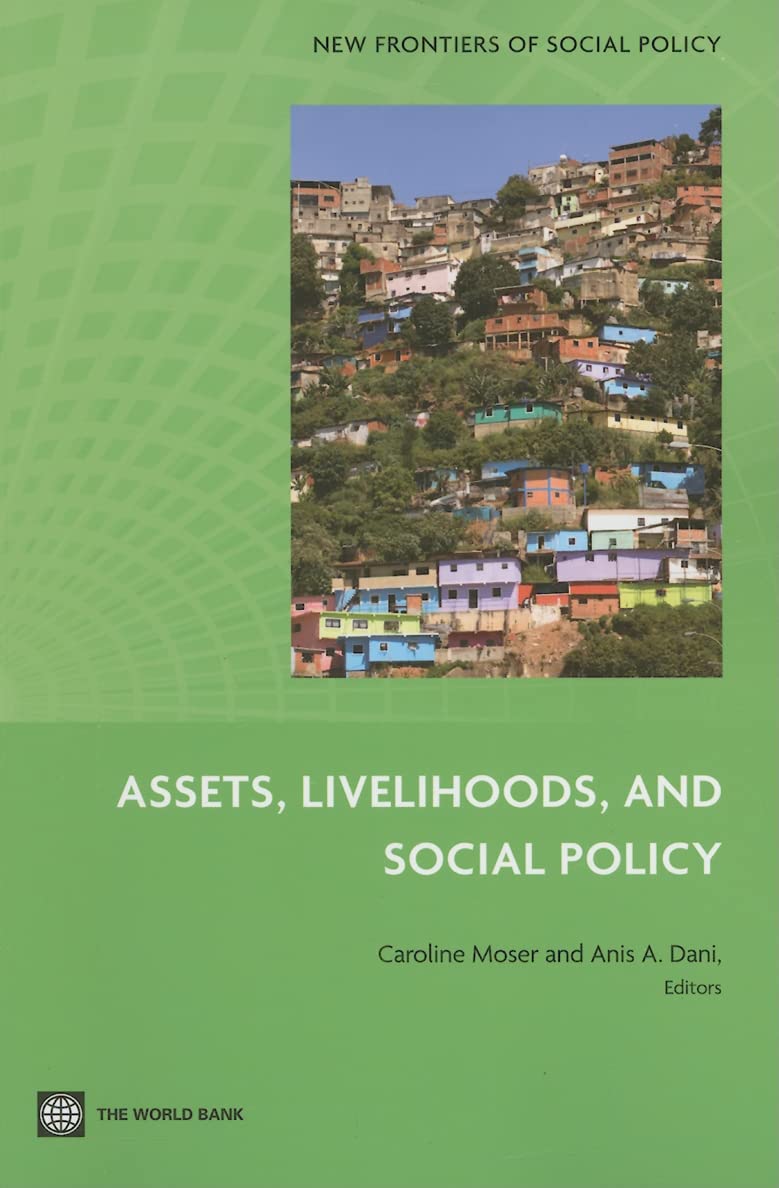
Given the lack of adequate universal social welfare for those unable to find jobs in the salaried formal sector, the livelihoods and wellbeing of most poor people depends heavily on their asset base. This includes their ability to access and accumulate assets, obtain decent returns from these assets, and use their asset base to manage risks. Assets, Livelihoods, and Social Policy discusses the diverse strategies adopted by people in different contexts to accumulate assets through migration, housing investments, natural resources management, and informal businesses. An assetbased social policy can strengthen asset accumulation strategies as well as help the poor overcome the constraints of unfavorable institutional environments. To a considerable extent, asset accumulation strategies depend on the agency exercised by people themselves through individual or collective action. At the same time, the status of policies and institutions can enable or hinder these strategies and affect livelihood outcomes. In synthesis, the case studies lead to the differentiation among three different types of policies: policies that affect outcomes by directly influencing access to assets by the poor such as land, housing, natural resources, or credit. policies and public investments that change the nature of returns on assets such as investments in rural roads, agricultural inputs, and market development. policies that transform the value of assets held by the poor by virtue of administrative decisions that increase or reduce value such as reclassification of land from arable or pasture to protected lands, land use regulations affecting resource use, or modification in regulations governing labor rights or migration. The chapters, originally ommissioned to reexamine major gaps in knowledge and development practice ten years after the Copenhagen Summit on Social Development, are authored by leading scholars from economics, anthropology, sociology, geography, and development studies. This book is part of a new series, New Frontiers in Social Policy, which examines issues and approaches to extend the boundaries of social policy beyond conventional social services toward policies and institutions that improve equality of opportunity and social justice in developing countries. Other titles in the series include Inclusive States: Social Policy and Structural Inequalities, and Institutional Pathways to Equity: Addressing Inequality Traps.
⚠️ WARNING (California Proposition 65):
This product may contain chemicals known to the State of California to cause cancer, birth defects, or other reproductive harm.
For more information, please visit www.P65Warnings.ca.gov.