
Title
Asymmetric Monetary Transmission in Europe (European and Transatlantic Studies),Used
Sold by Ergodebooks, an authorized reseller.
Returns accepted within 30 days | support@ergodebooks.com
Shipping Information
- Free Standard Shipping — United States only
- Processing Time: 3–5 business days
- Estimated Delivery: 6–10 business days after dispatch
- Double-boxed, fully insured & discreetly packaged
- Tracking number sent via email once dispatched
Returns & Refund
Returns accepted within 30 days of delivery.
Damaged or Defective Item
Free return shipping + replacement or full refund
Wrong Item Received
Free return shipping + replacement or full refund
Change of Mind
Return shipping at customer's expense · 25% restocking fee applies
Payment Option

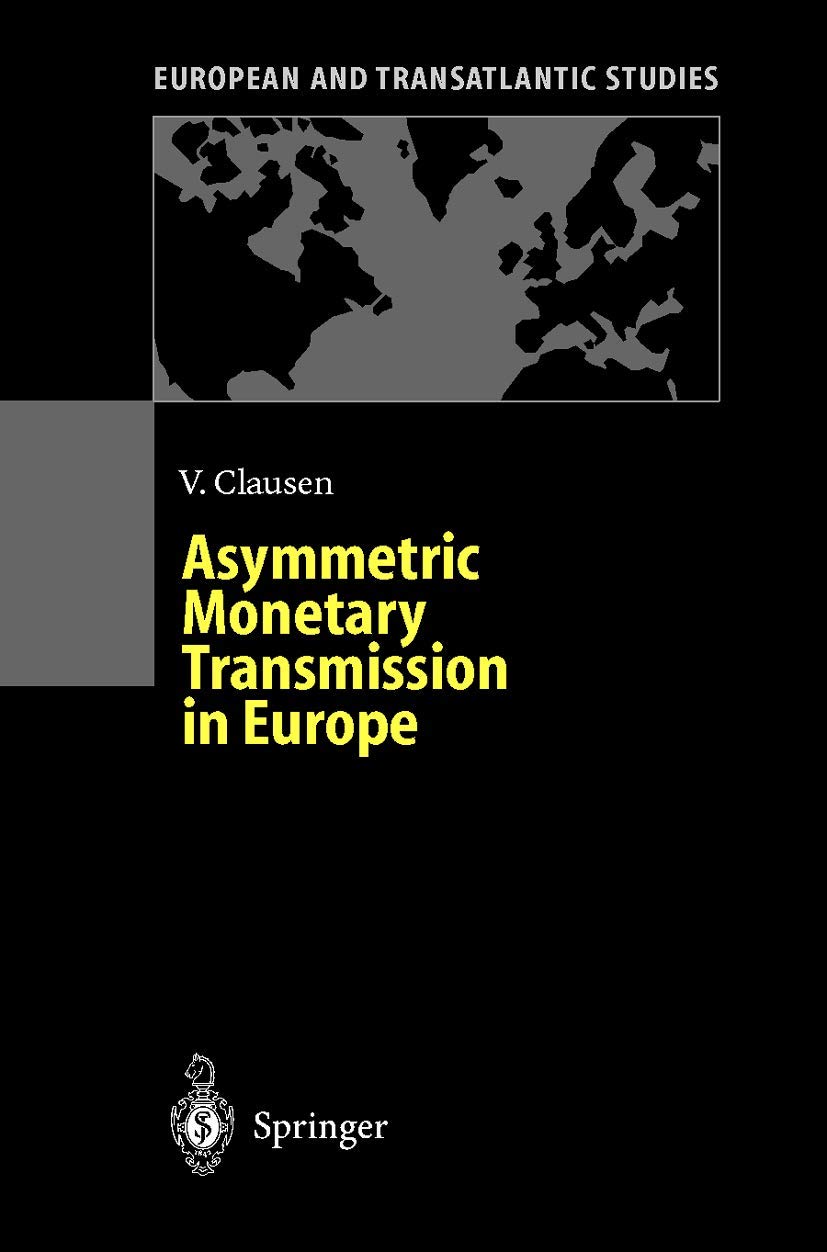
The euro and the ESCB have started in January 1999 and there is naturally a wideranging interest in academia and among policymakers in OECD coun tries, how successful European Monetary Union will and can be. EMU has started with 11 countries and experienced a rapid depreciation of the cur rency. With so many EU countries joining for a historical monetary union in a period of economic globalization, international financial market changes and ongoing EU enlargement the problem of monetary policy efficiency becomes crucial; especially as so many countries in the EU still have high unemploy ment rates and the euro has just started at the beginning of a cyclical upswing in the euro zone. Monetary policy is also quite crucial, because the Maastricht convergence criteria severely restrict the scope of national fiscal policy. With a very limited stock of valuable European monetary experience which could be usefully exploited by the ECB and the ESCB respectively, one naturally will appreciate advanced economic modeling of the main issues. This book takes an analytical look at the problem of asymmetric monetary transmission in Euroland. Facing the ECB's monetary policy, individual mem ber countries are likely to experience different policy effects. Countries differ in their financial structure a wellknown argument in the literature but also in the characteristics of goods and labor markets. The latter fields have been somewhat neglected in the literature but receive broad analytical attention here.
⚠️ WARNING (California Proposition 65):
This product may contain chemicals known to the State of California to cause cancer, birth defects, or other reproductive harm.
For more information, please visit www.P65Warnings.ca.gov.