If you have any questions, you are always welcome to contact us. We'll get back to you as soon as possible, withing 24 hours on weekdays.
Customer service
All questions about your order, return and delivery must be sent to our customer service team by e-mail at yourstore@yourdomain.com
Sale & Press
If you are interested in selling our products, need more information about our brand or wish to make a collaboration, please contact us at press@yourdomain.com
Help
If you have any questions, you are always welcome to contact us. We'll get back to you as soon as possible, withing 24 hours on weekdays.
Customer service
All questions about your order, return and delivery must be sent to our customer service team by e-mail at yourstore@yourdomain.com
Sale & Press
If you are interested in selling our products, need more information about our brand or wish to make a collaboration, please contact us at press@yourdomain.com
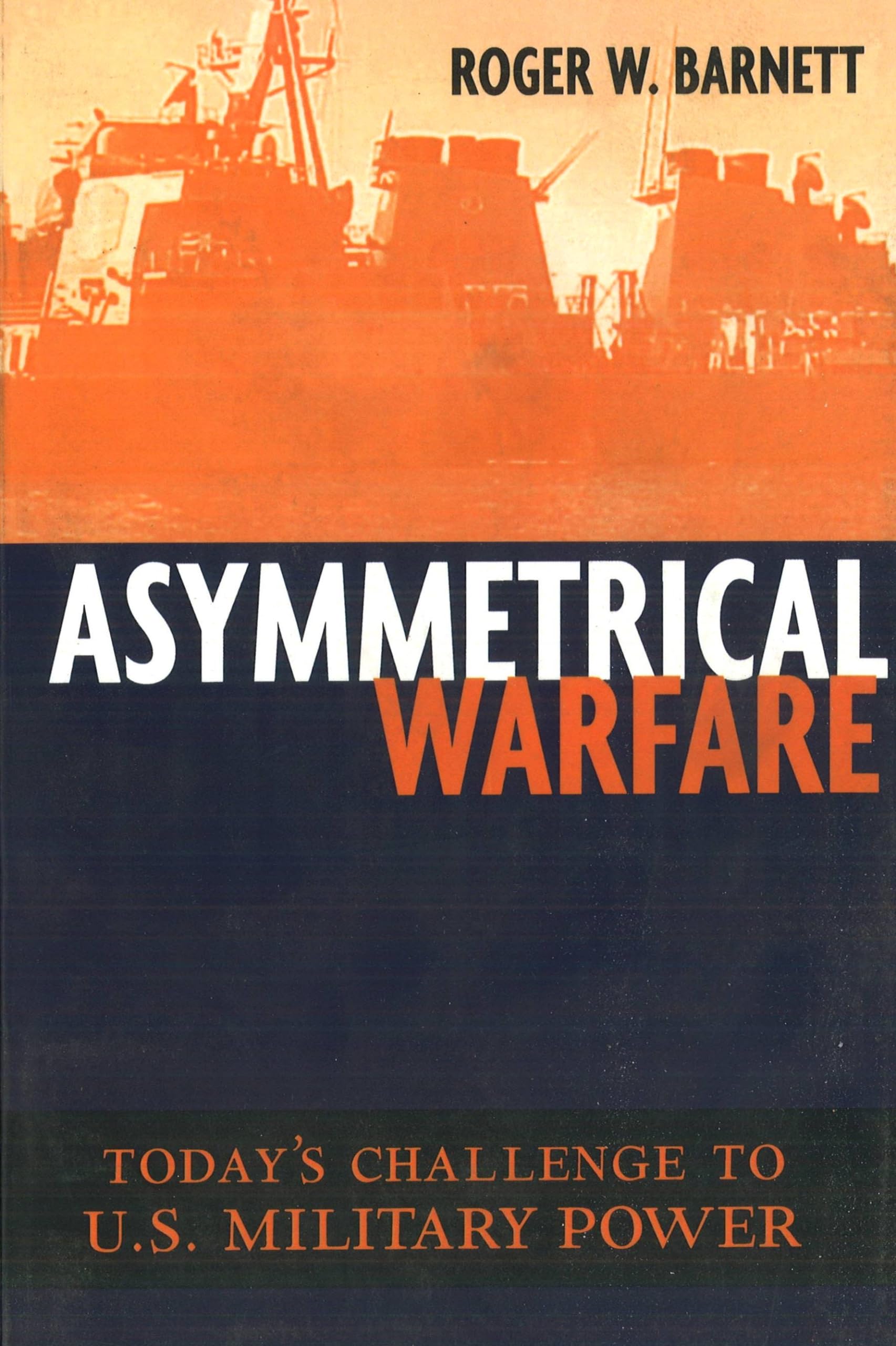
In this concise and penetrating study, Roger Barnett illuminates the effect of operational, organizational, legal, and moral constraints on the ability of the U.S. to use military force. As the tragic events of September 11 demonstrated, potential adversaries can take advantage of these limitations, thus spawning 'asymmetrical warfare.' Barnett defines asymmetrical warfare as not simply a case of pitting one's strength against another's weakness but rather of taking the calculated risk to exploit an adversary's inability or unwillingness to prevent, or defend against, certain actions. For instance, launching chemical, biological, or suicide attacks; taking indiscriminate actions against critical infrastructure; using hostages or human shields; deliberately destroying the environment; and targeting noncombatants all constitute possible asymmetrical warfare scenarios. Against these acts, the U.S. has not prepared any response in kind. Indeed it either cannot or will not undertake such responses, thus making these attacks especially difficult to counter. This refusal to retaliate in an 'eye for an eye' fashion complicates the dilemma of American policymakers who seek to wield power and influence on the world stage while simultaneously projecting a peaceful and benign image. Barnett concludes that the U.S. must create a formal system of selectively eliminating the constraints that dictate our response to certain situations or scenarios. Failure to make such changes will only increase paralysis and, when the use of force is required, contribute to the already heightened risks.
⚠️ WARNING (California Proposition 65):
This product may contain chemicals known to the State of California to cause cancer,
birth defects, or other reproductive harm.
For MAP (Minimum Advertised Price) violations and Intellectual Property (IP) or Trademark concerns, please contact:
support@ergodebooks.com
⚠️ California Proposition 65 Warning: Some products sold on this website may expose you to chemicals known to the State of California to cause cancer, birth defects, or other reproductive harm. For more information, visit www.P65Warnings.ca.gov.