
Title
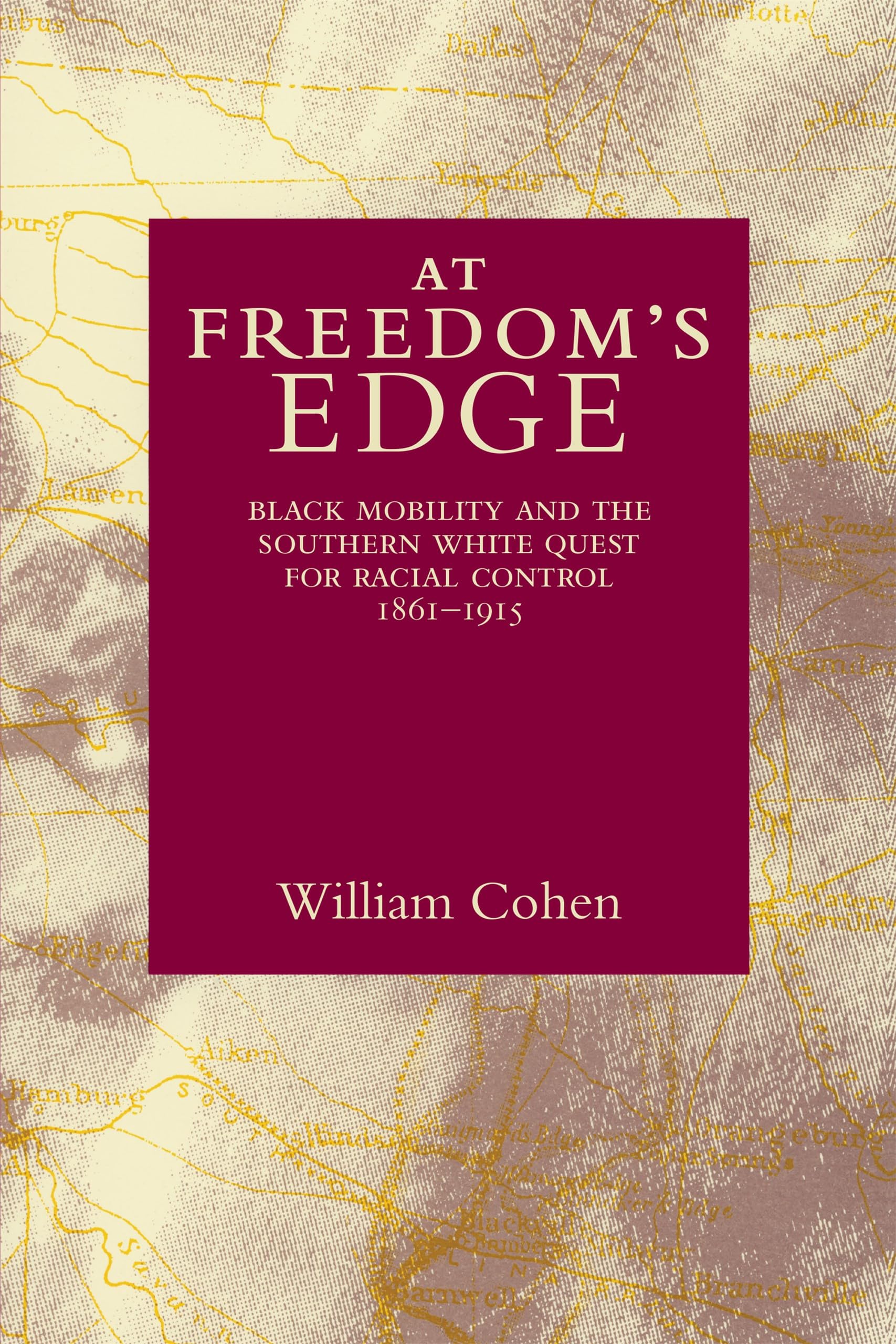
At Freedom's Edge: Black Mobility and the Southern White Quest for Racial Control, 18611915,Used
Sold by Ergodebooks, an authorized reseller.
Returns accepted within 30 days | support@ergodebooks.com
Shipping Information
- Free Standard Shipping — United States only
- Processing Time: 3–5 business days
- Estimated Delivery: 6–10 business days after dispatch
- Double-boxed, fully insured & discreetly packaged
- Tracking number sent via email once dispatched
Returns & Refund
Returns accepted within 30 days of delivery.
Damaged or Defective Item
Free return shipping + replacement or full refund
Wrong Item Received
Free return shipping + replacement or full refund
Change of Mind
Return shipping at customer's expense · 25% restocking fee applies
Payment Option

Even after the Civil War, blacks despaired of being treated as equals in a white mans world. They were deprived of many of the most basic rights of citizenship, and were often cheated and exploited. As a result they clung tenaciously to that most important of new rightsthe right to move.At Freedoms Edge is William Cohens comprehensive history of black mobility from the Civil War to World War I. Cohen treats mobility as a central component of black freedom, crucial in the emergence of a free labor system, and equally crucial as an obstacle to the persistent southern white effort to reassert hegemony over blacks in all areas of life. This study has a rigorously southern focus. Most historians of black migration concentrate on telling how the migrants adjusted to northern life, but Cohen provides detailed accounts of internal southern movement and efforts to leave the South. He also examines the relative absence, during this period, of significant migration to the North.Cohen presents a thorough treatment of the efforts of the Freedmens Bureau to restructure the southern labor system, showing how heavily this organization was influenced by questions involving black mobility. He also gives the fullest picture yet of the postwar emergence of the occupation of the labor agent. Among the migration episodes he considers are the Liberia movement, the Kansas exodus, the movement of blacks from Georgia and the Carolinas to Arkansas and Mississippi, and the migration to Oklahoma.The postReconstruction era was marked by a concerted white thrust to destroy black freedom. Cohen shows that while whites succeeded in establishing almost total dominion in the political and social realms, they failed when they tried to erect a system of involuntary servitude that would seriously limit black movement. Cohen argues that the difference here arose from the fact that whites were largely united on matters such as suffrage and segregation but were divided on the desirability of immobilizing the black labor force. Those who depended on black labor sought legal formulas aimed at stopping black movement. They met resistance, however, from those who did not share their economic interests. This study, then, is almost as much a legal history of white efforts to interdict black movement as it is a history of black migration.At Freedoms Edge is a probing study of the black search for freedom within freedom.
⚠️ WARNING (California Proposition 65):
This product may contain chemicals known to the State of California to cause cancer, birth defects, or other reproductive harm.
For more information, please visit www.P65Warnings.ca.gov.
- Q: What is the main topic of 'At Freedom's Edge'? A: 'At Freedom's Edge' explores the history of black mobility in the southern United States from the Civil War to World War I, focusing on the struggles for racial control and freedom during this period.
- Q: Who is the author of this book? A: The author of 'At Freedom's Edge' is William Cohen, who provides a comprehensive analysis of black mobility and its significance in the context of racial dynamics in the South.
- Q: What kind of condition is the book in? A: 'At Freedom's Edge' is listed as a used book in good condition, indicating that it may show some signs of wear but is generally well-preserved.
- Q: How many pages does 'At Freedom's Edge' have? A: 'At Freedom's Edge' contains a total of 362 pages, offering an in-depth exploration of its subject matter.
- Q: What is the publication date of this book? A: 'At Freedom's Edge' was published on March 1, 1991, providing historical insights that are still relevant today.
- Q: What topics are covered in this book? A: 'At Freedom's Edge' covers topics such as the Freedmen's Bureau, internal southern migration, the labor agent occupation, and various migration episodes, including the Liberia movement and the Kansas exodus.
- Q: Is this book focused on Northern migration? A: 'At Freedom's Edge' primarily focuses on internal southern movement and the efforts of blacks to leave the South, rather than on migration to Northern states.
- Q: What is the binding type of the book? A: 'At Freedom's Edge' is available in a paperback binding, making it a more flexible and portable option for readers.
- Q: Does the book include any significant historical events? A: Yes, 'At Freedom's Edge' examines significant historical events, including the post-Reconstruction era's impact on black freedom and mobility.
- Q: What genre does 'At Freedom's Edge' belong to? A: 'At Freedom's Edge' falls under the category of Black & African American literature, focusing on historical accounts of racial dynamics.