
Title
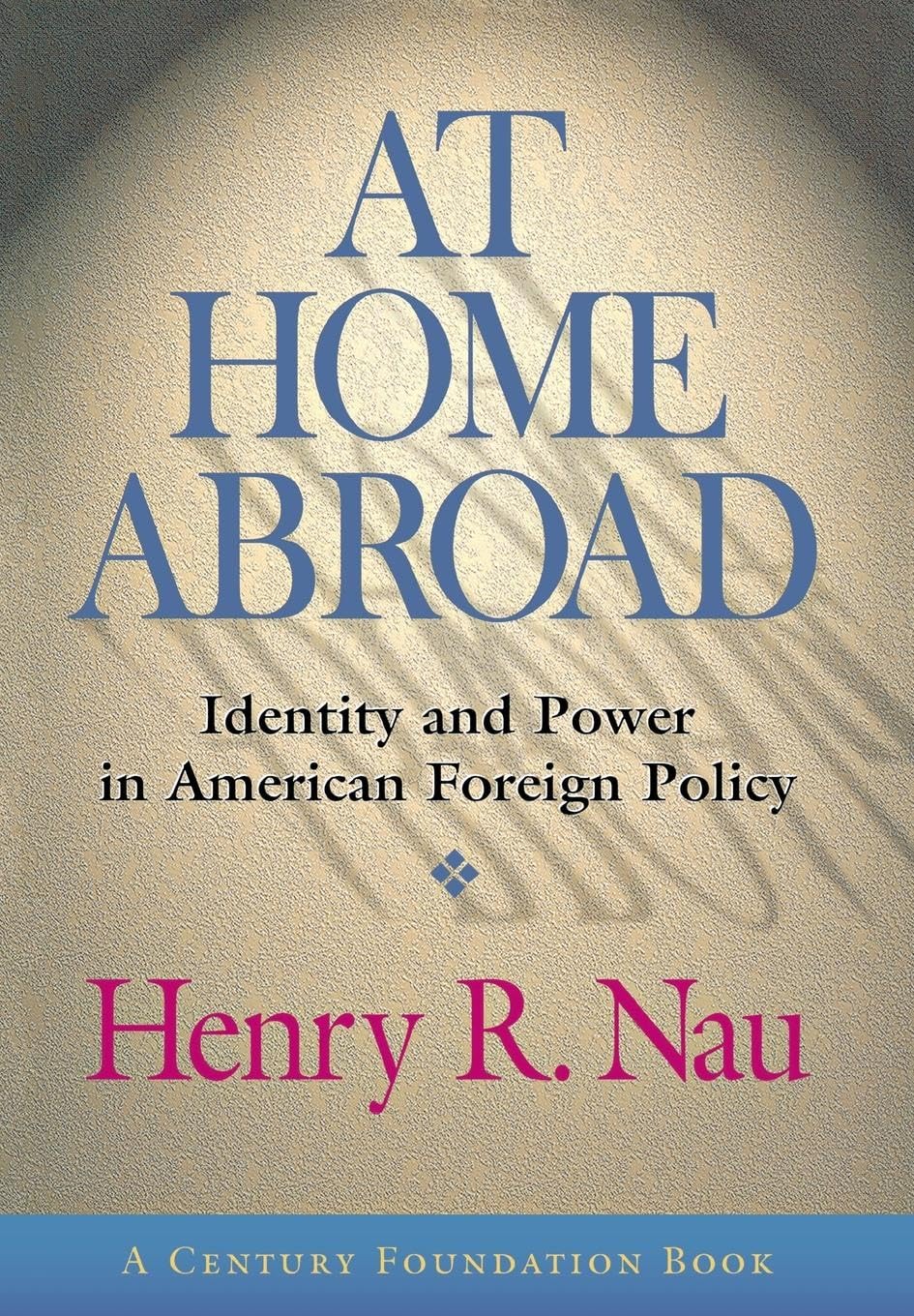
At Home Abroad: Identity and Power in American Foreign Policy (Cornell Studies in Political Economy),Used
Sold by Ergodebooks, an authorized reseller.
Returns accepted within 30 days | support@ergodebooks.com
Shipping Information
- Free Standard Shipping — United States only
- Processing Time: 3–5 business days
- Estimated Delivery: 6–10 business days after dispatch
- Double-boxed, fully insured & discreetly packaged
- Tracking number sent via email once dispatched
Returns & Refund
Returns accepted within 30 days of delivery.
Damaged or Defective Item
Free return shipping + replacement or full refund
Wrong Item Received
Free return shipping + replacement or full refund
Change of Mind
Return shipping at customer's expense · 25% restocking fee applies
Payment Option

The United States has never felt at home abroad. The reason for this unease, even after the terrorist attacks of September 11, 2001, is not frequent threats to American security. It is America's identity. The United States, its citizens believe, is a different country, a New World of divided institutions and individualistic markets surviving in an Old World of nationalistic governments and statist economies. In this Old World, the United States finds no comfort and alternately tries to withdraw from it and reform it. America cycles between ambitious internationalist efforts to impose democracy and world order, and more nationalist appeals to trim multilateral commitments and demand that the European and Japanese allies do more.In At Home Abroad, Henry R. Nau explains that America is still unique but no longer so very different. All the industrial great powers in western Europe (and, arguably, also Japan) are now strong liberal democracies. A powerful and peaceful new world exists beyond America's borders and anchors America's identity, easing its discomfort and ending the cycle of withdrawal and reform.Nau draws on constructivist and realist perspectives to show how relative national identities interact with relative national power to define U.S. national interests. He provides fresh insights for U.S. grand strategy toward various countries.In Europe, the identity and power perspective advocates U.S. support for both NATO expansion to consolidate democratic identities in eastern Europe and concurrent, but separate, greatpower cooperation with Russia in the United Nations. In Asia, this perspective recommends a shift of U.S. strategy from bilateralism to concentric multilateralism, starting with an emerging democratic security community among the United States, Japan, South Korea, Australia, New Zealand, India, and Taiwan, and progressively widening this community to include reforming ASEAN states and, if it democratizes, China. In the developing world, Nau's approach calls for balancing U.S. moral (identity) and material (power) commitments, avoiding military intervention for purely moral reasons, as in Somalia, but undertaking such intervention when material threats are immediate, as in Afghanistan, or material and moral stakes coincide, as in Kosovo.
⚠️ WARNING (California Proposition 65):
This product may contain chemicals known to the State of California to cause cancer, birth defects, or other reproductive harm.
For more information, please visit www.P65Warnings.ca.gov.