
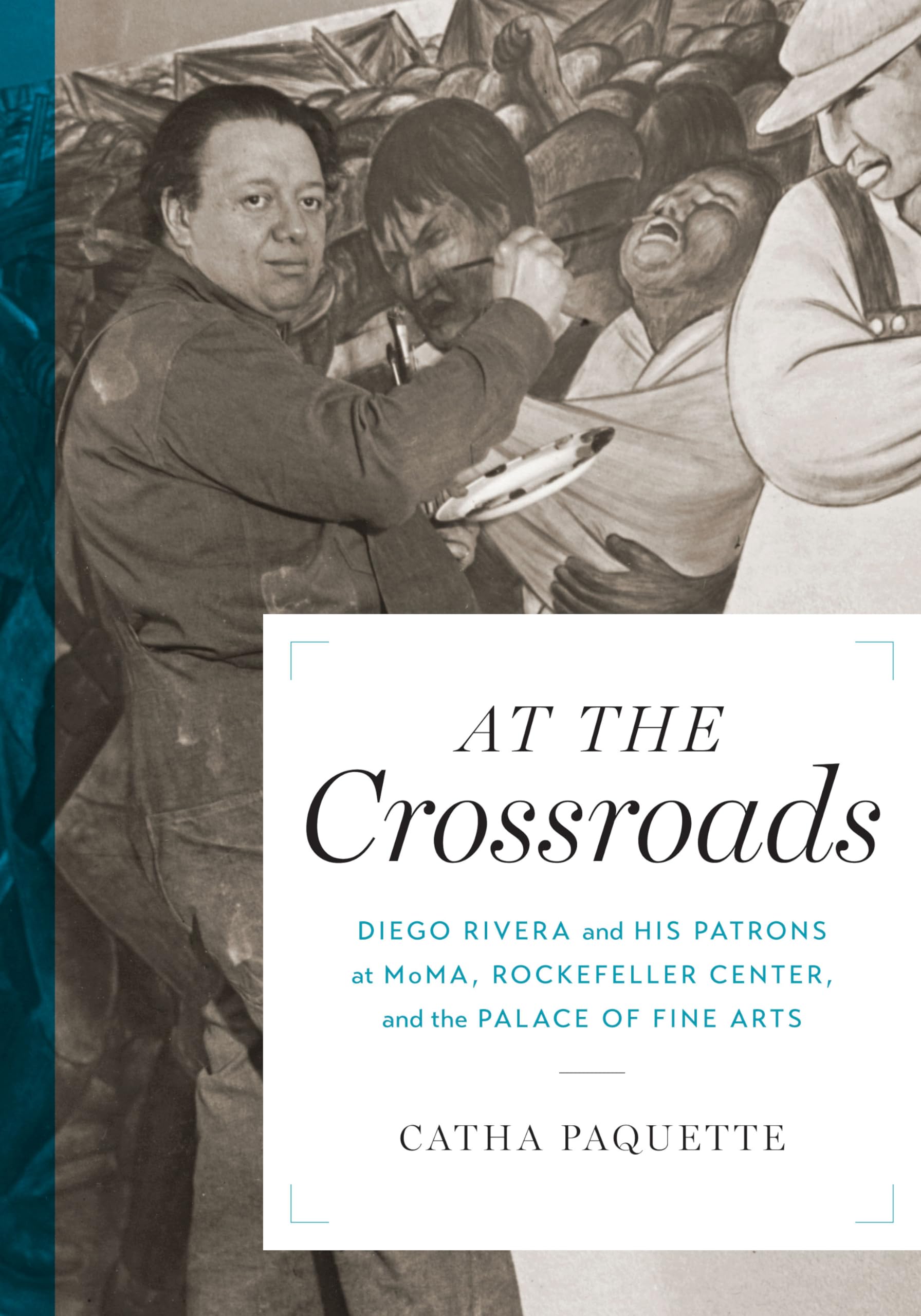
Title
At the Crossroads: Diego Rivera and his Patrons at MoMA, Rockefeller Center, and the Palace of Fine Arts (Joe R. and Teresa Loza,Used
Sold by Ergodebooks, an authorized reseller.
Returns accepted within 30 days | support@ergodebooks.com
Shipping Information
- Free Standard Shipping — United States only
- Processing Time: 3–5 business days
- Estimated Delivery: 6–10 business days after dispatch
- Double-boxed, fully insured & discreetly packaged
- Tracking number sent via email once dispatched
Returns & Refund
Returns accepted within 30 days of delivery.
Damaged or Defective Item
Free return shipping + replacement or full refund
Wrong Item Received
Free return shipping + replacement or full refund
Change of Mind
Return shipping at customer's expense · 25% restocking fee applies
Payment Option

Collaborations during the Great Depression between the Mexican artist and Communist activist Diego Rivera and institutions in the United States and Mexico were fraught with risk, as the artist occasionally deviated from course, serving and then subverting his patrons. Catha Paquette investigates controversies surrounding Riveras retrospective at the Museum of Modern Art in New York City, his Rockefeller Center mural Man at the Crossroads, and the Mexican governments commissioning of its reconstruction at the Palace of Fine Arts in Mexico City. She proposes that both the artist and his patrons were using art for extraordinary purposes, leveraging clarity and ambiguity to weigh in on debates concerning labor policies and speech rights; relations between the United States, Mexico, and the Soviet Union; and the viability of capitalism, communism, and socialism. Rivera and his patrons shared interest in images of labora targeted audiencemade cooperative ventures possible.In recounting Riveras shifts in strategy from collaboration/exploitation to antagonism/conflict, Paquette highlights the extent to which the artist was responding to politicoeconomic developments and facilitating alignment/realignment among leftist groups for and against Stalin. Although the artwork that resulted from these instances of patronage had the potential to serve conflicting purposes, Riveras images and the protests that followed the destruction of the Rockefeller Center mural were integral to a surge in oppositional expression that effected significant policy changes in the United States and Mexico.
⚠️ WARNING (California Proposition 65):
This product may contain chemicals known to the State of California to cause cancer, birth defects, or other reproductive harm.
For more information, please visit www.P65Warnings.ca.gov.