
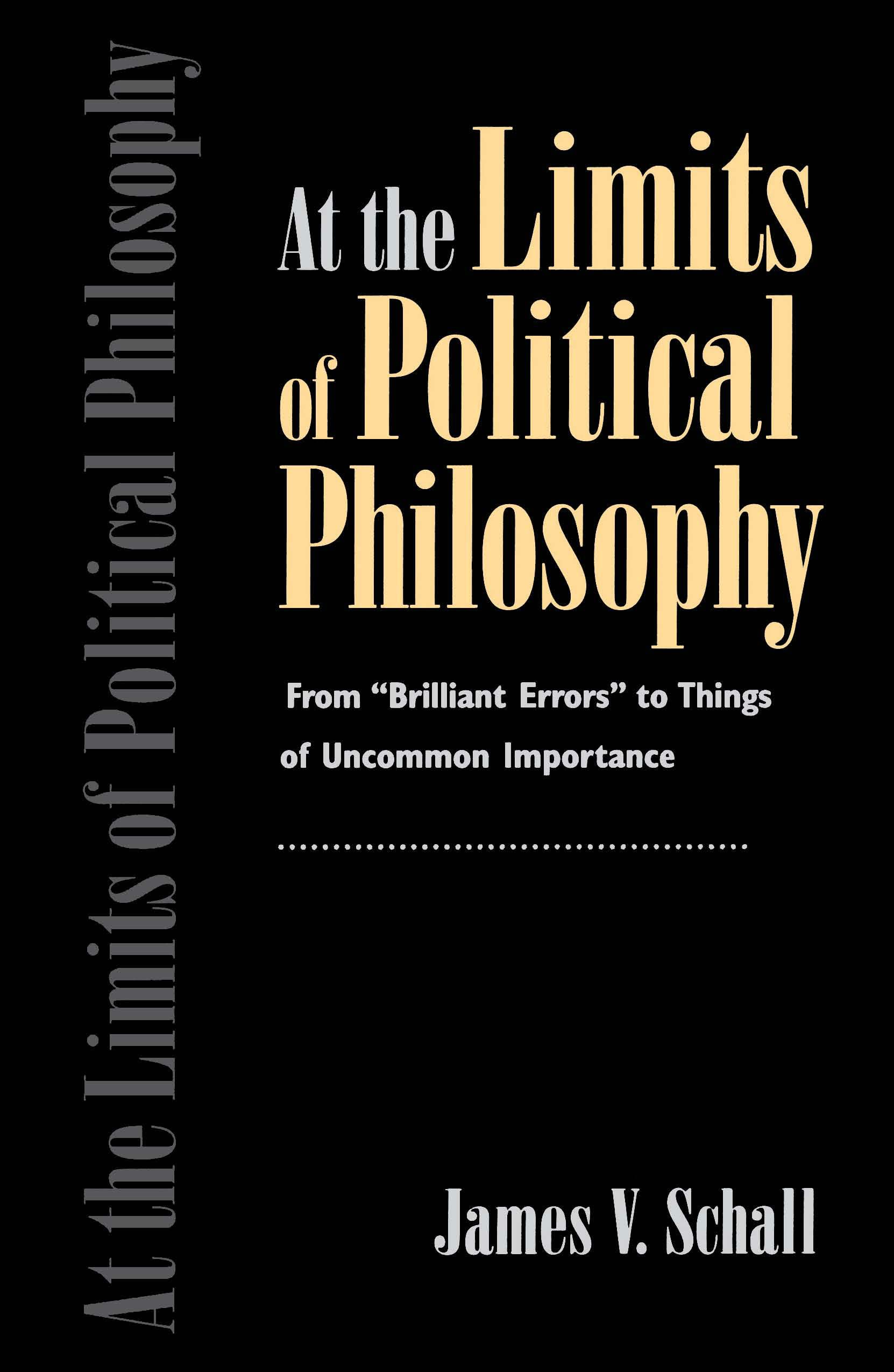
Title
At The Limits Of Political Philosophy,New
Sold by Ergodebooks, an authorized reseller.
Returns accepted within 30 days | support@ergodebooks.com
Shipping Information
- Free Standard Shipping — United States only
- Processing Time: 3–5 business days
- Estimated Delivery: 6–10 business days after dispatch
- Double-boxed, fully insured & discreetly packaged
- Tracking number sent via email once dispatched
Returns & Refund
Returns accepted within 30 days of delivery.
Damaged or Defective Item
Free return shipping + replacement or full refund
Wrong Item Received
Free return shipping + replacement or full refund
Change of Mind
Return shipping at customer's expense · 25% restocking fee applies
Payment Option

How do politics and religion point to each other in a way that respects the integrity of both? Why are reason and revelation not in absolute opposition to each other? Political philosophy asks questions such as these that seem to call forth responses that do not come from politics alone. In seeking the answers, James V. Schall presents, in a convincing and articulate manner, the revelational contribution to political philosophy, particularly that which comes out of the Roman Catholic tradition. In At the Limits of Political Philosophy he fills the need for a sustained account of the higher reaches of political philosophy, where questions arising within the discipline bring it to its own limits.In the first section of the book, Schall points out what Leo Strauss called the 'brilliant errors' that have arisen in the history of political philosophy and provides sober responses to those errors. He insists that neither the reality of evil nor the possibility of good within the city is completely explained within political philosophy, and he calls on political philosophy to acknowledge and respect its own boundaries.Schall maintains that a noncontradictory unity exists among three aspects of political philosophythe problem of evil, the problem of virtue, and the problem of contemplation of the highest things. Thus in the second section of his book he moves to a discussion of 'imperfect and dire conditions of human existence': death, evil, suffering, injustice, hell. He espouses a 'political realism' that understands them to be permanent realities in this world, realities that cannot be eliminated by human means.The third section treats the death of Socrates, the death of Christ, and the reality and meaning of happiness and of virtue. Schall examines the two deaths to show how ultimate issues arise within particular political instances and how they lead people to ask those questions about happiness and virtue that reveal the higher calling of human life. He maintains that political philosophy cannot be consistent with itself and not think about these higher realities. Finally, Schall addresses science, law, and friendship, which raise questions of truth, good, and love that are not adequately understood if viewed only in their political contexts. These are ideas that point to the deepest meaning of human experience; their uncommon importance requires political philosophy to consider them.
⚠️ WARNING (California Proposition 65):
This product may contain chemicals known to the State of California to cause cancer, birth defects, or other reproductive harm.
For more information, please visit www.P65Warnings.ca.gov.