
Title
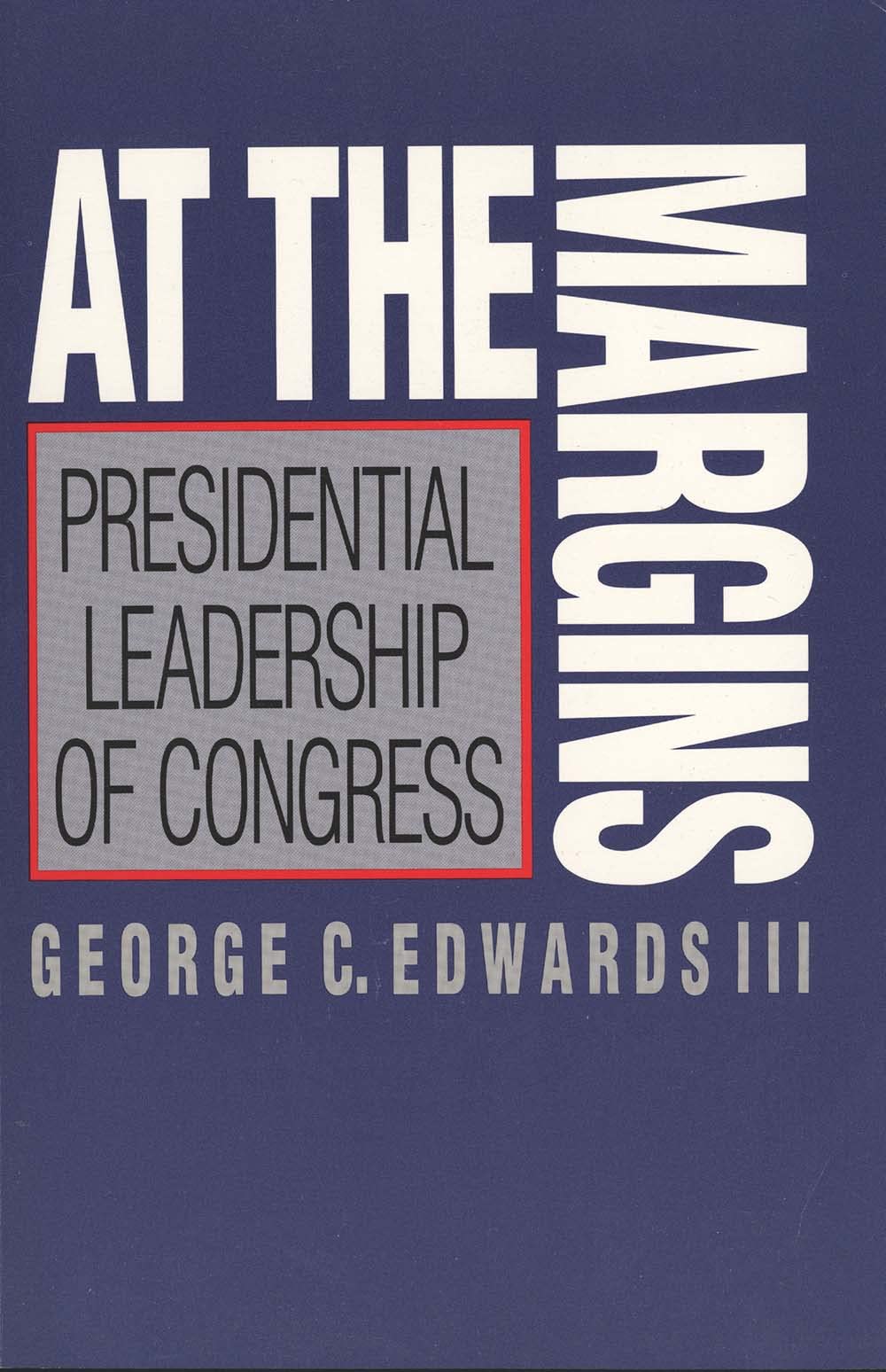
At the Margins: Presidential Leadership of Congress,New
Sold by Ergodebooks, an authorized reseller.
Returns accepted within 30 days | support@ergodebooks.com
Shipping Information
- Free Standard Shipping — United States only
- Processing Time: 3–5 business days
- Estimated Delivery: 6–10 business days after dispatch
- Double-boxed, fully insured & discreetly packaged
- Tracking number sent via email once dispatched
Returns & Refund
Returns accepted within 30 days of delivery.
Damaged or Defective Item
Free return shipping + replacement or full refund
Wrong Item Received
Free return shipping + replacement or full refund
Change of Mind
Return shipping at customer's expense · 25% restocking fee applies
Payment Option

In this book George Edwards seeks a deeper understanding of the relationship between the president and Congress, exploring how and under what conditions presidents lead Congress, what we can reasonably expect of them, and how we should evaluate their performance. He makes a persuasive case for his thesis that presidential leadership of Congress is typically at the margins, not the core, of policymaking. Edwards focuses on three important resources for presidential leadership: party, public opinion, and legislative skills. For each source of influence he analyzes the president's strategic position, the theoretical potential of the resource as an instrument of leadership. He then examines presidents' attempts to employ each resource to obtain support in Congress, showing that they are rarely able to expand their resource base or manipulate their resources reliably. Integrating quantitative analysis with documentary and historical research, Edwards argues that the effective leader is not the dominant chief executive of political folklore who restructures the contours of the political landscape to pave the way for change but is rather a facilitator who works at the margins of coalition building to exploit opportunities presented by a favorable configuration of political forces in his environment. Presidents are not by themselves going to bring about major changes in public policy, says Edwards, and we must adjust accordingly our expectations of their leadership. The implications of his book are broad, and his findings are an important corrective for those who personalize politics and attribute more influence to a single person or strategy than is usually merited.
⚠️ WARNING (California Proposition 65):
This product may contain chemicals known to the State of California to cause cancer, birth defects, or other reproductive harm.
For more information, please visit www.P65Warnings.ca.gov.