
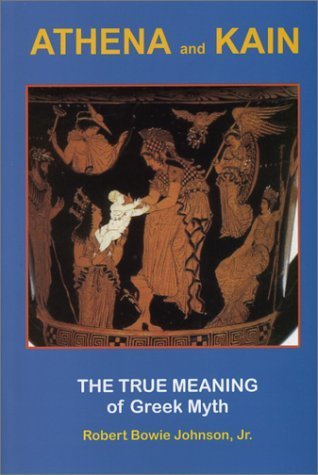
Title
Athena and Kain: The True Meaning of Greek Myth,Used
Sold by Ergodebooks, an authorized reseller.
Returns accepted within 30 days | support@ergodebooks.com
Shipping Information
- Free Standard Shipping — United States only
- Processing Time: 3–5 business days
- Estimated Delivery: 6–10 business days after dispatch
- Double-boxed, fully insured & discreetly packaged
- Tracking number sent via email once dispatched
Returns & Refund
Returns accepted within 30 days of delivery.
Damaged or Defective Item
Free return shipping + replacement or full refund
Wrong Item Received
Free return shipping + replacement or full refund
Change of Mind
Return shipping at customer's expense · 25% restocking fee applies
Payment Option

Based on solid evidence, Athena and Kain demonstrates a direct connection between the Greek religious system and the early events described in the Book of Genesis. Greek myth is not subjective metaphor or childlike belief in nature gods, but rather an accurate history of the human race. Greek myth tells the same story as Genesis except from the point of view that the serpent is the enlightener of mankind rather than our deceiver. The content of Athena and Kain is revolutionary, and it is based on a simple premise: if the Book of Genesis is true, then those truths in Genesis which pertain to humanity as a whole (Eden, the Flood, the Tower of Babel) must be recorded in the "myths" of the dominant ancient Greek Mediterranean culture. If we are all part of the same human race, with the same origin as described in Genesis, this has to be the case. Proceeding on this premise, and relying on the work of meticulous scholars, solid evidence, and common sense, we find that the Greek myths tell the same story as the early chapters of the Book of Genesis, except from the point of view that the serpent is the enlightener of mankind rather than its deceiver. The evidence substantiates the premise: the JudeoChristian and Greek religious traditions parallel each other, and both record the true history of humanity, yet from opposite standpoints. Without the Book of Genesis as a guide, Greek vasepaintings and sculptures present us with an amalgam of ambiguous elements whose meaning we cannot satisfactorily discern. But with Genesis as a frame of reference, ancient Greek art begins to make sense to us. No longer trapped in a fuzzy mental realm full of perplexing gods and befuddling stories, we begin to see the remarkably clear and coherent messages painted on vases and carved in marble by our ancestors. The best part comes when we see that this new understanding is not so much profound as it is obvious. The Greek gods looked exactly like humans because most of them were, in fact, the Greeks' own deified ancestors who included Adam (Zeus), Eve (Hera), Kain (Hephaistos), Seth (Ares), Noah (Nereus), Cush (Hermes), and Nimrod (Herakles). Kain, Kaineus, and Kentaurs Why Kain instead of Cain? The Greek Scriptures (Matthew to Revelation) were originally written in uppercase Greek. The name of the man, Kain, written as iKAIN,] appears three times (Hebrews 11:4, I John 3:12, and Jude 11). On the Franois vase from the 6th century BC, a certain man being pounded into the ground by Kentaurs is identified as iKAINEUS.] Both names refer to the same man. Keeping the original spelling helps maintain a connection that is essential to understanding the basic truth of ancient Greek religion: it chronicles the reestablishment of the way of Kain after the Flood. We donVt know why the King James scholars translated KAIN as Cain, or why Robert Graves translated KAINEUS as Caeneus, but both translations tend to disguise the fact that the ancient names represent the same person. The Greek word usually translated as icentaur] is Kentauros. In a very significant Greek myth, Kentaurs, halfmen/halfhorses, kill some ancient Lapiths (Flintchippers) and carry off their women (Chapter 6). Scholars capitalize Lapith because it represents a specific group of people. They think of the halfmen/halfhorses, however, as strange animals who represent barbarianism, and so they use the lowercase icentaur.] The truth is that the Kentaurs represent what the Greeks considered to be a istrange branch] of humanitythe line of Seth, the offspring of AdamVs and EveVs youngest son. Thus, as the name of a particular group, it should be capitalized, and to emphasize that fact, The author keeps the original Kappa, or K; therefore, Kentaur. One more thing. To really understand this, youVll need to think like the ancient Greeks. If you donVt realize it now, by the time youVre finished reading the introduction, you'll be happy to find out that in many ways you already think
⚠️ WARNING (California Proposition 65):
This product may contain chemicals known to the State of California to cause cancer, birth defects, or other reproductive harm.
For more information, please visit www.P65Warnings.ca.gov.